Ready to advertise in Houston?
Call now — 385-985-0003Houston / Google Advertising
Google Ads in Houston: the only channel that can surge the night a storm or a heat wave breaks
Rankings cannot triple on the morning after a foot of rain, and they cannot move at 9pm on the hottest Sunday in August. Bids can. Google advertising in Houston is how a plumbing, HVAC, fencing, concrete or epoxy flooring company shows up in the hours when a metro of seven million people is all searching for the same thing at once.
The short answer
Google advertising in Houston means paid search and Local Services Ads targeting emergency and high-intent service demand — ac repair, no cooling, emergency plumbing, slab leak, water heater replacement, driveway and concrete work, fence installation, epoxy flooring — bid by suburb, hour and device across Harris, Fort Bend and Montgomery counties. Extentus builds the campaigns, negatives and call tracking, then reports cost per booked job rather than cost per click.
01. The moment
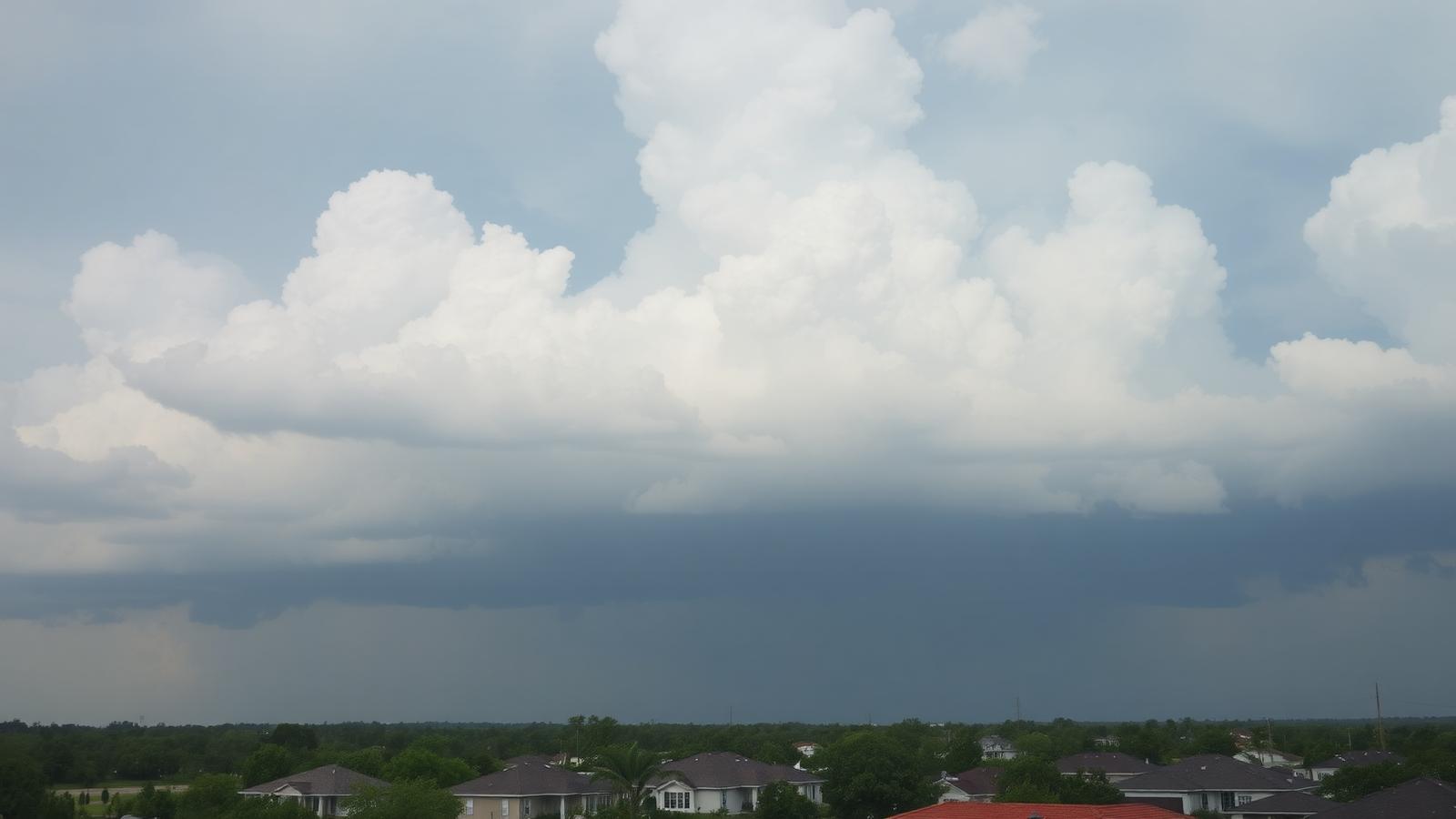
A slow-moving storm drops ten inches on west Houston overnight, and by 7am the whole city is searching at once.
Water came into garages in Meyerland and Bear Creek, a bayou crested in Kingwood, and thousands of homeowners wake up needing someone today — drying, flooring pulled up, a coated slab that has blistered, an outdoor unit that sat submerged, fence sections down. On days like that the search volume for a dozen trade terms across Harris County multiplies for seventy-two hours and then falls back.
The same spike shape shows up on the first genuinely brutal week of August, on a Sunday night when a compressor quits, on a January morning when a hard freeze warning goes up and every homeowner in the metro remembers 2021. Organic rankings sit exactly where they sat yesterday. The businesses that capture those hours are the ones that can raise a bid, widen a radius and answer a phone before the wave passes.
02. Why trades are different here
Houston is the most expensive click market in Texas — because it is the biggest and the best funded.
Emergency trade clicks in Houston are bid by independents, regional operators, national franchises, private-equity-backed HVAC and plumbing roll-ups, restoration companies and lead resellers, all at once. That is what scale does to an auction. A campaign built the way a generalist agency builds one — one citywide campaign, a 30-mile radius, broad match on "ac repair" — will spend most of its budget on Baytown, Conroe and Rosenberg traffic your crews will never profitably drive to, on renters, on parts shoppers and on people who want a DIY answer.
Geography is the other half. Houston has no single center; it has ring roads. Inside the Loop is dense, older, and drives slowly. The band between the Loop and Beltway 8 is where most of the 1950–1980 housing sits — cast iron plumbing, original ductwork, moving slabs. Outside the Grand Parkway are the new-build suburbs of Fort Bend and Montgomery counties. A single radius treats all of that as one market and prices it as one market. It is not one market: the ticket size, the housing age, the competition and the drive time are different in each band.
Timing is Gulf Coast specific too. Demand does not spread evenly across a season; it arrives in bursts tied to rainfall, sustained humidity and the rare freeze. Budget that sits flat all month is underspent during the bursts and wasted between them.
03. The build
Screened placements, band-by-band bidding and a storm playbook on standby.
Local Services Ads first where the trade qualifies, because Google-screened placements sit above search results, are billed per lead, and carry a badge that matters to a homeowner choosing between strangers. License and insurance verification, review flow and response time are managed as ranking inputs, not paperwork.
Then search campaigns segmented by intent and by geography: emergency terms separated from planned-project terms, and the metro split into the bands it actually behaves as — inside the Loop, the Loop-to-Beltway ring, Katy and west, Cypress and northwest, Spring, Klein, Tomball and The Woodlands to the north, Kingwood, Humble and Atascocita to the northeast, Pearland, Friendswood, Clear Lake and League City to the south, Sugar Land, Missouri City and Richmond to the southwest. Each with its own bids, its own hours and drive-time-aware targeting rather than a circle on a map.
Then the loss prevention that makes the numbers work: negative keyword lists that strip DIY, parts, wholesale, rental, warranty and jobs traffic; ad copy that pre-qualifies on trade, service area and after-hours availability; call tracking with recording so the record shows which campaigns produced booked jobs; and bid schedules tied to the hours your phone is actually answered. Then the storm-and-heat playbook: pre-built campaigns and budget headroom that go live within hours of a rain event, a heat advisory or a freeze warning.
04. The math
Cost per click is not the number. Cost per booked job is.
A Houston HVAC emergency click is expensive, and it is still the cheapest way to buy a $9,500 replacement decision at the moment it is being made.
The arithmetic is simple: if a segment of qualified emergency clicks converts to booked calls at a workable rate, and a predictable share of those diagnostic visits becomes replacement work, the channel pays for itself several times over inside the month — while an unsegmented citywide campaign at the same total spend loses money on the same clicks.
That is why the reporting is cost per booked job by suburb, not cost per click by account. It also makes the honest calls possible: which bands to hold bids in during a heat wave, which to pull back in a mild October, when Local Services Ads beat search for a given trade, and when a term is simply being bought at a loss by a competitor who values market share more than margin. Paid search in Houston is rented demand — which is exactly why it should not be the only thing you own.
05. Where it fits
Ads buy the hour. They cannot buy the baseline.
SEO compounds and costs nothing per call once it ranks, but it cannot surge on the morning after a storm. Social advertising creates elective demand — patios, epoxy, fence replacement — for homeowners who are not searching at all. Web design decides what share of expensive clicks turn into calls; in Houston, where a click is priced like a click in the fourth-largest city in America, a slow mobile page or a buried phone number wastes real money on every visit.
Google advertising is the fastest and the most perishable of the four. Turn it off and it is gone the same day. Run it alone in Houston and you are renting your entire customer flow from an auction whose price is set by roll-ups and franchises. Run it with the other three and the same budget buys the spike while SEO carries the baseline and the site converts both. The Houston framework page shows how the four trade budget across the year.
Google Advertising is one of four. The Houston Master Framework page makes the case for running all four together, and what running only one costs a Houston service business.

Where we run google ads in Houston
Google Advertising for service businesses across Houston and Harris County, plus the satellite towns crews already drive to. Every district below is targeted by name in campaigns, pages and profile service areas — not folded into a single city radius.
- Houston districts
- Downtown Houston · The Heights · Montrose · Midtown · Museum District · Rice Military · River Oaks · Memorial · Spring Branch · Bellaire · West University Place · Meyerland · Sharpstown · Energy Corridor · Clear Lake · Kingwood · Champions · Alief
- Beyond the county line
- Katy · Cypress · Sugar Land · Missouri City · Richmond · Pearland · Friendswood · League City · Spring · Klein · Tomball · The Woodlands · Humble · Atascocita · Baytown · Conroe · Harris County · Fort Bend County · Montgomery County · Galveston County · Brazoria County
- ZIP codes covered
- 77002 · 77004 · 77005 · 77006 · 77007 · 77008 · 77009 · 77018 · 77019 · 77024 · 77025 · 77027 · 77030 · 77035 · 77040 · 77043 · 77055 · 77056 · 77057 · 77063 · 77065 · 77070 · 77077 · 77079 · 77080 · 77084 · 77095 · 77096 · 77098 · 77339 · 77379 · 77401 · 77429 · 77433 · 77450 · 77478 · 77494 · 77502 · 77546 · 77573 · 77584
06. The Houston close
Seven million people, ring roads, and demand that arrives in bursts.
The checkable reality: the Houston metro exceeds 7.3 million people across nine counties and more than 10,000 square miles — an area larger than New Jersey — with roughly 4.8 million of them in Harris County and rapid growth continuing in Fort Bend and Montgomery counties. There is no single center and no zoning to concentrate demand, so paid targeting has to follow the ring-road bands and real drive times.
The climate produces the bursts. Gulf humidity keeps cooling systems under near-continuous load from May into October, so failures cluster in the hottest stretches. Flat terrain drained by bayous means intense rainfall — not coastal surge — is the flooding mechanism, and the water damage, flooring, coating and equipment work that follows arrives in concentrated seventy-two-hour waves in specific watersheds. Rare freezes do the same thing to plumbing across the whole metro at once.
Extentus builds paid search that is ready before those windows open, priced against booked jobs, and reported by suburb so you can see exactly which part of a seven-million-person metro is paying you back.
Google Ads in Houston — questions, answered
Enough to compete for a defined set of suburbs and hours, not enough to spread thinly across the whole metro. Houston's emergency trade auctions are the most expensive in Texas because national franchises, private-equity-backed roll-ups and lead resellers bid in them, so a budget spread across 10,000 square miles buys almost nothing anywhere. We start with the bands where your drive times and ticket sizes work — for example Katy and west, or Pearland and Clear Lake to the south — prove cost per booked job there, then widen. Budget headroom is held back deliberately for heat waves, freezes and rain events.
For most licensed trades, yes — they sit above search results, are billed per lead rather than per click, and carry a Google-screened badge that carries weight when a homeowner is choosing between companies they have never heard of. In a metro this large that badge is often the tiebreaker. They are not a substitute for search campaigns: Local Services Ads cover a narrower set of service categories and give you less control over which specific job types you appear for, so we usually run both and shift the mix based on cost per booked job per suburb.
Three things. First, geography: instead of one radius, we split Houston into the bands it actually behaves as — inside the Loop, Loop-to-Beltway, Katy and west, Cypress and northwest, Spring and The Woodlands, Kingwood and Humble, Pearland and Clear Lake, Sugar Land and Missouri City — with separate bids and drive-time-aware targeting. Second, negatives: DIY, parts, wholesale, rental, warranty and employment traffic are excluded before they cost anything. Third, measurement: call tracking with recording, so spend is judged on booked jobs by suburb rather than on clicks by account.
The rest of the Houston set
- SEO
Search Engine Optimization in Houston
The channel you own. Google Business Profile, Harris County and suburban service-area pages and review velocity, built so Houston searches for your trade land on you instead of a national franchise buying its way into a market it does not work in.
Open page - Social Ads
Social Advertising in Houston
The one channel built to manufacture demand rather than sit around waiting for it to show up in search. Meta, Instagram and short-form video aimed at the Houston suburbs where the housing matches the service, at a fraction of what an emergency search click costs here.
Open page - Web Design
Web Design in Houston
The conversion layer and the citation surface. Fast on cellular, click-to-call in a fixed header, separate paths for emergencies and planned projects, and structured so AI answer engines can cite your Houston business by name.
Open page - All four — recommended
The Master Framework in Houston
All four, installed together. One strategy across SEO, Google advertising, social advertising and web design, with budget moved between them as Houston's heat, rain and freeze windows open and close — and one accountable number.
Open page