Houston, Texas
SEO, Google Ads, Social and Web Design in Houston — The Largest Home Services Market in Texas
Houston is the fourth-largest city in America inside a metro of more than seven million people spread across an area larger than New Jersey, with no single center to organize it. There is more trade work here than anywhere else in Texas and more competition for it. The businesses that win get found in the hours when humidity, clay or water forces a decision.
Five dedicated Houston pages
Each discipline has its own Houston page — its own local search data, its own market detail, its own URL.
- SEO
Search Engine Optimization in Houston
The channel you own. Google Business Profile, Harris County and suburban service-area pages and review velocity, built so Houston searches for your trade land on you instead of a national franchise buying its way into a market it does not work in.
Open page - Google Ads
Google Advertising in Houston
The channel you can turn up tonight. Search and Local Services Ads bid by suburb and by hour across Harris, Fort Bend and Montgomery counties, with negatives that strip DIY and parts traffic before it reaches your budget.
Open page - Social Ads
Social Advertising in Houston
The one channel built to manufacture demand rather than sit around waiting for it to show up in search. Meta, Instagram and short-form video aimed at the Houston suburbs where the housing matches the service, at a fraction of what an emergency search click costs here.
Open page - Web Design
Web Design in Houston
The conversion layer and the citation surface. Fast on cellular, click-to-call in a fixed header, separate paths for emergencies and planned projects, and structured so AI answer engines can cite your Houston business by name.
Open page - All four — recommended
The Master Framework in Houston
All four, installed together. One strategy across SEO, Google advertising, social advertising and web design, with budget moved between them as Houston's heat, rain and freeze windows open and close — and one accountable number.
Open page

Houston holds roughly 2.3 million residents inside a Harris County of about 4.8 million and a nine-county metro exceeding 7.3 million, spread across more than 10,000 square miles of flat Gulf Coast plain drained by bayous rather than by slope. Its economy runs on energy, the largest medical center in the world, the port and petrochemicals, and it has no zoning to concentrate any of it. Underneath that runs a home services economy working continuously on roughly 2.4 million housing units — a large share built between 1950 and 1990 on expansive gumbo clay, with original cast iron and galvanized plumbing, aging ductwork and end-of-life fencing and concrete coming due street by street.
Across greater Houston, search engine optimization, Google advertising, social advertising and web design run as one connected build, not four vendors working from four different playbooks. In Houston the framework has to solve a coverage problem and a timing problem at the same time.
What makes the Houston market distinct
The metro reads clearly by band. Inside the Loop — the Heights, Montrose, Bellaire, West University, Meyerland, Memorial — is older, denser and slower to drive, where repipes, cast iron replacement, foundation movement, drainage work and renovation land hardest. The Loop-to-Beltway ring holds most of the 1950–1990 housing stock, aging into replacement work all at once. Beyond Beltway 8 and the Grand Parkway sit the growth suburbs of Fort Bend and Montgomery counties — Katy, Cypress, Richmond, Sugar Land, Missouri City, Pearland, Friendswood, League City, Spring, Klein, Tomball, The Woodlands, Kingwood, Humble, Atascocita, Conroe and Baytown — subdivisions five to twenty-five years old where original HVAC systems, water heaters, wood fencing and builder-grade driveways all come due together.
Three forces govern everything, and none of them are Central Texan. Humidity: Gulf moisture keeps dew points high and cooling systems under near-continuous load from May into October, so equipment fails from accumulated runtime rather than on one peak afternoon — and that same moisture rots fence posts, feeds mold behind walls and blisters coatings on slabs that were never moisture-tested. Water from the ground and sky: the region is nearly flat and drains through a bayou network, so its flood risk is a rainfall-and-drainage mechanism rather than coastal surge, and intense storms put water into neighborhoods far inland, producing concentrated waves of drying, flooring, coating and equipment replacement work. Clay: expansive gumbo soil moves with every drought-and-deluge cycle, cracking driveways, patios and foundations across whole subdivisions at the same time.
Search: rank by suburb, not by metro
Our SEO services in Houston build Google Business Profile authority and review velocity first, then a real page layer: the Heights, Montrose, Bellaire, West University, Memorial, Meyerland, Spring Branch, Clear Lake, Katy, Cypress, Sugar Land, Missouri City, Richmond, Pearland, Friendswood, League City, Spring, Klein, Tomball, The Woodlands, Kingwood, Humble, Atascocita and Baytown. Each one addresses the specific failure that housing stock in that part of the metro produces, because that specificity is what a homeowner searches and what an AI answer engine quotes.
Google advertising: buy the hour, not the month
Rankings cannot triple on the morning after ten inches of rain overwhelms a bayou, and they cannot move at 9pm on the most humid Sunday in August. Paid search and Local Services Ads can, and they are bid here by band and by hour — with drive-time reality respected instead of a circle drawn on a map, and negatives that strip DIY, parts, wholesale and rental traffic before it reaches your budget.
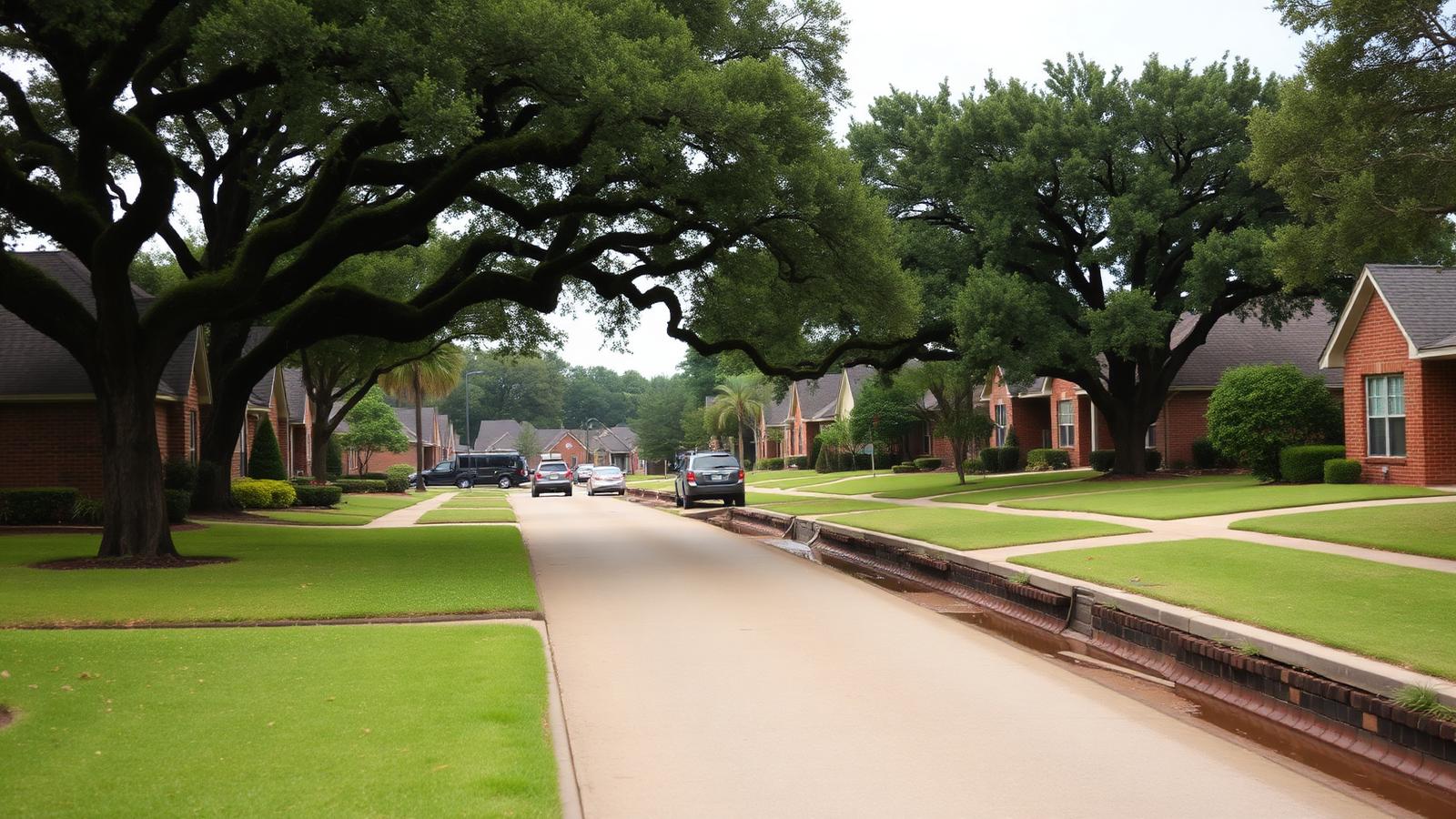
Social advertising: the unsearched backlog
Epoxy garage floors, covered patios and pergolas, outdoor kitchens, pool decks, fence replacement, artificial turf, generators and remodels have no search moment until the homeowner has already decided. Social advertising in Houston creates that decision — creative shot on your own job sites, aimed at the subdivisions where the housing matches the service, at a fraction of what an emergency search click costs in the most expensive trade auction in Texas.
Web design: the multiplier, and the AI citation surface
Houston's home-services buyers hire strangers more often than not, since word of mouth cannot cover a market this size, so every ranking, click and impression eventually depends on one landing page to close the sale. Our Houston builds work as sales infrastructure: fast on cellular data, a click-to-call button locked in the header, separate intake paths for an active leak versus a planned remodel, licence and insurance numbers in view, and photography from housing stock Houston homeowners recognise — plus LocalBusiness, Service and FAQ schema with explicit suburb geography so AI answer engines can cite the business by name. In a metro this large, nearly every visitor is hiring a company nobody they know has used, and the site is where that credibility is established or lost.
How the four channels compound in Houston
Search ranking is the layer that keeps producing long after ad spend stops, built suburb by suburb across the metro. Paid search picks up the heat stretch, the freeze warning and the rain event — moments rankings cannot move fast enough to cover. Paid social finds the homeowner who has been putting off a project for months and never once searched for it, and it keeps working through the mild weeks between emergencies. The website is where all three finally convert, and it is what determines whether an AI answer engine names the business at all. Run as separate contracts, each pays full Houston rate and leaves a gap; run together, each makes the next one cheaper.
One accountable record tracks what actually moved across the metro, replacing four disconnected vendor reports.
The Houston attribution advantage
Attribution matters more here than anywhere in Texas, because a metro of seven million people makes averages lie completely. Extentus reports one number set: qualified inbound by channel and by suburb, cost per qualified inbound, and the pages responsible — so you can see that Katy and Cypress organic are carrying themselves while Pearland still needs paid support, instead of reading a metro-wide average that hides both.
That reporting is what makes the trade possible. During a sustained humid stretch or a freeze scare, emergency paid spend earns its keep and elective social should go quiet; in a mild stretch the reverse is true. Budget rotates between channels as those seasonal windows open and close. No single-channel vendor will make that switch, since pulling budget from their channel means pulling revenue from their own invoice.

The four services Extentus runs in Houston
- Search Engine Optimization
- The channel you own — map-pack rankings, reviews and service-area pages that keep producing after the work is done.
- Google Advertising
- The channel with a volume dial — paid search and Local Services Ads tuned to the hours demand actually spikes.
- Social Advertising
- The channel that builds the pipeline — demand created in homeowners before they ever search.
- Web Design
- Where the other three cash out — fast, mobile-first pages built to convert visits into booked jobs.
Install all four in Houston
One framework, one accountable record: qualified inbound by channel and by Houston district, cost per qualified inbound, and the exact pages responsible.
Houston marketing questions, answered
Because the Houston metro spans more than 7.3 million people across nine counties and over 10,000 square miles — an area larger than New Jersey — with no single center and no zoning to organize demand, and Google weights proximity heavily in local results. A citywide page and one wide ad radius perform near your shop and nowhere else, while a 30-mile circle around downtown buys traffic in Baytown, Conroe and Rosenberg that your crews will never profitably drive to. Katy, Cypress, Sugar Land, Pearland, Spring, The Woodlands, Kingwood and League City behave as separate markets with separate housing ages, ticket sizes and competitors. We build and bid them separately.
Scale and mechanism. Houston is far larger than Austin — the fourth-largest city in the country inside a metro of more than seven million — which makes its emergency trade auctions the most expensive in Texas, bid by national franchises, private-equity-backed HVAC and plumbing groups and lead resellers. And its physical drivers are neither Central Texan nor coastal Floridian: Gulf humidity keeps cooling systems under near-continuous load rather than failing on one 105-degree afternoon, and Houston's flood exposure is an inland rainfall-and-drainage problem through the bayou system, not hurricane storm surge.
It sets two clocks. The long one is cooling season: demand climbs from May and holds into October under sustained heat and high dew points, with failures driven by accumulated runtime, so paid search and Local Services Ads carry the load for months. The short one is the event — a slow-moving rain system that overwhelms a bayou watershed overnight, or a hard freeze arriving with two days' notice — where search volume for drying, flooring, coating, plumbing and equipment work multiplies for about seventy-two hours in specific areas. Budget headroom is held back deliberately for those windows, elective social fills the mild stretches, and SEO holds the baseline underneath both.