Ready to advertise on social in New York City?
Call now — 385-985-0003New York City · Social Advertising
Social advertising in New York City: reaching the decision before the alteration agreement is even filed
A Park Slope brownstone owner scrolling past a finished roof deck at eleven at night, an Upper West Side co-op shareholder who has been quietly pricing a prewar kitchen gut since before the board even scheduled a hearing, a Bay Ridge two-family owner circling a backyard patio job that has to fit between two attached houses — none of that shows up as a Google search until the decision is nearly final. New York's dense housing stock, its co-op and condo approval process, and its walk-up and elevator buildings mean the moment that actually creates the job happens on a phone, scrolling a feed, long before any search bar opens.
The short answer
Social advertising in New York City means paid Facebook and Instagram campaigns that create demand for high-value renovation work — prewar and co-op kitchen gut jobs, brownstone and two-family renovations, roof decks, small backyard patios and basement epoxy work — before an owner ever searches for a contractor or files an alteration agreement. Extentus builds creative from real NYC job sites, targets it building by building and neighborhood by neighborhood, and reports the jobs actually signed.
Beat 01 · The renovation nobody types into a search bar
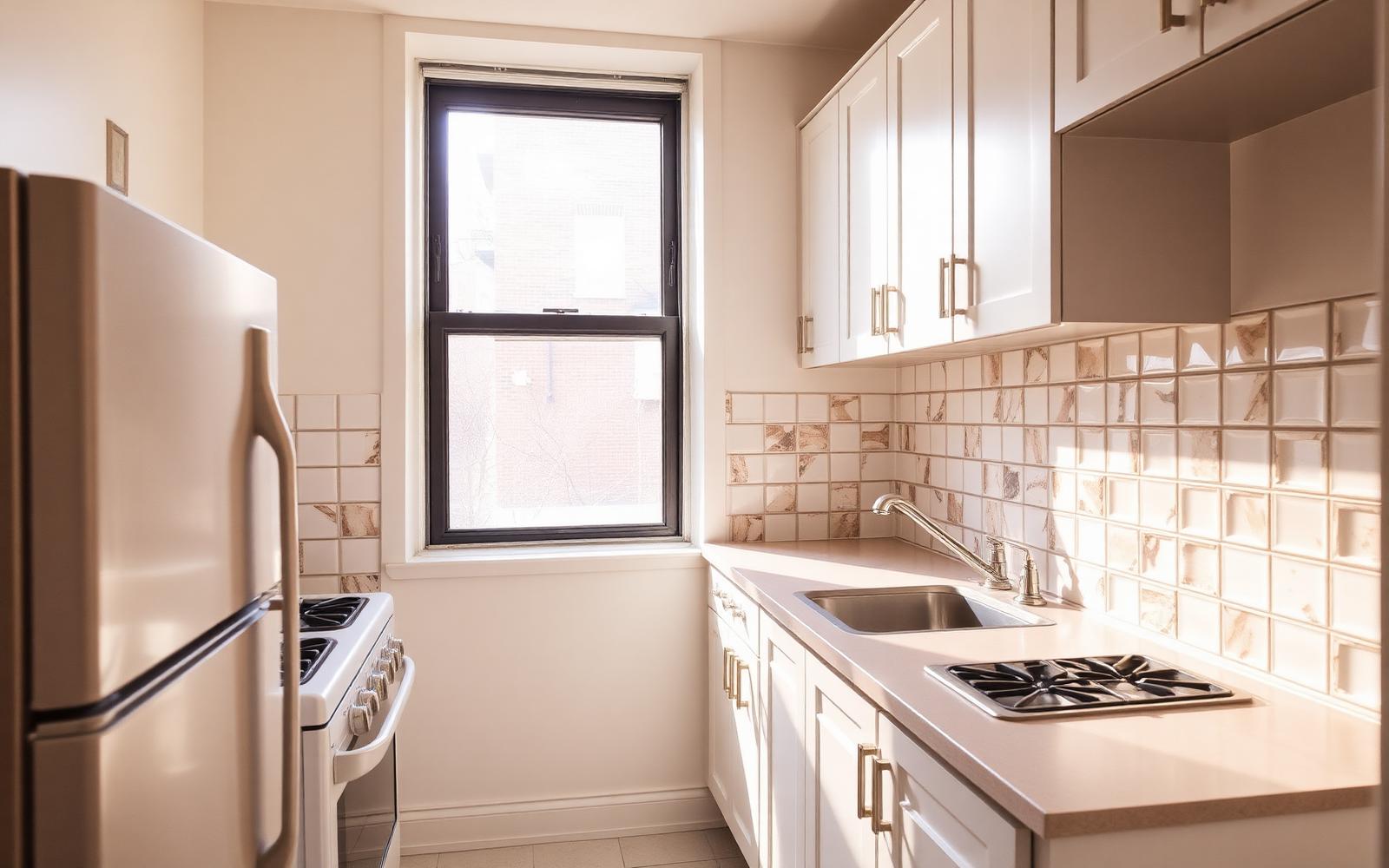
An Upper West Side shareholder scrolls past a finished prewar kitchen, photographed against original crown molding, on a Tuesday night.
Nobody in that co-op was hunting for a contractor at the moment the photo stopped the scroll. They had spent months circling the idea privately — a galley kitchen that hadn't been touched since the building converted decades ago, a family quietly agreeing it needed to change long before anyone filed paperwork with the managing agent. That kind of slow, private deliberation leaves no search trail at all. What stops the scroll is recognition: the same prewar moldings, the same narrow layout, finally turned into a kitchen someone would actually want to cook in.
By the time a New Yorker finally types 'kitchen renovation nyc' into a search bar, they are one of dozens of results bidding on the same handful of words, most of which have no idea whether the apartment is a co-op, a condo, or a rental. Paid social is how a contractor gets in front of that owner months earlier, while the kitchen or backyard is still a private idea and a folder of saved photos.
The same pattern shows up across nearly every category here: a brownstone gut renovation in Bed-Stuy once a young family finally outgrows the original layout, a roof deck built in Williamsburg once a rooftop finally gets waterproofed and a homeowner realizes the view is usable, a backyard patio poured in Bay Ridge once two attached two-family owners finally agree on a fence line, and a basement epoxy floor laid in Staten Island once a flooded rec room finally gets rebuilt for good.
Beat 02 · Why co-op boards, alteration agreements and prewar stock shift the whole playbook
Board approvals, alteration agreements and a housing stock built before World War II set New York's rhythm apart from a suburban market.
New York's renovation market runs on approvals a suburban campaign never has to think about. A co-op shareholder on the Upper East Side or in Forest Hills can't simply hire a contractor and start demolition — they need managing agent sign-off, an alteration agreement, sometimes an engineer's letter, and a board that meets on its own schedule. A condo owner in Long Island City faces a lighter version of the same process. Creative and messaging that assumes a homeowner can start work the day they sign a contract misreads how most of this city's renovation decisions actually get made.
The housing stock adds its own layer: prewar apartment buildings across Manhattan and parts of the outer boroughs carry original layouts, plaster walls and radiator placements that shape every kitchen and bathroom job differently than a postwar building would. Brownstones and row houses in Park Slope, Bed-Stuy, Crown Heights and Harlem carry their own structural quirks — party walls, narrow stoops, shared foundations with the house next door — and two-family homes in Bay Ridge, Astoria and Staten Island carry yet another set of constraints entirely.
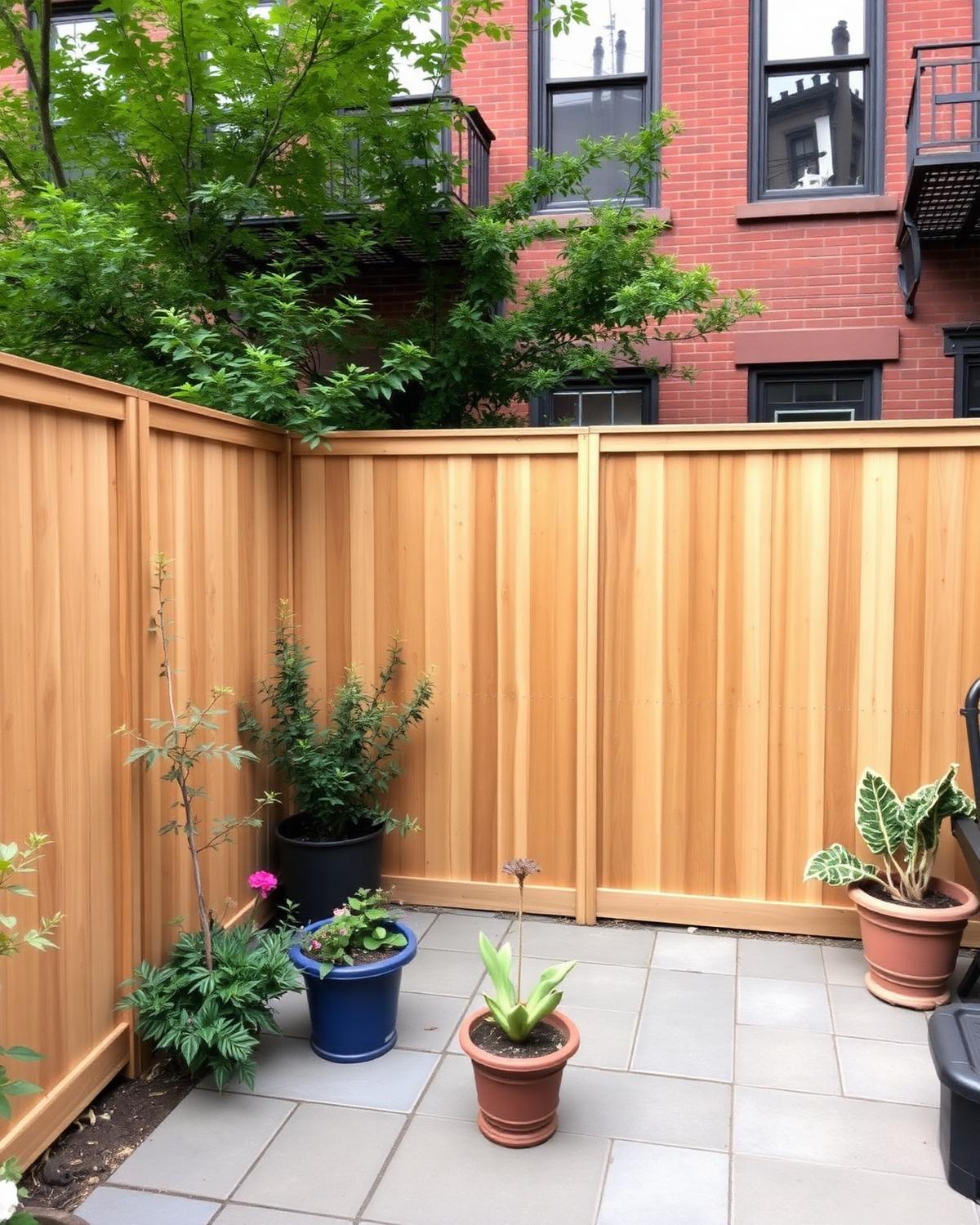
Outdoor space here is scarce and small by design, which changes the whole category. There is no suburban half-acre lot to fence, no detached three-car garage to epoxy — a New York backyard patio might be four hundred square feet wedged between two brick walls, a roof deck might be the only usable outdoor space a building has, and an iron gate in the Bronx might exist purely to secure a narrow alley between two row houses. Ad copy built for suburban fencing or garage-floor coating simply doesn't map onto most of this city's actual projects.
Beat 03 · Finished job-site footage, building-by-building targeting, and creative that matches the housing stock
Real NYC job sites, aimed at the exact buildings and blocks carrying that project type.
Every photo comes off a finished New York job — real light, real hallway, real finish detail. A phone walked through a freshly renovated prewar kitchen with the original moldings kept intact, a newly built roof deck in Williamsburg with the skyline in the background, a repointed brownstone stoop in Crown Heights the week after the scaffolding came down, a basement in Staten Island with a fresh epoxy floor still curing. Owners recognize their own building era, their own stoop style, their own rooftop layout — and that recognition earns a second look no generic renovation clip ever will.
Targeting then runs building by building and neighborhood by neighborhood: prewar kitchen and bathroom creative into co-op-heavy pockets of the Upper West Side, Upper East Side and Washington Heights, brownstone and row-house renovation messaging into Park Slope, Bed-Stuy, Crown Heights and Harlem, two-family and backyard creative into Astoria, Bay Ridge, Forest Hills and Staten Island, and roof-deck and rooftop messaging pushed into dense elevator-building corridors in Williamsburg, Long Island City and parts of Manhattan where a rooftop is the only private outdoor space a resident has.
Because so much of this market runs through walk-ups, elevator buildings and shared party walls, the creative has to show the work getting in and out of those buildings — materials carried up five flights, an elevator padded for a move, a narrow brownstone hallway protected during demolition. That detail signals a contractor who actually knows how to work in this city's buildings, not just a general remodeler running the same ad in every market. The discipline stays narrow: capture the inquiry inside the ad itself, follow up the same day, rotate job photos so a Park Slope block doesn't see the same brownstone twice, retarget the quiet lookers, and report in signed jobs.
Beat 04 · What one deferred New York project is actually worth
New York's labor costs push ticket sizes higher than almost any other market, and one finished job travels fast down a brownstone block.
One $85,000 kitchen gut booked once a month is over a million dollars a year in signed work, a number that holds before a single neighbor down the hall or across the street ever sees the finished space in person.
A full prewar kitchen gut in a Manhattan co-op, once demolition, cabinetry, appliances and board-required protection are folded in, regularly runs well into six figures once labor and building logistics are priced honestly. A brownstone renovation in Brooklyn touching multiple floors sits in a similar range, and even a modest backyard patio or roof deck in a dense outer-borough neighborhood costs meaningfully more here than the same square footage would in most other US markets, simply because of what it takes to get materials and crews into a New York building.
The compounding part is New York's density: a finished brownstone renovation on a Park Slope block gets noticed by the owner two doors down with the same original layout, and a rooftop deck visible from a neighboring building's windows in Williamsburg does the same thing at scale. Retargeting the surrounding blocks and buildings after a completed job turns one signed project into a small cluster of inquiries, which matters in a market where co-op board calendars and alteration-agreement timelines already slow down how fast any single job can close.
Beat 05 · Social versus search, the short version
Search waits for a New Yorker to decide; social is what puts the idea in front of them while the board packet is still being assembled.
Search only shows up after an owner has already typed the job into a search bar, at which point they're bidding against every other contractor chasing the same citywide keyword — which is exactly the ground the SEO and Google Ads pages of New York City's master-framework build are built to win. Paid social gets in front of that owner while the kitchen, backyard or roof deck is still a saved-photos folder and a private conversation with a spouse or co-shareholder, which is the shortest route from a scroll on a weeknight to a signed contract and a filed alteration agreement.
Run social alone in a city this fragmented across five boroughs and hundreds of distinct neighborhoods, and a better-funded competitor further down the funnel can close the demand it just created. Run it alongside the rest of a coordinated local presence — the way New York City's master-framework bundle ties the channels together at /locations/new-york/new-york-city/master-framework — and it becomes the front door of one system instead of a standalone bet.
Social Advertising is one of four. The New York City Master Framework page makes the case for running all four together, and what running only one costs a New York City service business.
Where we run social ads in New York City
Social Advertising for service businesses across New York City and New York County, plus the satellite towns crews already drive to. Every district below is targeted by name in campaigns, pages and profile service areas — not folded into a single city radius.
- New York City districts
- Manhattan · Brooklyn · Queens · The Bronx · Staten Island · Upper East Side · Upper West Side · Harlem · Washington Heights · Chelsea · Greenwich Village · Lower East Side · Financial District · Williamsburg · Park Slope · Bushwick · Bedford-Stuyvesant · Bay Ridge · Astoria · Long Island City · Forest Hills · Flushing · Jackson Heights · Ridgewood · Riverdale · Fordham · St. George · Sunset Park
- Beyond the county line
- Yonkers · Mount Vernon · New Rochelle · Hoboken · Jersey City · Union City · Bayonne · Newark · Great Neck · Valley Stream · Hempstead · Lynbrook · Long Beach · Westchester County · Nassau County · Kings County · Queens County · Bronx County · Richmond County · Hudson County
- ZIP codes covered
- 10001 · 10002 · 10003 · 10009 · 10011 · 10012 · 10013 · 10014 · 10016 · 10017 · 10018 · 10019 · 10021 · 10022 · 10023 · 10024 · 10025 · 10026 · 10027 · 10028 · 10029 · 10031 · 10032 · 10033 · 10034 · 10035 · 10036 · 10038 · 10040 · 10128 · 11201 · 11205 · 11206 · 11211 · 11215 · 11217 · 11221 · 11222 · 11226 · 11235 · 11101 · 11106 · 11354 · 11373 · 11375 · 11385 · 11432 · 10451 · 10456 · 10463 · 10301 · 10306 · 10314

Beat 06 · A dense, board-governed, five-borough market with its own rhythm
Co-op governance, prewar and brownstone housing stock, and scarce outdoor space are why this channel works in New York City specifically.
The checkable local reality: much of Manhattan's apartment stock and a meaningful share of the outer boroughs run through co-op boards and alteration agreements that slow down and formalize renovation decisions, prewar buildings and brownstones carry structural and layout quirks that shape every kitchen, bathroom and gut renovation differently than newer construction would, and usable outdoor space is scarce enough that a roof deck or a small backyard patio functions here the way a full yard would in a suburban market. Suburban fencing campaigns and garage-floor epoxy framing simply don't map onto most New York projects, where the equivalent work is an iron gate securing a narrow alley or an epoxy floor in a shared building basement.
What actually works is organized building by building and neighborhood by neighborhood — prewar co-op pockets on the Upper West Side and Upper East Side, brownstone blocks in Park Slope, Bed-Stuy, Crown Heights and Harlem, two-family stock in Astoria, Bay Ridge, Forest Hills and Staten Island, and elevator-building rooftop corridors in Williamsburg and Long Island City — where building type, ownership structure and approval process all shift the pitch from one area to the next.
Then the labor-cost reality closes the case: New York's project budgets run higher than almost any other US market because of what it costs to move materials and crews through walk-ups, elevator buildings and permit-heavy blocks, which means a single signed job here is worth chasing hard, and a well-targeted campaign that reaches the right building or the right block pays for itself many times over. Extentus cuts the creative from your own NYC job photos and aims it at the exact buildings and blocks living that exact renovation cycle. See the full local build in the New York City master framework.
Social Ads in New York City — questions, answered
Many New York renovations require a managing agent's sign-off and a formal alteration agreement before work can begin, which stretches the decision timeline to months and means the owner is scrolling and planning long before any contract is signed. Extentus times creative to that private planning window instead of assuming an owner can start work the day they hire a contractor.
Prewar apartments and Brooklyn brownstones carry original moldings, party walls and narrow layouts that photograph nothing like a suburban home, and owners recognize their own building era and stoop style instantly. Extentus builds creative from real NYC job sites so it matches the exact architecture a given neighborhood actually has.
New York's renovation demand is concentrated in specific co-op buildings, brownstone blocks and two-family corridors rather than spread evenly across a zip code, and outdoor space like roof decks and small backyards is scarce enough that only certain buildings and blocks even have it. Extentus builds building-by-building and block-by-block audiences so creative and targeting match each area's actual housing stock instead of treating a borough as one market.
The rest of the New York City set
- SEO
Search Engine Optimization in New York City
The channel built for a city where building type decides everything: steam-heat co-ops instead of central-air ranch houses, sidewalk vaults instead of driveways, iron railings instead of privacy fences. Extentus builds Google Business Profiles that speak to riser work, PTAC swaps and DOB violation repair, borough and neighborhood pages for Astoria, Park Slope, Riverdale, Flushing and two dozen more, and the review volume needed to outrank both national franchises and the hundred other local contractors bidding the same job.
Open page - Google Ads
Google Advertising in New York City
The channel built for a market where a click on a broad HVAC term can cost more than a full service call in a smaller city. Paid search and Local Services Ads here segment by borough, by neighborhood density, and by building type — steam heat in a pre-war Manhattan co-op, a PTAC unit in a Queens rental tower, an iron railing violation in a Brooklyn brownstone — with call-only campaigns funded for the hours when an emergency actually happens, and reporting tied to booked jobs instead of raw clicks.
Open page - Web Design
Web Design in New York City
Sites built for a New York City buyer who is underground, in an elevator, behind a doorman desk, or answering to a co-op board: click-to-call buttons sized to work through a spotty connection, NYC DOB license numbers and active insurance proof placed above the fold instead of buried in a footer, project galleries pulled from real prewar apartments and brownstone renovations instead of stock photos of driveways, pricing language calibrated to the country's highest-cost labor market, and named pages for Manhattan, Brooklyn, Queens, the Bronx and Staten Island plus their neighborhoods, instead of one page pretending five boroughs and eight million people share a single search intent.
Open page - All four — recommended
The Master Framework in New York City
All four channels, installed together for New York City's five distinct borough markets, its co-op and condo board approval process, its DOB permit and licensed-trade requirements, and the country's most saturated advertising auction. One strategy across SEO, Google advertising, social advertising and web design, with spend and creative built for Manhattan, Brooklyn, Queens, the Bronx and Staten Island as five separate markets — and one accountable number.
Open page