Ready to rank in Chicago?
Call now — 385-985-0003Chicago · SEO
SEO in Chicago: a city of two-flats, alleys and basements, ranked block by block instead of citywide
A homeowner in Logan Square typing "sewer backup repair chicago" after a July storm floods their basement mechanical room, a Bridgeport family searching "furnace repair bridgeport chicago" the week a January cold snap drops the temperature below zero, and a Beverly couple looking for "concrete driveway repair chicago" after their alley-facing garage slab heaves — three searches that all say "Chicago," but describe three entirely different jobs in three entirely different kinds of housing. Chicago is not one search market; it's dozens of them stacked block by block across Cook County, and a page that treats the whole city as a single generic Midwest metro loses every one of these searches to a competitor who wrote for the actual neighborhood.
The short answer
SEO in Chicago means ranking for searches like furnace repair bridgeport chicago and sewer backup repair chicago, where demand comes from dense brick two-flats and bungalow-belt housing, basement mechanical rooms prone to backups, and a climate that swings from brutal January cold to humid July heat. Extentus builds the Google Business Profile categories, neighborhood-specific proof and local pages that let a trade rank in one of the country's most crowded home-services markets instead of disappearing into it.
Beat 01 · A flooded basement, a dead furnace and a heaved slab are three different Chicago searches
A Logan Square basement backup, a Bridgeport furnace failure and a Beverly driveway crack all say "Chicago," but each buyer is ruling out everyone who can't speak to their specific block.
One is typing "sewer backup repair chicago" minutes after a summer thunderstorm has pushed water up through a basement floor drain in a Logan Square two-flat, and whoever answers needs to already understand aging combined sewer lines and basement mechanical rooms, not generic drain cleaning. Another is searching "furnace repair bridgeport chicago" the week the first real cold snap hits, needing someone who can service a furnace crammed into a tight brick two-flat basement that was never designed around modern HVAC equipment.
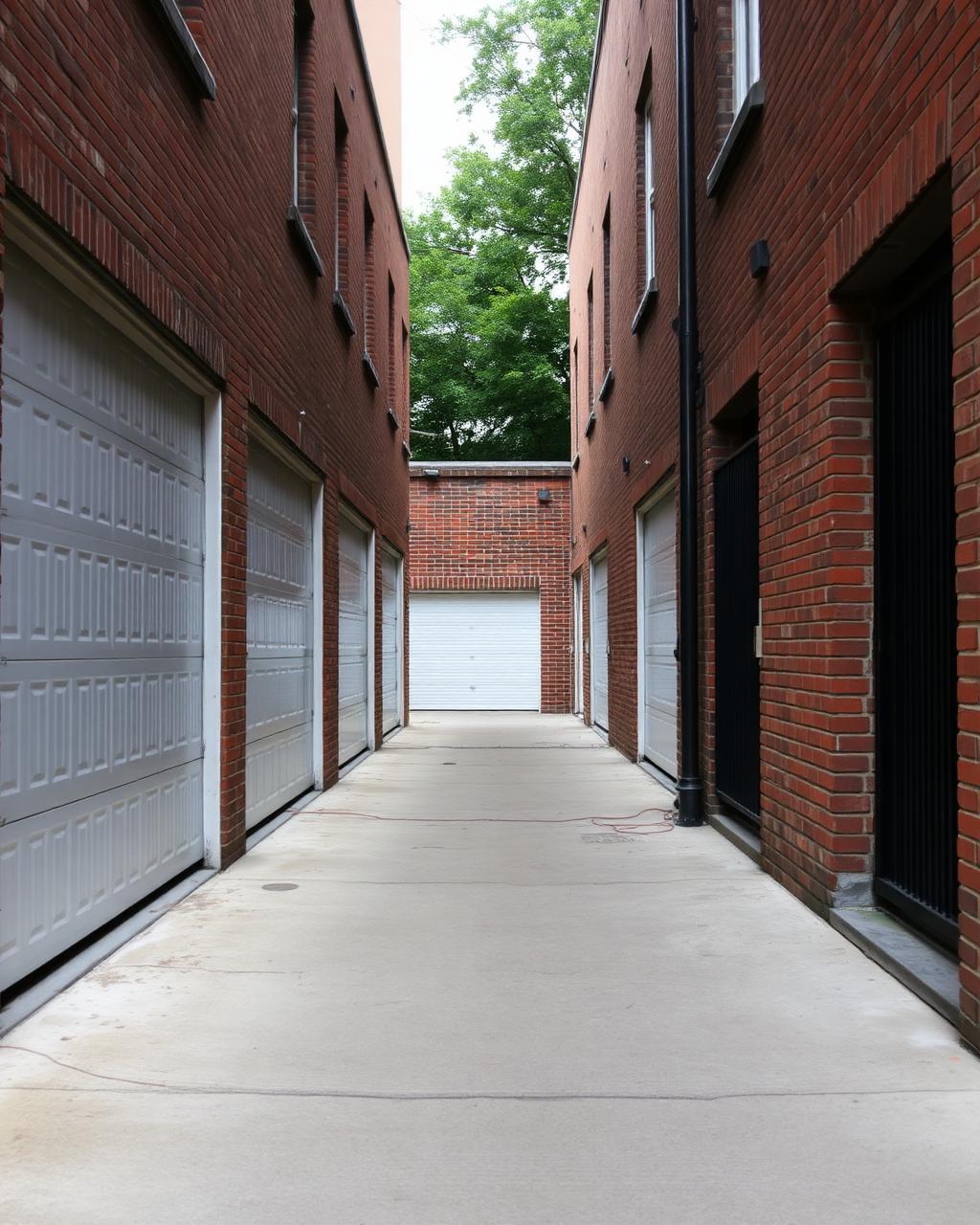
A third search comes from a Beverly homeowner typing something close to "concrete driveway repair chicago," describing an alley-facing slab that cracked again after another freeze-thaw winter — a problem tied to the alley grid behind Chicago's housing stock, not to a basement or a furnace at all.
A single flat Chicago page can't answer a flooded mechanical room, a dying furnace in a cramped two-flat basement, and a cracked alley slab with the same paragraph, because each of these homeowners is scanning results for the business that clearly already knows their specific version of Chicago housing.
Beat 02 · Chicago's neighborhoods search like distinct small cities stitched into one grid
Logan Square, Pilsen, Bridgeport and Rogers Park search like older, denser blocks; Beverly, Portage Park, Garfield Ridge and Albany Park search like the bungalow belt they actually are.
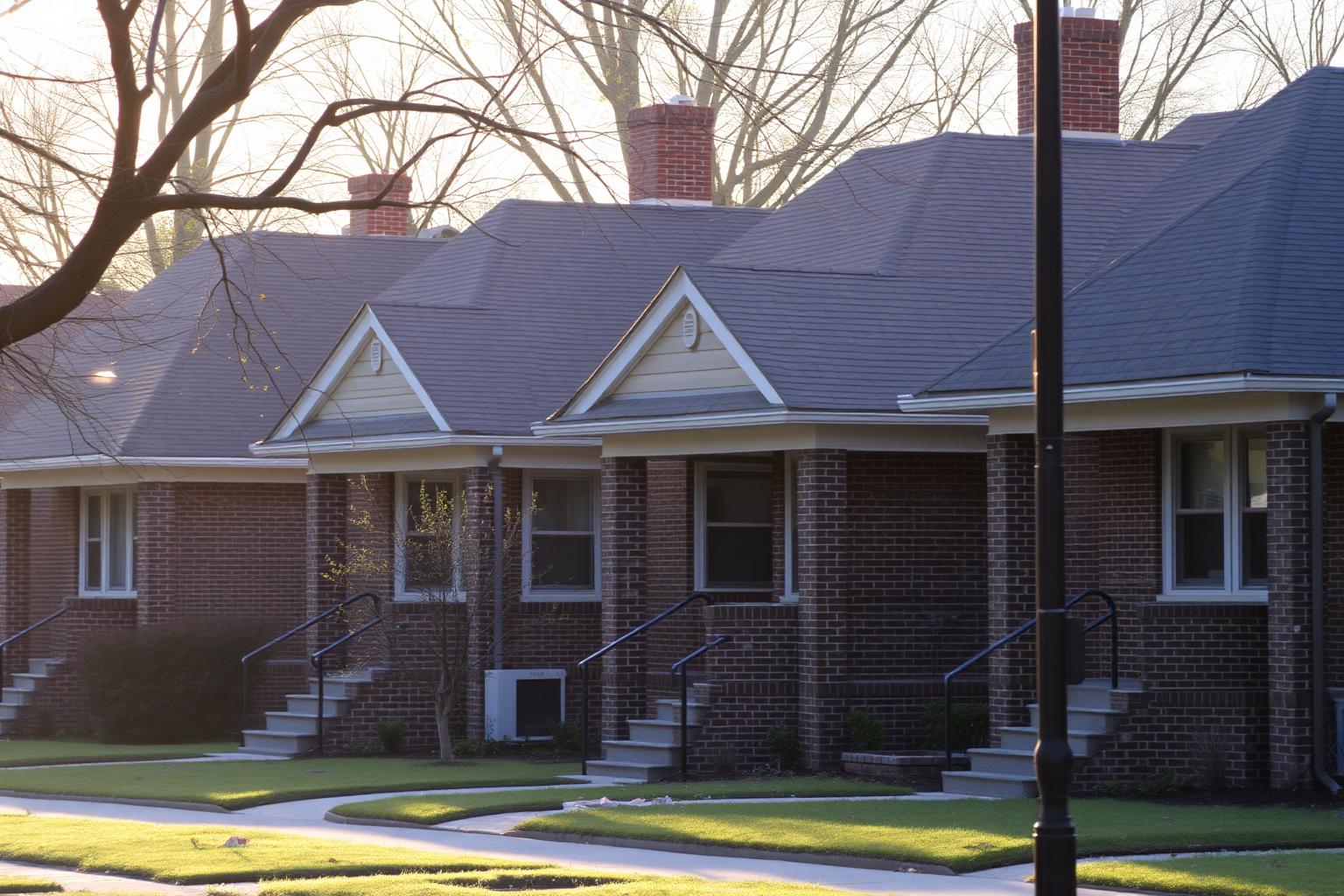
Logan Square, Pilsen and Bridgeport hold dense brick two-flats, three-flats and greystones packed tight along narrow lots, and the search behavior there tracks that density directly: shared party walls, basement mechanical rooms doing double duty as laundry and furnace space, and sewer lines original to buildings a century old. This is repair-and-maintenance demand on housing that was never built with modern trades in mind, in a market where three other crews are bidding the same job.
Move toward the bungalow belt — Beverly, Portage Park, Garfield Ridge, Albany Park — and the pattern shifts toward detached brick bungalows with real basements, real garages and real alleys behind them, generating steadier fencing, concrete and epoxy garage floor demand alongside the same furnace and sewer work that never really goes away in Cook County housing.
Then there's Rogers Park, Hyde Park and Lincoln Square, each with its own mix of vintage courtyard buildings, greystones and denser rental stock, generating a search pattern that overlaps with both the older core neighborhoods and the bungalow belt without matching either one exactly — which is exactly why a generic citywide page keeps losing these searches to whoever bothered to write for the block.
Beat 03 · Profile, proof, then a page for every corner of the grid
The sequence that wins in a market this crowded: a profile calibrated to real Chicago housing, proof from real neighborhood jobs, then pages that treat each part of the grid as its own market.
Google Business Profile carries the most ranking weight for any local trade search, and in Chicago that means categories built around the real job mix — basement plumbing and sewer backup work given real prominence for the two-flat and greystone core, furnace and AC service framed for a climate that swings hard between January cold and July humidity, fencing and concrete positioned for the alleys and garages behind bungalow-belt homes, and epoxy flooring for finished basements citywide.
Proof matters more here than almost anywhere else, because Chicago's home-services market is unusually crowded — a homeowner in Pilsen deciding between five plumbers wants to see language they recognize, and a review that reads "cleared a sewer backup in a Logan Square two-flat basement" answers a question that a generic five-star review never does, while a review from a Beverly job answers a completely different one for a bungalow-belt search.
Then the page layer: dedicated coverage for Logan Square, Pilsen, Bridgeport, Rogers Park, Beverly, Portage Park, Hyde Park, Lincoln Square, Albany Park and Garfield Ridge, each written to the housing type and search pattern that neighborhood actually has, with schema naming every neighborhood served rather than a single citywide claim that dissolves into noise against dozens of other Cook County competitors making the same claim.
Beat 04 · The fact that explains why Chicago search behaves the way it does
Chicago is a city of roughly 2.7 million people spread across Cook County's dense street grid, and that scale plus its brick housing stock and brutal seasonal swings shapes every search this page targets.
Chicago spans 77 community areas.
Chicago's housing is dominated by brick two-flats, three-flats and greystones packed onto narrow lots downtown and along the older transit corridors, giving way to detached brick bungalows across the bungalow belt neighborhoods that ring the city — Beverly, Portage Park, Garfield Ridge, Albany Park and dozens more. That mix means basement mechanical rooms, shared party walls and alley-facing garages show up in trade searches constantly, in a way a sprawling suburban market never would.
The climate compounds it: Chicago gets brutally cold Januaries that push furnace and boiler failures citywide, and humid, storm-heavy Julys that flood basements and stress AC systems just as hard, so HVAC and plumbing searches stay high nearly year-round rather than spiking once. Layer on a home-services market that's genuinely one of the most crowded in the country — dozens of plumbing, HVAC, fencing and concrete companies bidding the same neighborhood keywords — and it's clear why a generic citywide SEO approach gets buried fast.
Beat 05 · Where the ranking ends and the ad begins
Organic carries the steady stream of two-flat and bungalow repair calls across the grid; paid covers the family that needs someone this week in a neighborhood where a business hasn't built a track record yet.
A paid campaign can put a business in front of a Bridgeport homeowner the day a furnace finally quits, or in front of a Beverly family the week a driveway cracks badly enough to actually call someone. Search rankings can't move that fast — a neighborhood page for Pilsen or Rogers Park needs months of consistent signals and real local reviews before it holds a position against a genuinely crowded field — but once it's standing, it keeps producing calls from every two-flat and bungalow in that neighborhood without a fresh dollar attached to each one.
In a market as dense and competitive as Chicago, the two channels have to split deliberately: organic catches the steady, year-round repair demand from the bungalow belt and the older two-flat core, while paid catches the newer or less-established neighborhoods where a local trade's reputation hasn't caught up to the competition yet. Skip organic here and every repeat basement, furnace and fencing call drifts to whichever competitor's Google Business Profile already dominates that neighborhood's map pack; skip paid and the fast-moving jobs go to whoever bought the keyword first.
Search Engine Optimization is one of four. The Chicago Master Framework page makes the case for running all four together, and what running only one costs a Chicago service business.
Where we run seo in Chicago
Search Engine Optimization for service businesses across Chicago and Cook County, plus the satellite towns crews already drive to. Every district below is targeted by name in campaigns, pages and profile service areas — not folded into a single city radius.
- Chicago districts
- The Loop · River North · West Loop · Near North Side · Lincoln Park · Lakeview · Logan Square · Avondale · Albany Park · Irving Park · Portage Park · Jefferson Park · Norwood Park · Edison Park · Lincoln Square · Uptown · Edgewater · Rogers Park · West Town · Wicker Park · Bucktown · Humboldt Park · Pilsen · Little Village · Bridgeport · McKinley Park · Brighton Park · Garfield Ridge · Archer Heights · Beverly · Mount Greenwood · Morgan Park · Hyde Park · Kenwood · South Shore · Chatham · Auburn Gresham · Englewood · Bronzeville · Douglas · Austin · Belmont Cragin · Dunning · Hermosa · Ravenswood · North Center · Roscoe Village · Andersonville · Old Irving Park · Galewood · Clearing
- Beyond the county line
- Oak Park · Cicero · Berwyn · Evanston · Skokie · Lincolnwood · Niles · Park Ridge · Norridge · Harwood Heights · Elmwood Park · River Forest · Forest Park · Riverside · Brookfield · Burbank · Bedford Park · Evergreen Park · Oak Lawn · Blue Island · Calumet City · Dolton · Berkeley · Melrose Park · Des Plaines · Rosemont · Cook County · DuPage County · Lake County · Will County · Chicagoland
- ZIP codes covered
- 60601 · 60602 · 60603 · 60604 · 60605 · 60606 · 60607 · 60608 · 60609 · 60610 · 60611 · 60612 · 60613 · 60614 · 60615 · 60616 · 60617 · 60618 · 60619 · 60620 · 60621 · 60622 · 60623 · 60624 · 60625 · 60626 · 60628 · 60629 · 60630 · 60631 · 60632 · 60634 · 60636 · 60637 · 60638 · 60639 · 60640 · 60641 · 60642 · 60643 · 60644 · 60645 · 60646 · 60647 · 60649 · 60651 · 60652 · 60653 · 60654 · 60655 · 60656 · 60657 · 60659 · 60660 · 60661 · 60707 · 60706 · 60712 · 60302 · 60202

Beat 06 · What Chicago's scale actually proves
Chicago's dense grid of distinct neighborhoods — not a single citywide identity — is the real advantage here, if a trade business is built to compete block by block instead of hoping a generic page covers all of Cook County.
Chicago's older core — Logan Square, Pilsen, Bridgeport, Rogers Park — carries the repair demand that keeps a local trade business busy through every season: basement mechanical rooms, sewer backups after summer storms, furnaces original to buildings decades old, all set against a climate that genuinely swings between brutal winters and humid summers.
Beverly, Portage Park, Garfield Ridge and Albany Park add the bungalow-belt side of the business — fencing and concrete work around alleys and garages, epoxy garage floors, and the same furnace and plumbing demand that never really stops in Cook County — while Hyde Park and Lincoln Square carry their own mixed housing stock generating overlap demand across both patterns.
None of that fits a single citywide template, and that's the point: a city built on dense brick housing, alley-facing garages and a search market this crowded produces a search pattern that only pays off when it's broken down neighborhood by neighborhood. Extentus builds the Chicago search layer around that reality — categories that match the real housing mix, proof drawn from real jobs across specific neighborhoods, and coverage across the bungalow belt and the older core alike, all working as one coordinated system instead of a single generic citywide page competing against dozens of others just like it.
SEO in Chicago — questions, answered
Because the housing stock and the resulting search intent are genuinely different. Pilsen, Logan Square and Bridgeport hold dense two-flats and three-flats with shared basements and aging sewer lines, so searches there skew toward basement plumbing and backup repair. Beverly and Portage Park are bungalow-belt neighborhoods with detached homes, garages and alleys, so their searches skew toward fencing, concrete and epoxy garage floors. A single citywide page misses the buying moment for both.
Yes. Chicago swings between brutally cold Januaries and humid, storm-heavy Julys, so furnace and air conditioning searches stay strong for most of the year instead of spiking in just one season. A local SEO strategy that only builds around winter heating keywords leaves a huge share of summer AC and humidity-related demand uncaptured.
Yes, because Chicago's home-services market is unusually crowded, and a generic citywide page competes against dozens of other businesses making the same broad claim. Dedicated pages for neighborhoods like Rogers Park, Hyde Park, Lincoln Square and Albany Park let a business speak directly to that area's housing type and search pattern, which is what actually earns map pack visibility on a block-by-block level.
The rest of the Chicago set
- Google Ads
Google Advertising in Chicago
The channel built for the biggest, most expensive paid-search market in the region. Local Services Ads carry the licensed trades, the radius segments down to individual neighborhoods instead of spreading across all of Cook County at once, and spend concentrates on the moments that actually convert — a frozen pipe in a Logan Square two-flat, a dead furnace in a Bridgeport bungalow basement, a no-cooling call from a Lakeview high-rise in July — rather than chasing every impression in an auction big enough to swallow an unfocused budget whole.
Open page - Social Ads
Social Advertising in Chicago
The Chicago channel built to create intent block by block: Facebook, Instagram and TikTok campaigns targeted by ZIP and neighborhood — from the bungalow belt on the Northwest and Southwest Sides to Lincoln Park condo towers to the inner-ring Cook County suburbs — showing real finished porches, fences, epoxy garage floors and rooftop decks to the exact household staring at the unfinished version.
Open page - Web Design
Web Design in Chicago
Sites structured for Chicago's scale: neighborhood and service-area pages built for a 77-community grid, mobile-first layouts for a city that searches from the platform and the bus stop, condo-board and property-manager pages next to single-family bungalow pages, license and permit language for a regulation-aware buyer, and a winter-emergency front door that swaps to summer-project mode without a rebuild.
Open page - All four — recommended
The Master Framework in Chicago
All four channels, installed together for a metro defined by scale, competition and two hard seasonal peaks — sub-zero January emergencies and humid July cooling and outdoor-project demand. One strategy across SEO, Google advertising, social advertising and web design, tuned to Chicago's dense neighborhood grid, its Cook County inner ring, and the old brick housing stock that drives basement, alley and exterior work, with one accountable number instead of four separate vendors.
Open page