Chicago, Illinois
Web Design and SEO in Chicago, Illinois — A Metro of Millions, Won One Neighborhood at a Time
Chicago is not a market you win with a citywide campaign. It is seventy-seven community areas of brick two-flats, greystones and bungalows sitting on one enormous grid, and demand here arrives twice a year — once when it is below zero and once when it is ninety and humid.
Five dedicated Chicago pages
Each discipline has its own Chicago page — its own local search data, its own market detail, its own URL.
- SEO
Search Engine Optimization in Chicago
The trade that claims a Chicago neighborhood before the next competitor with a citywide ad budget notices how localized the search behavior really is. A Google Business Profile built around Chicago's real job mix — basement mechanical room plumbing and sewer backup work in the bungalow belt, furnace and AC service split across brutal January cold and humid July heat, fencing and concrete for the alleys and garages behind two-flats and three-flats, and epoxy flooring for finished basements from Logan Square to Garfield Ridge — paired with neighborhood pages for Pilsen, Rogers Park, Beverly, Portage Park, Hyde Park, Lincoln Square and Albany Park separately, gives a local crew a fighting chance in a market this dense and this crowded.
Open page - Google Ads
Google Advertising in Chicago
The channel built for the biggest, most expensive paid-search market in the region. Local Services Ads carry the licensed trades, the radius segments down to individual neighborhoods instead of spreading across all of Cook County at once, and spend concentrates on the moments that actually convert — a frozen pipe in a Logan Square two-flat, a dead furnace in a Bridgeport bungalow basement, a no-cooling call from a Lakeview high-rise in July — rather than chasing every impression in an auction big enough to swallow an unfocused budget whole.
Open page - Social Ads
Social Advertising in Chicago
The Chicago channel built to create intent block by block: Facebook, Instagram and TikTok campaigns targeted by ZIP and neighborhood — from the bungalow belt on the Northwest and Southwest Sides to Lincoln Park condo towers to the inner-ring Cook County suburbs — showing real finished porches, fences, epoxy garage floors and rooftop decks to the exact household staring at the unfinished version.
Open page - Web Design
Web Design in Chicago
Sites structured for Chicago's scale: neighborhood and service-area pages built for a 77-community grid, mobile-first layouts for a city that searches from the platform and the bus stop, condo-board and property-manager pages next to single-family bungalow pages, license and permit language for a regulation-aware buyer, and a winter-emergency front door that swaps to summer-project mode without a rebuild.
Open page - All four — recommended
The Master Framework in Chicago
All four channels, installed together for a metro defined by scale, competition and two hard seasonal peaks — sub-zero January emergencies and humid July cooling and outdoor-project demand. One strategy across SEO, Google advertising, social advertising and web design, tuned to Chicago's dense neighborhood grid, its Cook County inner ring, and the old brick housing stock that drives basement, alley and exterior work, with one accountable number instead of four separate vendors.
Open page

Chicago is the third-largest city in the United States, the core of a Cook County metro of roughly nine million people, and the single most contested local-services auction in the Midwest. Plumbing, HVAC, fencing, concrete and epoxy flooring companies here are not competing with three other firms — they are competing with hundreds, many of them buying the same clicks in the same ZIP codes on the same January morning.
Extentus runs search, Google advertising, paid social and web design as one installed system instead of four separate contracts. In a market this large and this expensive, the compounding between channels is not a nice-to-have; it is the only thing that keeps a cost per lead survivable.
What makes the Chicago market distinct
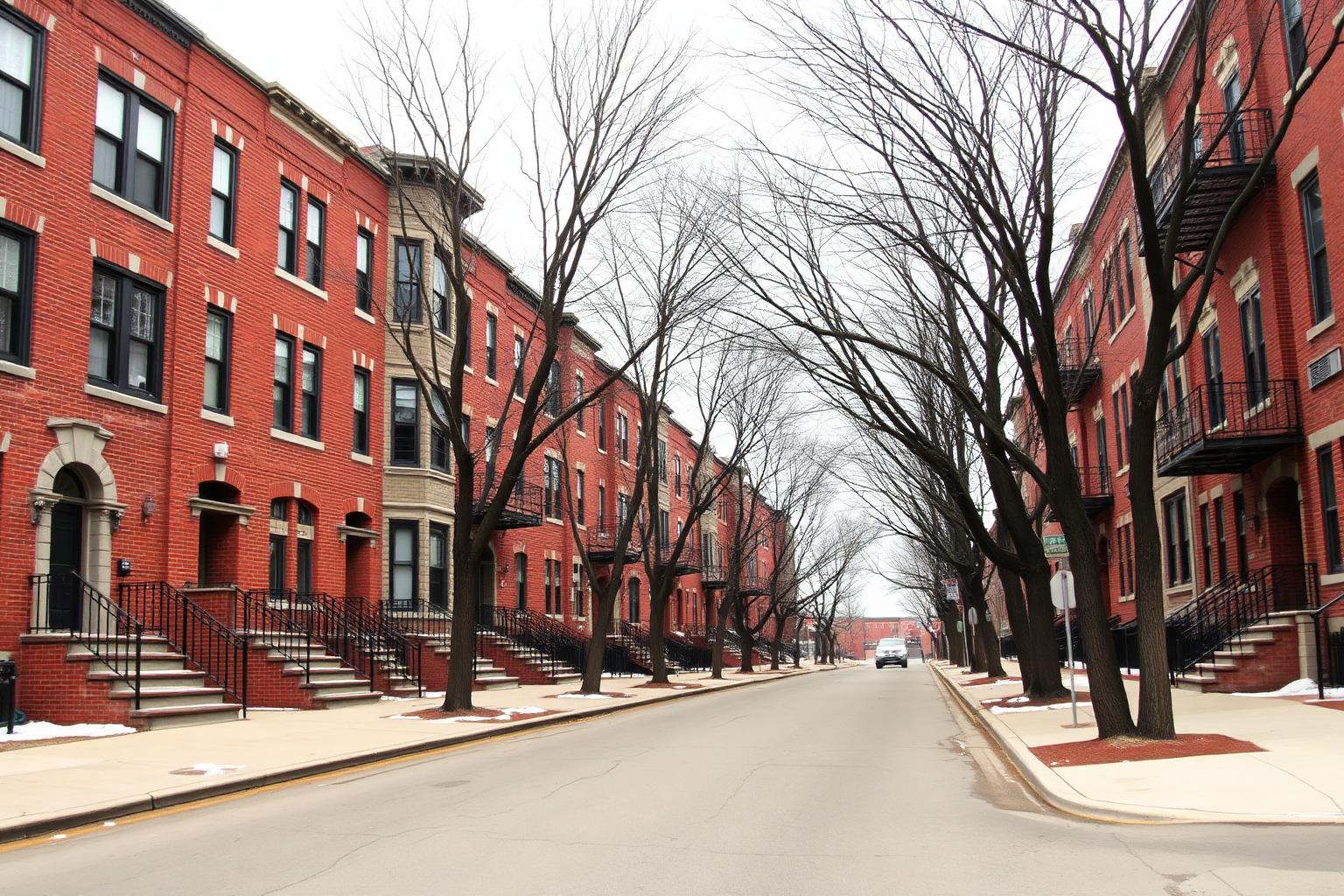
Three things separate Chicago from every other city in this rollout. First, housing type: much of the city is brick two-flats, three-flats, greystones and bungalows on narrow lots served by rear alleys and detached garages, with basements holding the furnace, the water heater and the sewer line. That changes the work — fencing runs along shared lot lines, concrete work is alley aprons and back stairs as often as driveways, epoxy floors go into small detached garages, and plumbing calls are basement calls. Second, climate: sub-zero January stretches and humid ninety-degree July weeks create two separate emergency peaks, heating and cooling, roughly equal in weight. Third, scale of competition: the sheer number of established local operators means nothing here is won on effort alone.
Search: the volume is real, and so is the difficulty
Chicago head terms carry genuine monthly volume and genuinely defended positions. That combination means the organic strategy is neighborhood and trade depth rather than a single citywide page — Logan Square, Albany Park, Bridgeport, Hyde Park, Garfield Ridge, Lincoln Square, Beverly, Rogers Park and the inner-ring suburbs each behave like their own local market with their own housing stock and their own price expectations.
Google advertising: expensive clicks that punish sloppy targeting
Emergency trade clicks in Chicago are among the most expensive local clicks in the country, and a flat citywide radius quietly funds competitors. Campaigns get split by geography and by urgency: no-heat and frozen-pipe intent in January, no-cooling and storm-related sewer backup intent in July, project work in the shoulder seasons, with Local Services Ads carrying the qualified emergency demand where trades qualify.
Social advertising: demand creation at metro scale
Nobody in Chicago searches for a fence in February. Paid social is where deck, porch, fence, concrete and epoxy demand is created ahead of the season, built against tight neighborhood audiences instead of a metro-wide blur, and used to retarget every visitor the other three channels produce.
Web design: the thing that decides whether the spend works
Chicago buyers arrive on a phone, often outside, often in a hurry, often in bad weather. Sites are built to load fast, answer the service-and-neighborhood question immediately, and convert an emergency call in one tap — with the depth of service-area structure a grid this large requires and the trust signals a crowded market demands.
How the four channels compound in Chicago
Organic and site quality lower the price of paid clicks. Paid search buys immediate emergency volume while organic depth is built out neighborhood by neighborhood. Paid social creates the seasonal project demand that search alone never captures. One team, one ledger, one accountable party — which is exactly what four separate vendors in a market this expensive cannot produce.
The Chicago attribution advantage
At Chicago click prices, unattributed spend is the fastest way to lose a budget. Every qualified inbound is sorted by channel, by neighborhood and by the page that produced it, so budget can move between paid and organic as the calendar turns from January emergencies to summer projects.

The four services Extentus runs in Chicago
- Search Engine Optimization
- The channel you own — map-pack rankings, reviews and service-area pages that keep producing after the work is done.
- Google Advertising
- The channel with a volume dial — paid search and Local Services Ads tuned to the hours demand actually spikes.
- Social Advertising
- The channel that builds the pipeline — demand created in homeowners before they ever search.
- Web Design
- Where the other three cash out — fast, mobile-first pages built to convert visits into booked jobs.
Install all four in Chicago
One framework, one accountable record: qualified inbound by channel and by Chicago district, cost per qualified inbound, and the exact pages responsible.
Chicago marketing questions, answered
Because hundreds of established operators are bidding on the same emergency intent across the same dense grid. The fix is not a bigger bid — it is tighter geography, urgency-split campaigns, and enough organic and site strength that paid does not have to carry every lead.
Rarely. Chicago's 77 community areas differ sharply in housing type, lot size and price expectation, so a single citywide radius spends most of its budget on the wrong households. Neighborhood-level structure across search, ads and social is what makes the numbers work.
It creates two peaks instead of one. Sub-zero January stretches drive no-heat, frozen-pipe and burst-line demand, while humid July drives cooling failures and storm-driven basement backups. Budget is seasoned to both, with fencing, concrete and epoxy project demand built in the shoulder months.