Charleston · Web Design
Web design in Charleston: the page is read on a phone, outdoors, usually while something is already wrong.
Standing in a yard with a soaked crawl space, a leaning fence or a dead condenser, nobody reads a company history. They look for whether you handle this, whether you come to their town, roughly what it costs, and how fast. A site that answers those four things in ten seconds wins the call.
The short answer
Web design in Charleston, South Carolina should be treated as conversion infrastructure, not decoration. That means a site that loads quickly on a phone outdoors, answers four questions immediately — do you do this work, do you come to my town, what does it roughly cost, how soon — and states coastal specifics plainly: salt-air equipment life, elevated crawl spaces and dehumidification, storm-damage repair queues, architectural review on protected streets, and sandy-soil drainage. Structured content with named towns across Charleston, Berkeley and Dorchester counties gives search and AI answer engines something exact to cite.
Beat 01 · The reading conditions decide the design
This site gets read in bright sun, on cellular, one-handed.
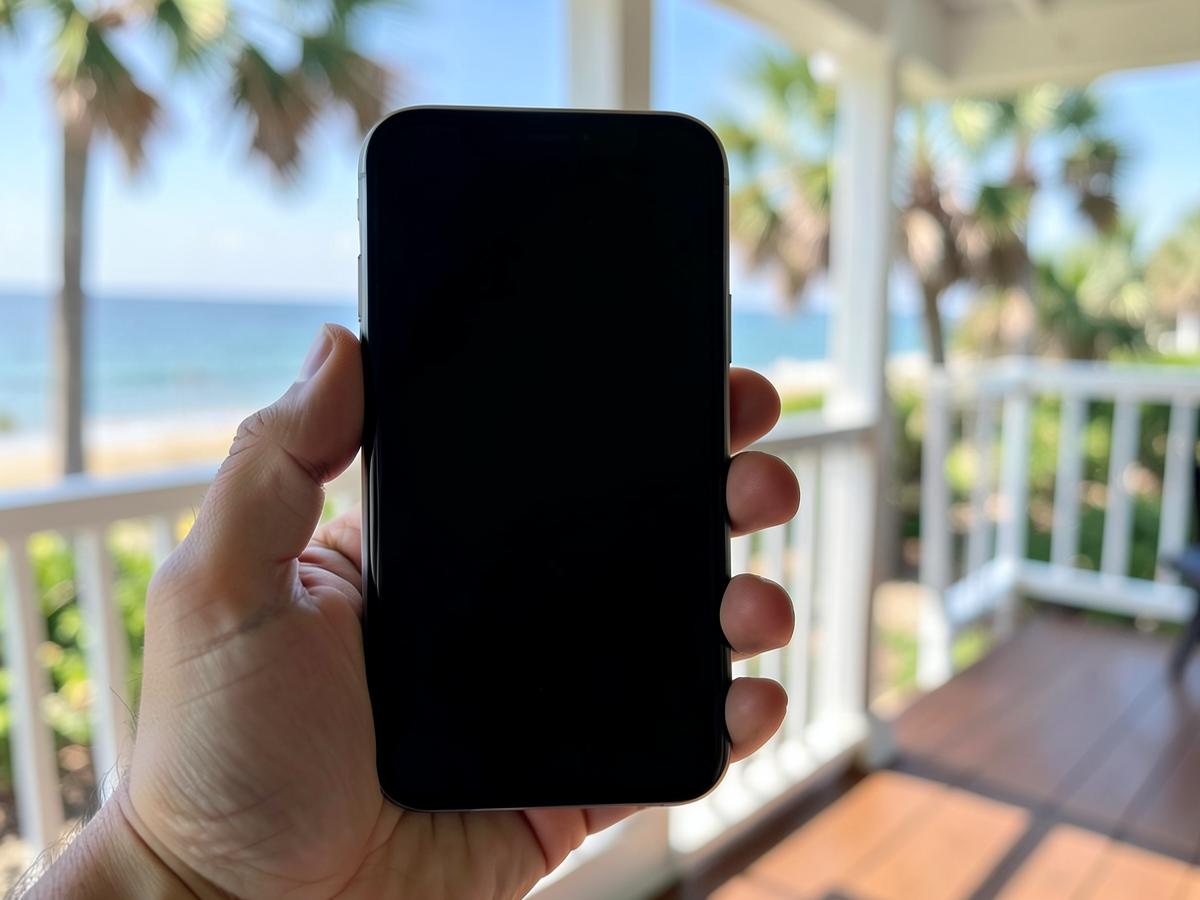
The typical Charleston service visit does not happen at a desk. It happens in a yard, a driveway or a crawl-space doorway, on a phone, in glare, often on a network that is not fast, and usually with a problem already in progress.
That rules out a great deal of common design practice: full-screen video, slow hero animation, a menu that hides the phone number, a contact form four taps deep, body text at a size that needs pinching. None of these fail on a designer's monitor; all of them fail in a driveway.
So the build starts from the constraint. Large legible type, high contrast, the phone number persistent, the request form immediate, images compressed hard, and no decorative weight that delays the first paint.
Beat 02 · The shift: from brochure to answer
Say what you do, where you go, what it costs, and how fast.
Most local sites describe the business. The visitor wants an answer about themselves. Replacing adjectives with specifics is nearly always the single largest conversion gain available, and it costs nothing but honesty.
In this market the specifics are coastal. Whether you handle equipment that failed early from salt exposure. Whether you work under a raised house and what dehumidification you install. Whether you are on a storm repair queue and how long it currently is. Whether you know what architectural review requires on a protected street. Whether you drive to Johns Island, Folly Beach or Moncks Corner, and what that adds.
Publishing a price band is the part most businesses resist and the part that works hardest. A household comparing three companies on a phone will call the two that gave a range and skip the one that made them fill in a form to find out.
Beat 03 · Mechanism: speed, structure, proof
Three properties, and they are all measurable.
Speed first, because it multiplies everything else. Compressed and correctly sized images, minimal script, fast first render, no layout shift as the page settles. On cellular in a yard, the difference between two seconds and six is most of the conversion rate.
Structure second. Real headings, a page per service and a page per town rather than one page trying to be everything, marked-up business data, service and FAQ structure, and text that answers questions in complete sentences so an answer engine can quote it directly instead of paraphrasing a competitor.
Proof third. Photographs of actual local work — a raised crawl space, a repaired fence line, a poured driveway on sand, a coated garage floor — named people, reviews that mention the town, stated scope with exclusions, and a published band. Proof is what converts the traffic the other three channels are paying to deliver.
Beat 04 · The number
10
Ten seconds is the whole budget. That is roughly how long a household standing in a yard with a problem will spend deciding whether this site is worth a call.
Inside those ten seconds the page must load, state the service, name the area, show a real photograph, and put a phone number and a form within reach. Anything else on the page is competing with the only job the page has.
Every channel decision downstream multiplies against whatever happens in those ten seconds. Improve them once and search, paid and social all get more valuable at the same time without a single extra dollar of spend.
Beat 05 · The contrast
A slow, beautiful site that never says where it works.
It opens with a video of a coastline. It hides the phone number in a hamburger menu. It lists services in a column with no scope, no exclusions and no numbers. It shows renderings instead of jobs. It never names Mount Pleasant, Summerville, Goose Creek or Johns Island, and it never mentions salt, elevation, storm queues or review boards.
So it earns clicks from three channels and converts poorly on all of them, which reads in reports as an advertising problem and gets treated by buying more clicks.
The fix is unglamorous: make it fast, make it specific, publish the numbers, name the towns, show the work.
Web Design is one of four. The Charleston Master Framework page makes the case for running all four together, and what running only one costs a Charleston service business.
Where we run web design in Charleston
Web Design for service businesses across Charleston and Charleston County, plus the satellite towns crews already drive to. Every district below is targeted by name in campaigns, pages and profile service areas — not folded into a single city radius.
- Charleston districts
- South of Broad · French Quarter · Ansonborough · Harleston Village · Radcliffeborough · Cannonborough-Elliotborough · Elliotborough · Wraggborough · Mazyck-Wraggborough · Hampton Park Terrace · Wagener Terrace · North Central · Westside · Downtown Charleston peninsula · Upper King Street corridor · West Ashley · Avondale · Byrnes Downs · Ashley Forest · Shadowmoss · Citadel Mall area · James Island · Riverland Terrace · Harbor View · Johns Island · Daniel Island · Cainhoy · Park Circle · Olde North Charleston · North Charleston industrial corridor
- Beyond the county line
- Mount Pleasant · Sullivan's Island · Isle of Palms · Folly Beach · Kiawah Island · Seabrook Island · North Charleston · Hanahan · Goose Creek · Ladson · Summerville · Moncks Corner · Cane Bay · Nexton · Carnes Crossroads · Ridgeville · Awendaw · McClellanville · Ravenel · Hollywood · Meggett · Adams Run · Edisto Island · Wadmalaw Island · Bonneau · Cordesville · Huger · Jedburg · Knightsville · Lincolnville · Harleyville · St. Stephen · Charleston County · Berkeley County · Dorchester County · the Lowcountry · Charleston Harbor · Ashley River · Cooper River · Wando River · Stono River · Intracoastal Waterway · I-26 corridor · US 17 corridor · Highway 78 corridor
- ZIP codes covered
- 29401 · 29403 · 29405 · 29407 · 29409 · 29412 · 29414 · 29418 · 29424 · 29425 · 29455 · 29464 · 29466 · 29492 · 29403 · 29406 · 29410 · 29420 · 29429 · 29439 · 29451 · 29482 · 29483 · 29485 · 29486 · 29445 · 29456 · 29461 · 29470 · 29487 · 29431 · 29437 · 29448 · 29449 · 29453 · 29468 · 29472 · 29477 · 29479
Beat 06 · Charleston close
In this metro the website is the cheapest thing to fix and the most expensive thing to leave broken.
Charleston households are comparison shoppers with plenty of options and, during storm weeks, very little patience. Growth-ring subdivisions are full of first-time buyers of every trade service, and they judge quickly on very little information.
Extentus builds the site as the conversion layer under everything else: fast on a phone, honest about scope and cost, structured for search and answer engines, and specific about the coastal conditions this market actually lives with.
Fix it once and every dollar the other three channels spend afterward is worth more.
Web Design in Charleston — questions, answered
Speed on a phone and specificity. Most visits happen outdoors on cellular while a problem is in progress, so the page must render fast and immediately answer whether you do this work, whether you come to their town, roughly what it costs and how soon. A published price band and real photographs of local work outperform any amount of visual polish.
Yes, for the towns you genuinely serve. Mount Pleasant, West Ashley, James and Johns Islands, North Charleston, Summerville and the Berkeley County corridors behave as separate markets with different housing and different drive times. An honest page per area that states the drive and shows work done in that kind of house beats one page listing every community.
By answering questions in complete, self-contained sentences and marking the page up properly. Clear headings, a page per service and per area, business and service structured data, an FAQ block with real answers, and explicit coastal detail — salt-air equipment life, raised crawl spaces, storm repair timelines, architectural review — give an answer engine something exact to quote instead of a competitor's summary.
The rest of the Charleston set
- SEO
Search Engine Optimization in Charleston
Charleston is a working port and a tourism economy wrapped around a preserved historic peninsula, with aerospace and manufacturing payroll in North Charleston and Ridgeville and one of the fastest-growing suburban rings in the Southeast. Extentus builds a search footprint on the coastal vocabulary people actually type here and the towns they name instead of the city.
Open page - Google Ads
Google Advertising in Charleston
Paid search in Charleston is a timing problem before it is a budget problem. Extentus runs the urgent hours hard, segments bids by county and bridge crossing, and points every expensive click at a page built for that exact job rather than a homepage.
Open page - Social Ads
Social Advertising in Charleston
Charleston's growth ring produces a constant supply of households with no established providers, and a coastal calendar that makes some months far more persuasive than others. Extentus runs social advertising against both — new-mover acquisition and seasonal timing — and retargets everyone search and paid brought in.
Open page - All four — recommended
The Master Framework in Charleston
Search, paid search, social advertising and the website are one system in Charleston or they are four bills. Extentus installs all four against one number set, with spend that shifts between them around the coastal calendar rather than spread evenly across twelve months.
Open page