Miami-Dade — Web Design
Web design in Miami: the multiplier every other channel has to land on
Whether you run a plumbing company, an HVAC business, a fencing or concrete crew, or any local service company in Miami, every ranking, every expensive click and every social impression arrives at the same page. If that page is slow on cellular, English-only, or buries the phone number, you are paying Miami prices to lose people at the door.
The short answer
Web design in Miami for a home service business means a fast, mobile-first, bilingual site that puts click-to-call and a short quote form in front of every visitor, separates emergency paths from planned-project paths, proves the work with recognisable Miami-Dade job photos, and carries LocalBusiness, Service and FAQ schema so Google and AI answer engines can cite the business by name.
A dying phone battery on a hot sidewalk
Little Havana doesn't wait five seconds for your hero slider.
A homeowner in Little Havana has a leak under the sink and a phone at 12% battery. They tap your listing. If the page takes five seconds to paint, or the number is a tiny link in a footer, or the first thing they see is a hero slider about your commitment to excellence, they are back in the search results before your logo finishes loading.
That is the entire job of the site. Not to impress a designer, not to win an award — to answer one question in the first screen: can this business handle my problem, in my language, right now, and how do I make it happen in one tap?
In Miami this is unforgiving in a specific way. Traffic here is overwhelmingly mobile, often on congested cellular, frequently in Spanish, and the competitor whose page loads faster gets a call that your SEO or your paid budget already paid for.
Two languages, one hurricane code, zero patience
A page that only speaks English is invisible to half the county.
Home service traffic is not e-commerce traffic. There is no browsing session, no cart, no return visit two weeks later for most emergency work. There is a single decision, usually on a phone, usually in the first ten seconds — which is why trade sites are built around a fixed click-to-call header, an obvious after-hours path, and a short quote form rather than a long contact page.
Miami adds language. A site that exists only in English is invisible to a large share of a county where a majority of households speak Spanish at home. That does not mean a translation plugin; it means a real bilingual structure — proper language paths, native copy on the pages that matter, and a visible signal that the phone will be answered in Spanish.
Miami also adds proof requirements. This is a market with a long memory of unlicensed work and post-storm contractor churn, so licence numbers, insurance, permit language and Miami-Dade product-approval awareness are conversion elements, not legal footnotes. A fencing or window company that shows it works to High-Velocity Hurricane Zone standards closes at a different rate than one that does not mention it.
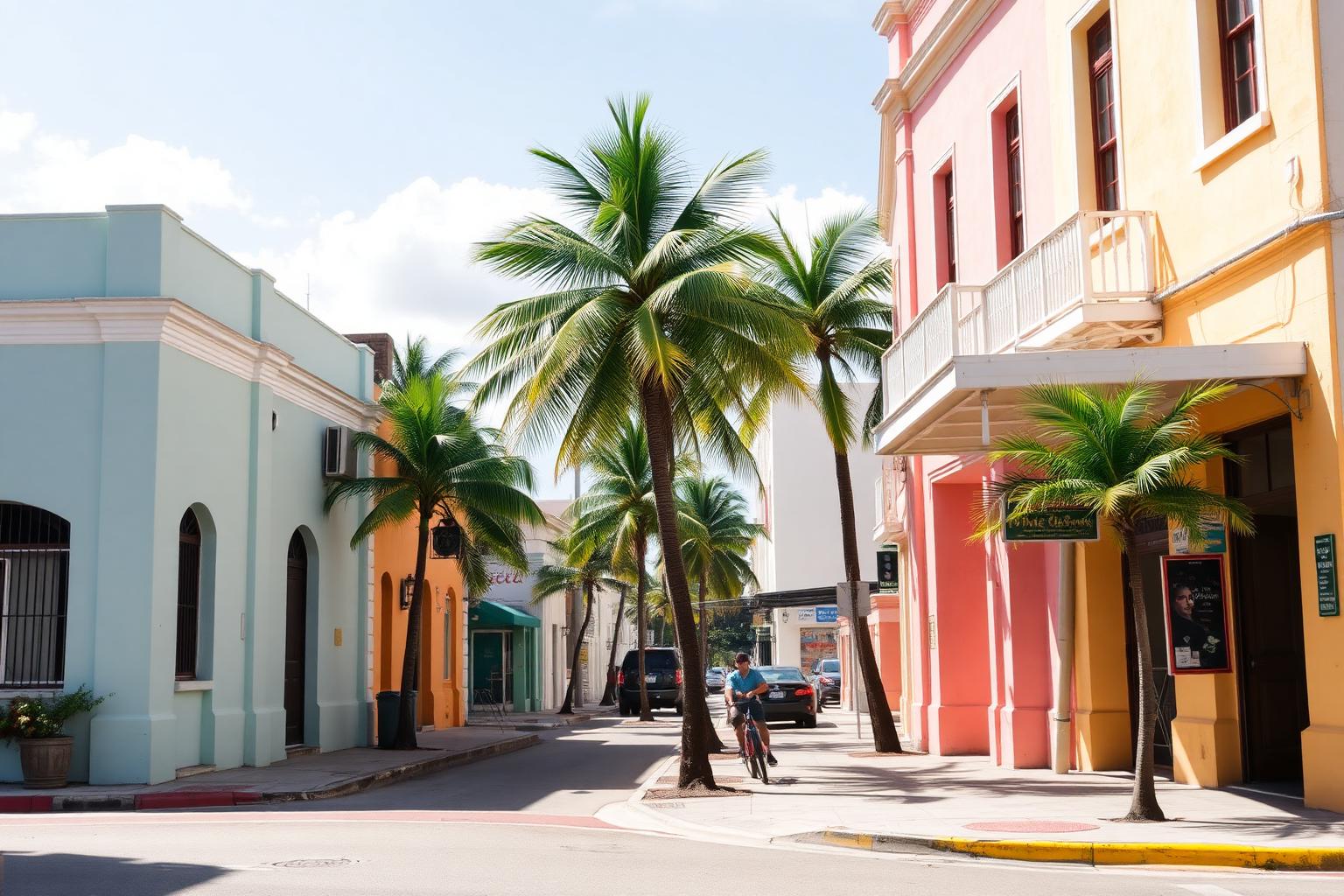
And it adds one more: recognisability. A homeowner in Coral Gables trusts a gallery of Coral Gables jobs. Generic stock photography of a smiling technician in a snow-free suburb that could be anywhere reads as a franchise landing page — which is exactly what your listing is competing against.
Under the hood
Speed, split paths, bilingual copy, and markup an AI can quote.
Speed first, because it is the one thing that cannot be retrofitted cheaply: server-rendered pages, compressed and correctly sized images, no bloated page-builder stack, and Core Web Vitals measured on a throttled mobile connection rather than a desktop score.
Then the conversion architecture. A fixed header with a tap-to-call number on every screen. Two clearly separated paths — emergency now, and quote for a planned project — because a burst pipe and a paver driveway are different buyers. Short forms that ask for the address, the problem and a phone number, nothing more. Service-area and neighborhood pages with real detail: the streets and municipalities you cover, drive times, jobs completed there.
Then proof: job photography from recognisable Miami neighborhoods, review content pulled through from the Google profile, licence and insurance details visible, and plain language about permits and approved products for the trades where that decides the sale.
Then the bilingual layer, built properly — parallel English and Spanish paths with correct language markup, native copy rather than machine translation, and forms and calls-to-action translated including the confirmation screens.
Then the machine-readable layer, which increasingly decides whether you exist at all: LocalBusiness and ProfessionalService schema with real Miami-Dade geography, Service schema per offering, FAQ schema on genuine questions, and a clean crawl structure so Google's AI overviews and other answer engines can quote the page and name the business.
A rebuild pays for itself in a quarter
Turning 4% into 7% is cheaper than buying more clicks.
If your site converts 4% of visits into calls and a rebuild takes it to 7%, every ranking and every paid click you already pay for produces roughly three-quarters more work — with no increase in spend at all.
Conversion rate is a multiplier on everything else, and in Miami everything else is expensive.
Run that against a Miami paid budget where individual emergency clicks cost real money and the arithmetic is blunt: the site pays for itself out of the ad account, often inside a quarter, before you count a single organic call.
The bilingual layer often has the largest single effect, because it is not a percentage improvement on the same audience — it is access to a share of the county that previously bounced. In a market where Spanish-language search is cheaper and less contested, having somewhere for that traffic to land is the difference between a discount and a dead end.
A pretty site with no visitors is a business card
The site converts what the other three channels send it, nothing more.
SEO earns the visit. Google advertising buys the visit. Social advertising creates the interest that leads to the visit. Web design decides what happens next — which makes it the only channel whose improvement raises the return on all three at once, and the only one that produces nothing on its own.
A beautiful Miami site with no traffic is a business card. Traffic pointed at a slow, English-only site is a subsidy to your competitors. This is precisely why the four are installed together rather than bought separately, and the Miami framework page makes the full argument.
Web Design is one of four. The Miami Master Framework page makes the case for running all four together, and what running only one costs a Miami service business.
Where we run web design in Miami
Web Design for service businesses across Miami and Miami-Dade County, plus the satellite towns crews already drive to. Every district below is targeted by name in campaigns, pages and profile service areas — not folded into a single city radius.
- Miami districts
- Brickell · Downtown Miami · Little Havana · Wynwood · Little Haiti · Allapattah · Coconut Grove · Coral Gables · Westchester · Kendall · Pinecrest · Palmetto Bay · Cutler Bay · Miami Shores · Key Biscayne
- Beyond the county line
- Hialeah · Doral · Miami Beach · Miami Lakes · Miami Gardens · Aventura · Homestead · Sweetwater · Miami Springs · Broward County
- ZIP codes covered
- 33125 · 33126 · 33127 · 33130 · 33131 · 33133 · 33134 · 33135 · 33137 · 33139 · 33143 · 33144 · 33145 · 33146 · 33155 · 33156 · 33165 · 33172 · 33176 · 33186
Built for hurricane season and a bilingual county
The site has to survive the exact week your competitors are also overwhelmed.
Two local realities shape how these sites are built. The first is the season: from June through November, the days that matter most are the days when a system is offshore, power is unreliable, and traffic spikes on mobile with people scrolling on battery savers. A site that needs three seconds and a strong signal fails on exactly the days your competitors are also overwhelmed.
The second is code and trust. Miami-Dade enforces the strictest wind-load standards in the country, so homeowners buying fences, shutters, windows and roof work are shopping for compliance as much as price. Sites that make permits, approvals and licensing legible convert better here than sites that lead with slogans, and they give AI answer engines concrete, quotable facts to cite when someone asks which Miami contractor handles impact-rated work.
Extentus builds Miami sites as conversion infrastructure — fast, bilingual, click-to-call, proof-heavy and fully structured — then reports the number that matters: conversion rate by traffic source, and cost per booked job across all four channels.
Web Design in Miami — questions, answered
Speed on a mobile connection, a tap-to-call number fixed to every screen, and a first screen that names the trade, the service area and the response time. After that: separate paths for emergencies and planned projects, short forms, real Miami-Dade job photography, visible licence and insurance details, and a genuine Spanish path. Design polish matters, but it never outranks a page that loads fast and makes the call obvious.
In most cases yes. A clear majority of Miami-Dade residents speak Spanish at home, and Spanish-language search for trade work is real and less contested than the English equivalent. A proper bilingual build means parallel language paths with correct markup and natively written copy — not a translation widget — and it only pays off if the phone is answered in the same language the visitor came in with.
Substantially. AI overviews and assistants quote pages they can parse and verify, so the structural work decides whether you get cited: LocalBusiness and ProfessionalService schema with real Miami-Dade geography, Service schema per offering, FAQ schema on genuine questions, clean headings, and concrete specifics — neighborhoods served, licence details, permit and product-approval practice. Vague marketing copy gives an answer engine nothing to quote; a page that states checkable facts about Miami work gets named.
The rest of the Miami set
- SEO
Search Engine Optimization in Miami
The channel you own. Google Business Profile, bilingual Miami-Dade service-area pages and review velocity, built so Miami searches for your trade land on you instead of a franchise.
Open page - Google Ads
Google Advertising in Miami
The channel you rent, on purpose. Emergency intent, storm-day budget rules and Local Services Ads verification, targeted by ZIP across Miami-Dade instead of one blunt radius.
Open page - Social Ads
Social Advertising in Miami
The channel that creates demand. Bilingual Meta and TikTok creative shot on your own Miami job sites, aimed by neighborhood at the households who buy planned projects.
Open page - All four — recommended
The Master Framework in Miami
The whole argument. Why one channel cannot cover a 2.7-million-person county at Miami prices, and how SEO, Google Ads, social and web design compound as one engagement.
Open page