Ready to advertise in Miami?
Call now — 385-985-0003Miami-Dade — Google Advertising
Google Ads in Miami: buying the emergency hour in the state's most expensive auction
Miami's paid search auction is the priciest in Florida, so precision is the entire discipline. A plumbing company, an HVAC business, a fencing or concrete crew, or any local service business needs Google advertising to buy the 10pm burst pipe and the day after a storm passes, at a cost per booked job it can actually defend.
The short answer
Google advertising in Miami means paying for the highest-intent moments — emergency repair searches, storm-damage demand and same-day service — while SEO carries the baseline. Extentus builds ZIP-level campaigns across Miami-Dade, completes Local Services Ads and Google Screened verification, runs bilingual ad copy, and prices performance in cost per booked job rather than clicks.
A pipe lets go
A supply line fails at 10:40pm in Coral Gables and the clock starts.
Water is moving across a tile floor. Nobody is reading a blog post, comparing warranties or scrolling social. They search, they tap the first number that looks like it answers, and the job is sold in under a minute — often at a premium, because the alternative is drywall replacement.
That is the moment Google advertising exists to buy. In Miami it is not one moment a night; across 2.7 million Miami-Dade residents it is hundreds of them, spread from Aventura down to Homestead, and they do not wait for your organic rankings to mature.
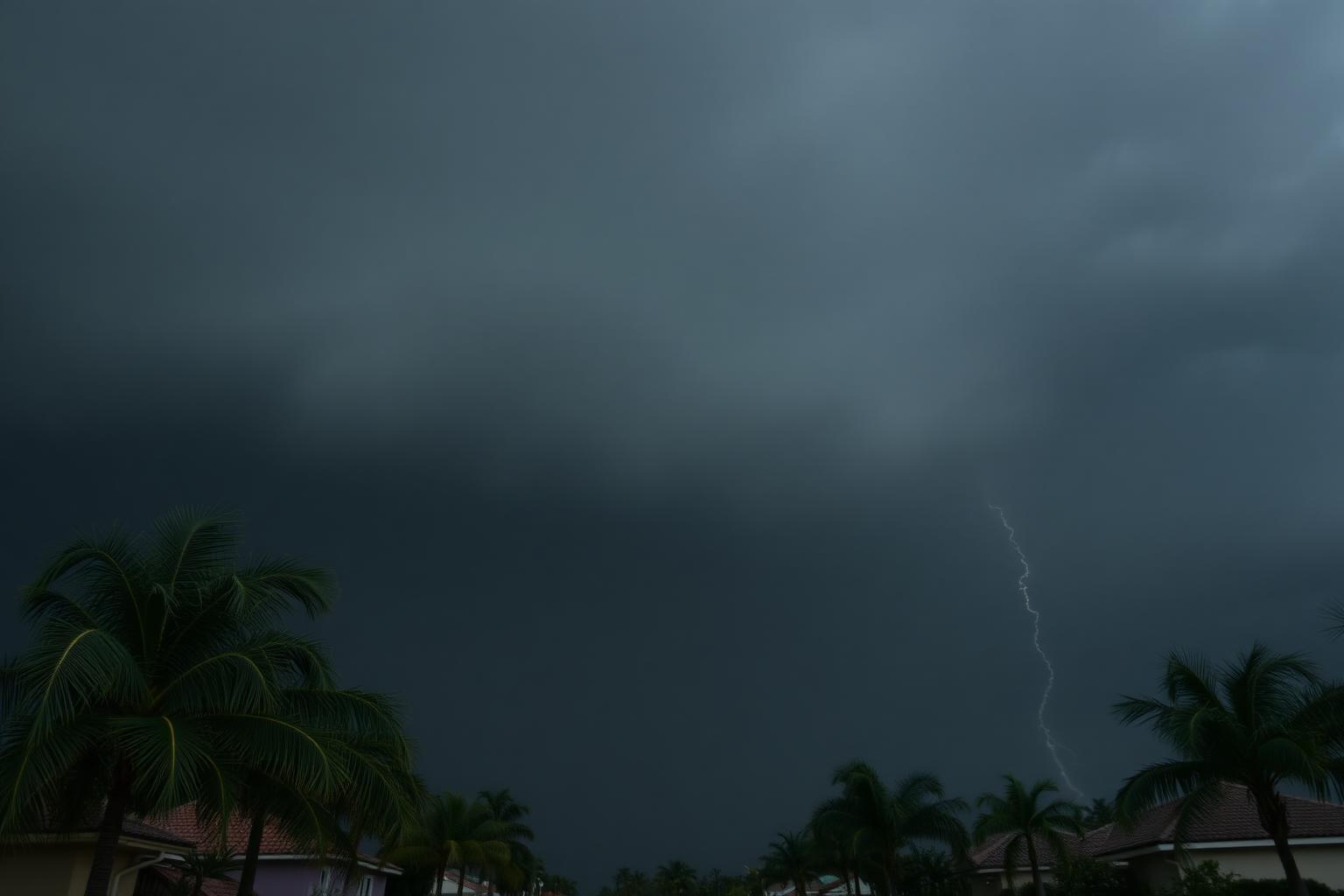
The same urgency drives air conditioning failures during a July heat index above 105, roof leaks in the middle of an afternoon downpour, and the eight days after a tropical system when every fence in a neighborhood is on the ground at once.
The most expensive market in the state
Miami clicks cost the most in Florida, so waste is the whole risk.
Paid search for home service trades is costly everywhere and worst in large coastal metros. Miami sits at the top of Florida's range: national franchises, private-equity-backed roll-ups and lead resellers with modelled bidding all compete in the same auctions, and they are willing to lose money on a first job to buy a service agreement. A local business cannot out-spend that. It can out-target it.
Density changes the tactics. One citywide radius in Miami-Dade is not a targeting strategy — it spends against neighborhoods your crews cannot economically reach at 6pm on the Palmetto, and against high-rise buildings where the caller is a renter with no authority to buy a replacement system. Campaigns here are built by ZIP and by crew territory: Brickell and Downtown separately from Kendall, Doral separately from Homestead, Miami Beach separately from Hialeah.
Language is a live lever, not a nicety. Spanish-language search demand in Miami-Dade is large and consistently cheaper to reach than the English equivalent, because far fewer advertisers write Spanish ad copy and landing pages. Running the same campaign in both languages typically lowers blended cost per lead outright.
And there is the code layer. Miami-Dade's High-Velocity Hurricane Zone rules mean fencing, shutter, window and roofing work needs approved products and permits. Searchers ask about permits and impact ratings, which makes those phrases high-converting and, because national advertisers ignore them, comparatively cheap.
The account structure
Verification, then intent, then geography.
Local Services Ads first for every trade that qualifies. They sit above the entire ad block, carry the Google Guaranteed or Google Screened badge, and charge per lead rather than per click. In a market where a single emergency plumbing click can cost more than a coffee run, lead-based pricing is structurally better — so licence and insurance verification gets handled as part of the build.
Then search campaigns split by intent, not by service. Emergency phrasing — burst, leaking, no cooling, same day, 24 hour — gets its own campaign, its own bids and its own hours, because that traffic converts several times better than research phrasing and deserves to be defended. Planned-project phrasing gets a smaller budget and a longer measurement window.
Then geography and time: ZIP-level targeting mapped to crew territories, ad scheduling weighted to the hours your phone is genuinely answered, call-only formats for emergency terms on mobile, and call tracking so a booked job is measurable rather than assumed.
Then the storm layer, which is specific to South Florida. Hurricane and squall campaigns are built in advance and left paused: fence repair, roof tarping, tree and debris removal, drainage, generator hookups. When a system tracks toward Miami-Dade, they go live within hours and budgets shift automatically — and they pause again when demand normalises, instead of quietly burning spend for a month.
Everything runs against negative keyword lists that keep DIY searches, job seekers, parts buyers, wholesalers and out-of-county traffic out of the account.
Why the price still works
The arithmetic that makes expensive clicks worth it.
A replacement close near $10,000 means a single sale can absorb an entire month of paid spend.
Miami emergency clicks are expensive; Miami emergency jobs are valuable and they close on the phone. A plumbing company paying a premium per click on genuinely urgent phrasing, converting a healthy share of calls into dispatched jobs at a several-hundred-dollar average ticket, is still comfortably profitable — and that says nothing about the water heater replacement or repipe that follows the callout.
HVAC is starker. The discipline is not paying less per click; it is refusing to pay for research traffic, renters, wrong ZIPs and closed hours so that budget concentrates on calls that dispatch.
This is also the channel that lets you buy demand you did not earn yet. A new Miami business with no rankings can be visible tonight. That is worth paying for — but only with a number attached, which is why we report cost per booked job by campaign and by ZIP rather than clicks and impressions.
Speed versus compounding
Ads are the only channel that turns on instantly.
SEO compounds but is slow. Social advertising creates demand that does not exist yet. Web design converts whatever arrives. Google advertising is the only one of the four that can be live tonight and off tomorrow — which makes it the storm-week channel and the launch channel, and the wrong channel to run alone forever.
Run alone at Miami prices, ads mean every call is rented at the market's peak rate, and the day the budget stops the phone stops. Run alongside SEO and a converting site, the same budget buys fewer, better-targeted moments, because the baseline is already handled and the landing page turns more of those expensive clicks into booked jobs. The Miami framework page shows how the four move budget between each other as windows open and close.
Google Advertising is one of four. The Miami Master Framework page makes the case for running all four together, and what running only one costs a Miami service business.

Where we run google ads in Miami
Google Advertising for service businesses across Miami and Miami-Dade County, plus the satellite towns crews already drive to. Every district below is targeted by name in campaigns, pages and profile service areas — not folded into a single city radius.
- Miami districts
- Brickell · Downtown Miami · Little Havana · Wynwood · Little Haiti · Allapattah · Coconut Grove · Coral Gables · Westchester · Kendall · Pinecrest · Palmetto Bay · Cutler Bay · Miami Shores · Key Biscayne
- Beyond the county line
- Hialeah · Doral · Miami Beach · Miami Lakes · Miami Gardens · Aventura · Homestead · Sweetwater · Miami Springs · Broward County
- ZIP codes covered
- 33125 · 33126 · 33127 · 33130 · 33131 · 33133 · 33134 · 33135 · 33137 · 33139 · 33143 · 33144 · 33145 · 33146 · 33155 · 33156 · 33165 · 33172 · 33176 · 33186

The Miami close
The calendar this account is actually run against.
Miami's paid year has a shape. May through October is the heat and humidity block: air conditioning demand is relentless, and afternoon thunderstorms produce daily roof and drainage bursts. June 1 to November 30 is hurricane season, peaking August through October, when a single system east of the county resets demand for fencing, roofing, tree work and concrete for weeks. Fall king tides add flooding and drainage calls on their own schedule. The dry season from December into April is when planned work — pavers, epoxy floors, pool decks, artificial turf — should be carrying the calendar.
That rhythm is why storm campaigns are built and paused rather than improvised, and why budget rules are written before the season rather than during it. Miami-Dade's High-Velocity Hurricane Zone requirements also mean post-storm work is permitted and product-approved, so the searches that follow a storm are specific and worth answering precisely.
Extentus runs Miami paid search as a measured channel: ZIP-level structure, bilingual copy, verified Local Services Ads where they qualify, storm campaigns ready before the season, and one reported number — cost per booked job.
Google Ads in Miami — questions, answered
Enough to hold position in a defined set of ZIP codes during the hours you answer the phone, rather than a thin citywide spend. Miami is the most expensive paid auction in Florida for home service trades, so a small budget spread across all of Miami-Dade buys nothing; the same money concentrated on emergency phrasing in three or four ZIPs, with call-only formats and tight negatives, produces dispatched jobs. We start from your average ticket, close rate and crew capacity and work backwards to a spend that returns a defensible cost per booked job.
For any trade that qualifies, yes — usually before regular search ads. Local Services Ads sit above the entire standard ad block, carry the Google Guaranteed or Google Screened badge, and charge per lead rather than per click, which matters more in Miami than almost anywhere because click prices here sit at the top of the national range. Verification requires licence and insurance documentation, and we handle that setup as part of the build.
In most cases yes, and it usually lowers your blended cost per lead rather than raising it. A clear majority of Miami-Dade residents speak Spanish at home, and far fewer advertisers write Spanish ad copy and Spanish landing pages, so those auctions are less crowded. The requirement is that the experience is genuinely bilingual end to end — ad, landing page and the person who answers the phone — otherwise the cheaper clicks simply do not convert.
The rest of the Miami set
- SEO
Search Engine Optimization in Miami
The channel you own. Google Business Profile, bilingual Miami-Dade service-area pages and review velocity, built so Miami searches for your trade land on you instead of a franchise.
Open page - Social Ads
Social Advertising in Miami
The channel that creates demand. Bilingual Meta and TikTok creative shot on your own Miami job sites, aimed by neighborhood at the households who buy planned projects.
Open page - Web Design
Web Design in Miami
The multiplier. A fast, bilingual, click-to-call site that turns Miami's expensive traffic into booked jobs — and gives AI answer engines something to cite.
Open page - All four — recommended
The Master Framework in Miami
The whole argument. Why one channel cannot cover a 2.7-million-person county at Miami prices, and how SEO, Google Ads, social and web design compound as one engagement.
Open page