Ready to rank in Phoenix?
Call now — 385-985-0003Phoenix · SEO
SEO in Phoenix: the largest desert search market in the country, won one district at a time.
A condenser that dies at 114°F in a Desert Ridge two-story with a family inside. A slab leak under a 1960s Arcadia ranch. A tile roof cracked open by monsoon wind in Ahwatukee. Two hundred feet of block wall around a new Laveen lot. Phoenix demand is enormous, urgent and constant — and almost none of it is won metro-wide. It is won district by district.
The short answer
SEO in Phoenix means ranking a trade business inside the fifth-largest city in the United States and a metro of nearly five million people across Maricopa County. Volumes are large — air conditioning repair alone runs into the thousands of searches a month — and difficulty is real but beatable at the district level. The work is to own a defined set of Phoenix districts and suburbs by name rather than chasing the whole Valley at once.
Beat 01 · The market is not one results page, it is dozens
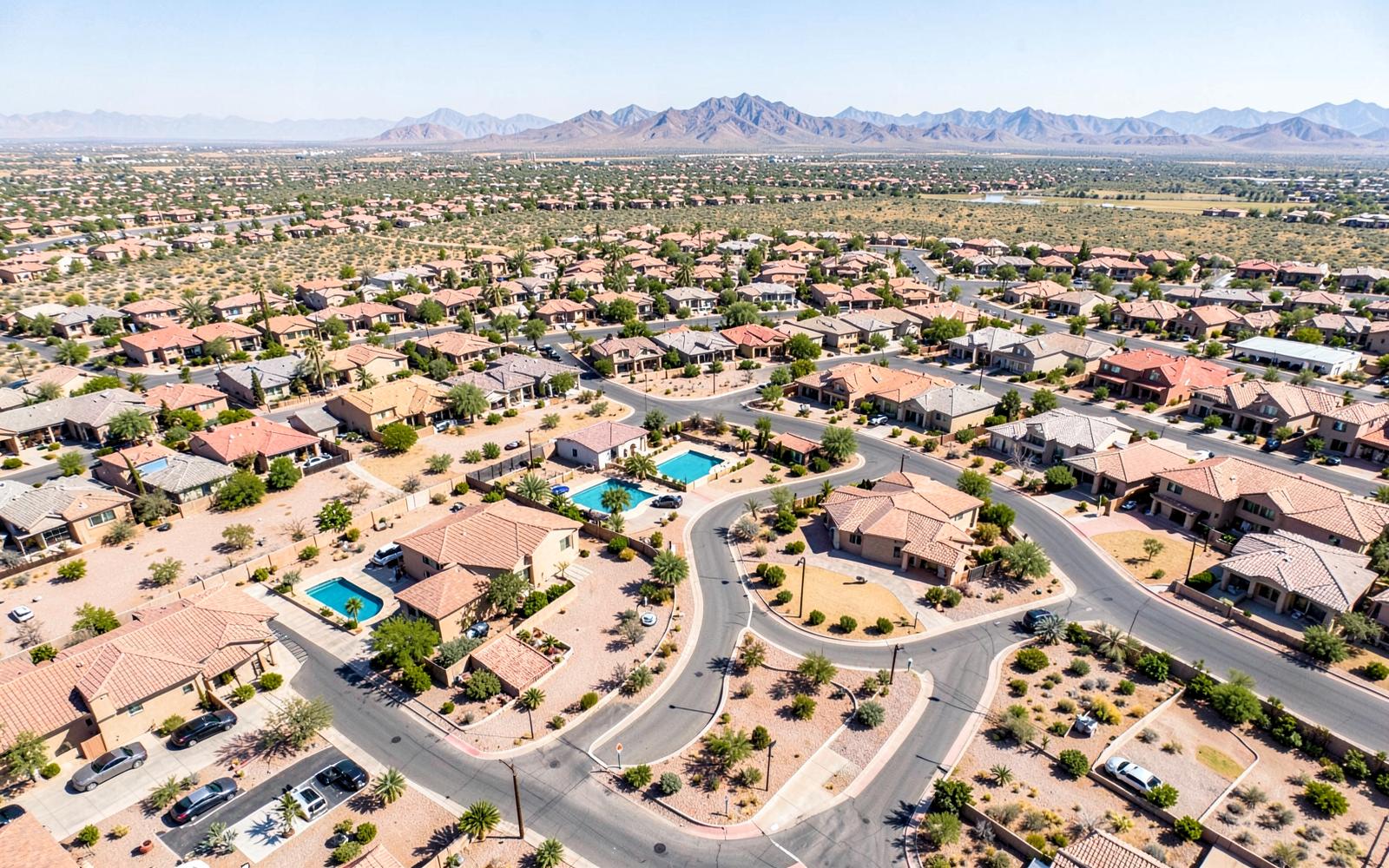
Phoenix is roughly 500 square miles of city inside a metro of nearly five million.
Search a trade in Phoenix and the page you see in Ahwatukee is not the page a homeowner sees in Deer Valley, twenty-five miles north. Google is answering a local question, and in a city this physically large the local answer changes several times inside the city limits.
That is why metro-wide SEO underperforms here. A single page titled for Phoenix competes against every large operator in the Valley at once, while the districts where your crew actually works go unclaimed.
The opening is the opposite of a small market. Demand is not the constraint in Phoenix — focus is.
Beat 02 · The shift: from citywide to district-level
Homeowners search their part of town, not their census designation.
People here say Arcadia, Ahwatukee, Laveen, Maryvale, Desert Ridge, Sunnyslope, Encanto, Biltmore. They search that way too, and they add the trade and the failure: cooling out, water heater leaking, tile slipping, panel tripping.
So the site stops being a brochure with one service-area sentence and becomes a map. A named district page carries the streets, the housing stock, the age of the equipment typical there, and the jobs actually finished nearby.
Five honest district pages with real proof outrank fifty templated ones, and Google has gotten decisive about ignoring the templated version.
Beat 03 · Mechanism: profile, proof, and the heat calendar
Three layers, built in order, none of them optional in this climate.
First the Google Business Profile: correct primary category, a service radius that matches the crew's real drive, service items named the way Phoenix homeowners phrase them, and a review pace that keeps producing through summer rather than spiking once.
Then the district layer: pages for the parts of the Valley you genuinely cover, each with photographs, named neighborhoods, and detail that only somebody who has worked a Phoenix attic in July would write.
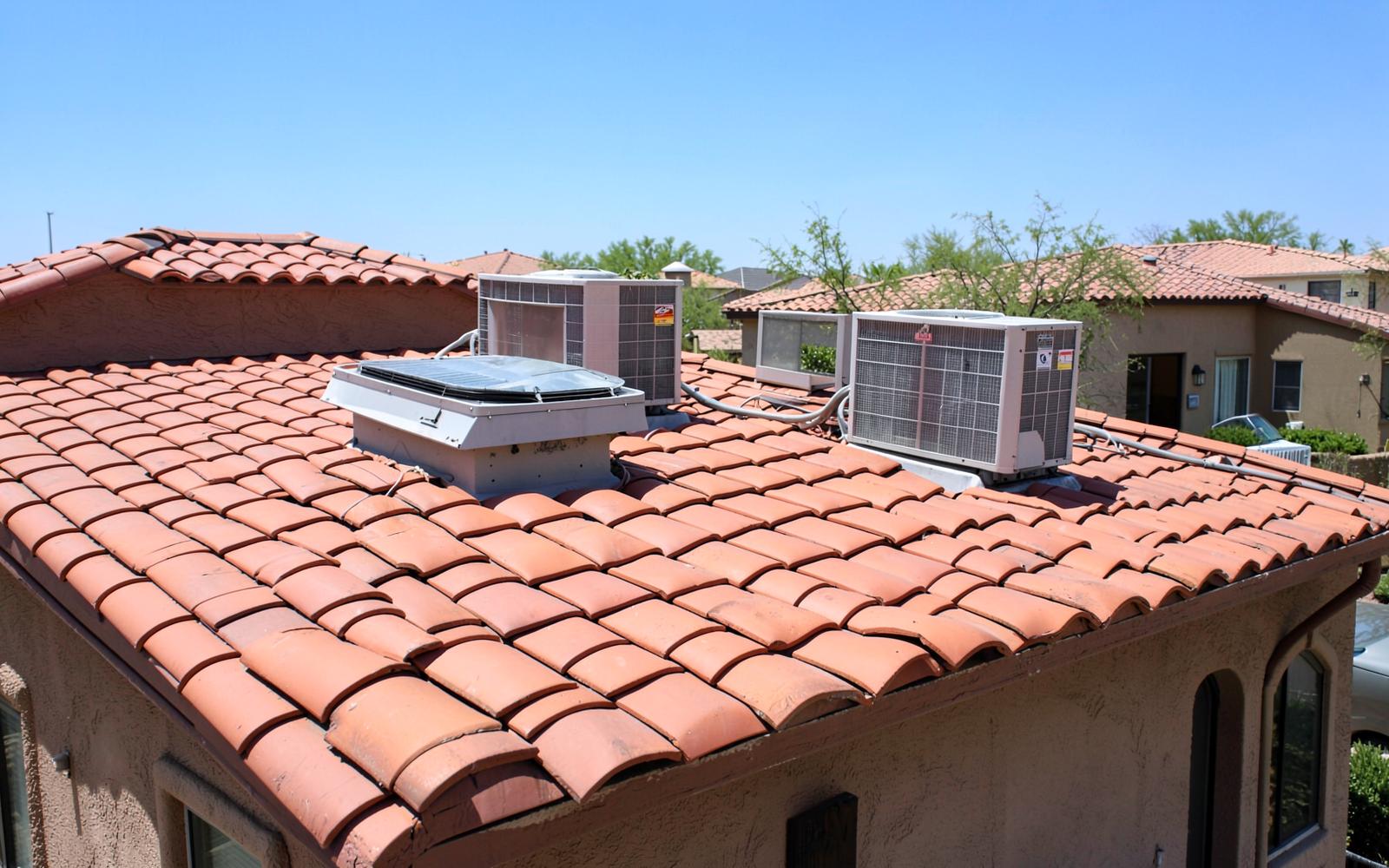
Then the failure layer: cooling capacity in 115-degree heat, refrigerant lines on hot roofs, hard water scaling on tanks and fixtures, monsoon-driven roof and wall damage, dust intrusion in ductwork. Those pages catch demand that spikes on a specific afternoon.
Beat 04 · The number: what Phoenix search demand actually looks like
Air conditioning repair alone produces more than 3,600 Phoenix searches a month.
Plumbing runs in the same order of magnitude, and paid clicks on those terms cost dollars each — meaning the organic position beside them is worth a substantial monthly figure the moment it holds.
That is the case for organic in a market this size. Paid search in Phoenix is expensive precisely because the demand is real; ranking beside it converts that same demand at no cost per click.
Volume this large is also why partial coverage still pays. Owning four districts of Phoenix is a full calendar for most crews, and it is a far shorter climb than owning the Valley.
Beat 05 · Contrast: the national vendor's Phoenix page
One page, twenty city names in a footer, no idea what a July attic feels like.
It lists Phoenix, Scottsdale, Mesa, Chandler, Gilbert, Glendale and Peoria in a row, says nothing about any of them, and ranks for none of them. Meanwhile the profile still carries a service radius drawn around the whole county.
It also treats seasonality as a marketing theme instead of an operating fact. In Phoenix the cooling season decides the year, and content has to be ranking before the first 110-degree week, not published during it.
The correction is not more pages. It is fewer pages that are genuinely about specific places, published on a heat calendar.
Search Engine Optimization is one of four. The Phoenix Master Framework page makes the case for running all four together, and what running only one costs a Phoenix service business.

Where we run seo in Phoenix
Search Engine Optimization for service businesses across Phoenix and Maricopa County, plus the satellite towns crews already drive to. Every district below is targeted by name in campaigns, pages and profile service areas — not folded into a single city radius.
- Phoenix districts
- Downtown Phoenix · Midtown · Encanto · Roosevelt Row · Arcadia · Biltmore · Camelback East · Sunnyslope · North Mountain · Deer Valley · Desert Ridge · Paradise Valley Village · Moon Valley · Ahwatukee Foothills · South Mountain Village · Laveen · Maryvale · Estrella · Alhambra · Garfield · Coronado · Willo · Norterra · Anthem edge · Rio Vista
- Beyond the county line
- Scottsdale · Tempe · Mesa · Chandler · Gilbert · Glendale · Peoria · Surprise · Goodyear · Avondale · Buckeye · Tolleson · El Mirage · Litchfield Park · Sun City · Sun City West · Queen Creek · Apache Junction · Fountain Hills · Cave Creek · Carefree · Anthem · New River · Maricopa · Casa Grande · Maricopa County · Valley of the Sun
- ZIP codes covered
- 85003 · 85004 · 85006 · 85008 · 85012 · 85013 · 85014 · 85015 · 85016 · 85018 · 85020 · 85021 · 85022 · 85023 · 85024 · 85027 · 85028 · 85029 · 85032 · 85033 · 85035 · 85037 · 85040 · 85041 · 85042 · 85043 · 85044 · 85045 · 85048 · 85050 · 85051 · 85053 · 85054 · 85083 · 85085 · 85086 · 85087
Beat 06 · Phoenix close
In a metro this large, extreme heat makes the search urgent and the ranking valuable.
Phoenix summers routinely push past 110°F for weeks at a stretch, and cooling stops being comfort and becomes safety. A homeowner in that position takes the first credible local result. Being that result is worth more here than in almost any market in the country.
The plan is not complicated: claim the districts you can serve, write the heat and monsoon pages nobody else bothers with, keep the profile honest, and let the volume do the rest.
Extentus builds that footprint alongside the other three channels, so the rankings land on a site and a set of campaigns built to convert them.
SEO in Phoenix — questions, answered
District-level movement usually shows in three to four months, and competitive citywide terms take longer — six to twelve months depending on the trade and the site's history. Phoenix rewards patience because the volume is so large: air conditioning repair alone produces thousands of searches a month in the metro, so even a partial position across a handful of districts produces meaningful call volume well before a citywide ranking arrives.
No. Build pages only for the districts and suburbs your crew genuinely serves, with photographs, named neighborhoods and real job detail on each. Google actively discounts templated city pages that differ by one word, so five substantive pages covering north Phoenix, Ahwatukee, Laveen, Arcadia and Maryvale will outperform thirty thin ones covering the whole of Maricopa County.
Yes, in timing more than topic. Cooling and heat-related pages need to be indexed and ranking by April, because Phoenix regularly runs past 110 degrees from June into September and that demand arrives all at once. Publishing cooling content in July means competing for attention while the season is already spending. Monsoon roof and wall damage content follows the same rule on a July-to-September window.
The rest of the Phoenix set
- Google Ads
Google Advertising in Phoenix
Phoenix clicks are expensive because Phoenix emergencies are real. We run paid search against a radius the crew can actually drive, bid the East and West Valley separately, weight budget into the June-through-September cooling peak, and split emergency intent from planned replacement so neither subsidizes the other.
Open page - Social Ads
Social Advertising in Phoenix
Phoenix adds tens of thousands of new households a year, and every one of them arrives with an empty contact list and a yard that needs finishing. Meta and TikTok reach those homeowners by district, by move-in recency and by home age — creating demand for fencing, concrete, epoxy and shade work nobody types into a search bar.
Open page - Web Design
Web Design in Phoenix
Phoenix visitors arrive in a hurry, on a phone, often mid-emergency. The site has to load fast, prove the business is local and licensed, show the districts it covers, and put the call within thumb reach — then do the slower job of quoting planned work like fencing, concrete and epoxy for the buyers who are comparing.
Open page - Framework
The Master Framework in Phoenix
In Phoenix the four channels are not alternatives — they are four different pieces of a market too large for any one of them. Organic holds the districts, paid search takes the 114-degree emergency, paid social reaches the new households arriving every month, and the site converts all three. Extentus installs the whole system as one engagement with one ledger.
Open page