St. George, Utah
Marketing in St. George, Built for a Desert Retirement and Tourism Economy
St. George is the third-largest market in Utah and almost nothing like the first two. A city of roughly 100,000 inside a Washington County past 200,000, growing faster than almost any metro in the country, sitting at about 2,860 feet in red rock desert where summer runs triple digits from June into September — and where the customer buying plumbing, cooling or concrete work is, on average, considerably older than the buyer in Provo or Salt Lake City.
Five dedicated St. George pages
Each discipline has its own St. George page — its own local search data, its own market detail, its own URL.
- SEO
Search Engine Optimization in St. George
The channel that keeps producing calls in a market where summer cooling failures, not winter heating emergencies, drive the service calendar, hard well and municipal water leaves mineral scale on every fixture, and Little Valley and Washington Fields keep adding new rooftops every month. A Google Business Profile built around triple-digit AC emergencies, block wall privacy fencing and new-construction concrete and epoxy work, neighborhood pages for Downtown St. George, Bloomington, Bloomington Hills, Dixie Downs, Green Valley, Little Valley, Washington Fields, Middleton, Tonaquint, Sunbrook, Entrada, Red Cliffs, Foremaster Ridge, Desert Hills, Fort Pierce, Shadow Mountain, Cottonwood Cove, Millcreek, Santa Clara Heights and Bloomington Ranches, plus reach into Washington, Santa Clara, Ivins, Hurricane, La Verkin, Toquerville, Leeds, Springdale, Diamond Valley, Dammeron Valley, Veyo, Central, New Harmony, Enterprise, Cedar City and Mesquite, and enough locally specific, review-backed proof to outrank national franchises that have never worked a Little Valley new-build or a Bloomington retiree's block wall.
Open page - Google Ads
Google Advertising in St. George
The channel built for a city where June-through-September triple-digit heat drives same-day AC failure calls across Bloomington, Dixie Downs and Sunbrook, while new construction in Little Valley and Washington Fields pushes a separate wave of scheduled HVAC, plumbing and concrete demand. Paid search and Local Services Ads split St. George's older core neighborhoods from the growth ring stretching toward Washington and Hurricane, weighted for hard water, xeriscape irrigation and short-term rental turnover, then report against booked jobs instead of raw clicks.
Open page - Social Ads
Social Advertising in St. George
The St. George channel built for an older, retiree- and second-home-heavy market: Facebook and Instagram campaigns pulled from real local job sites and aimed neighborhood by neighborhood across Bloomington, Bloomington Hills, Green Valley, Little Valley, Washington Fields, Dixie Downs, Middleton, Tonaquint, Sunbrook, Entrada, Red Cliffs, Foremaster Ridge, Desert Hills, Fort Pierce, Shadow Mountain, Cottonwood Cove, Millcreek and Downtown St. George, plus Washington, Santa Clara, Ivins, Hurricane, La Verkin, Toquerville, Leeds, Springdale, Cedar City and Mesquite.
Open page - Web Design
Web Design in St. George
Sites built for a Washington County market that runs from Downtown St. George, Bloomington, Bloomington Hills, Green Valley, Little Valley, Washington Fields, Dixie Downs, Middleton, Tonaquint, Sunbrook, Entrada, Red Cliffs, Foremaster Ridge, Desert Hills, Fort Pierce, Shadow Mountain, Cottonwood Cove, and Millcreek out through Washington, Santa Clara, Ivins, Hurricane, La Verkin, Toquerville, Leeds, Springdale, Cedar City, and Mesquite: large type, obvious tap-to-call, plain-language pricing, and a visible human name — built for a retirement- and second-home-driven audience judging a crew before ever meeting one in person.
Open page - All four — recommended
The Master Framework in St. George
All four channels, installed together for a red rock metro that has crossed 200,000 residents and keeps growing, where retirement migration from California, Nevada and Las Vegas means word-of-mouth and community trust carry more weight than in a younger search-first market, triple-digit summers drive cooling-dominant demand with no freeze-thaw season to speak of, and new construction concentrates hard in Little Valley and Washington Fields while Zion National Park tourism keeps a steady flow of visitors and vacation-rental turnover moving through Bloomington and Green Valley. One strategy across SEO, Google advertising, social advertising and web design, tuned to St. George's neighborhoods and Washington County's map, with one accountable number.
Open page
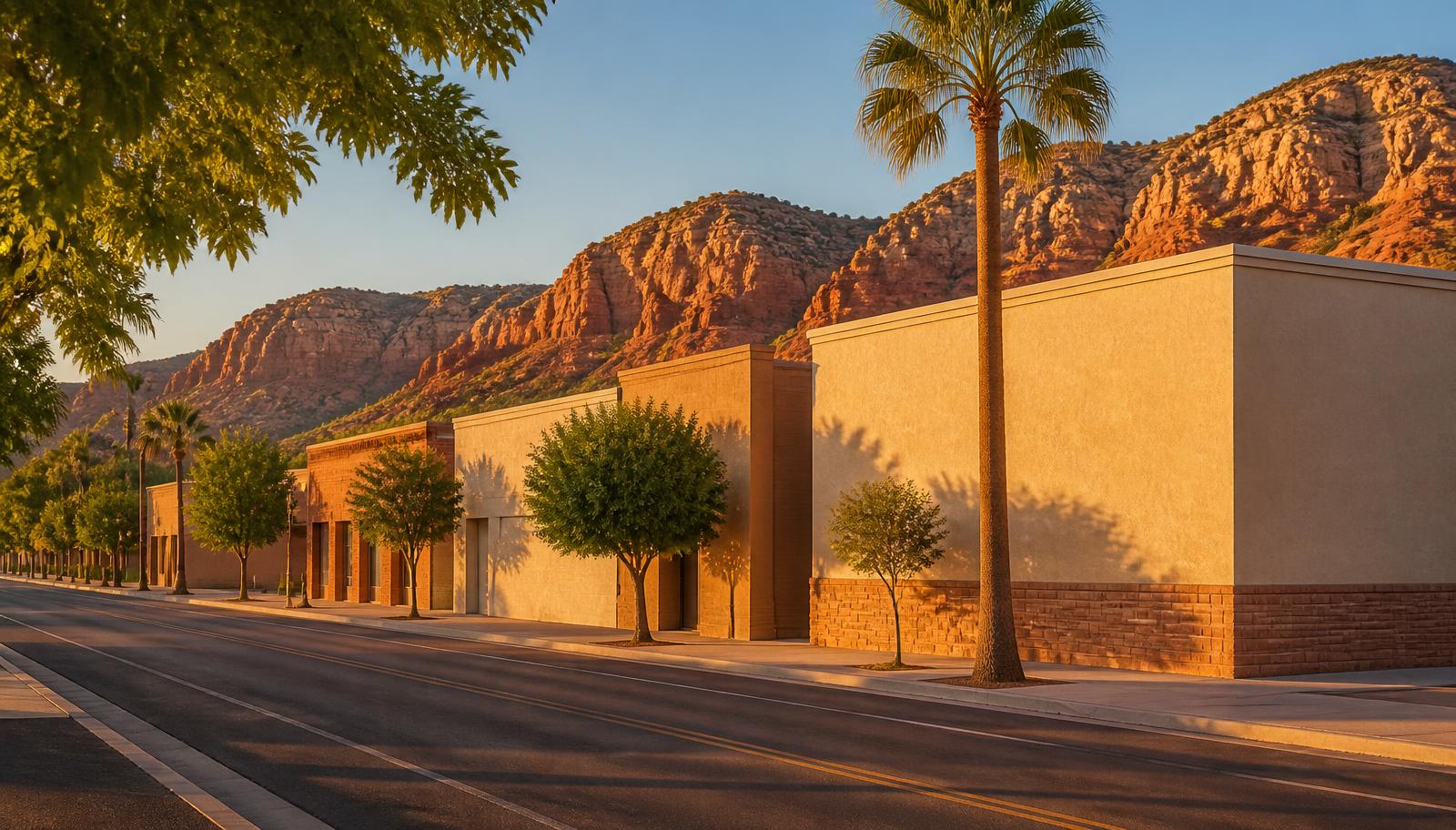
The two forces shaping demand here are climate and migration. Cooling is the mechanical season: air conditioning failures, refrigerant work, duct and rooftop unit replacement, and the hard-water scale that quietly ends water heaters early. There is no freeze-thaw cycle cracking driveways every spring and no furnace emergency season, which means the seasonal calendar every cold-climate market runs on simply does not apply. Meanwhile retirement and second-home migration out of California, Nevada and the Las Vegas valley keeps adding households — many of them arriving with no local contractor relationships at all.
Extentus coordinates search, Google advertising, paid social and web design under one plan rather than four separate vendors. In St. George that matters for a specific reason: this is a word-of-mouth market with an older median age, and a recent arrival who has no one to ask searches instead. Reputation and search visibility are the same asset here, and they have to be built together.
What makes the St. George market distinct
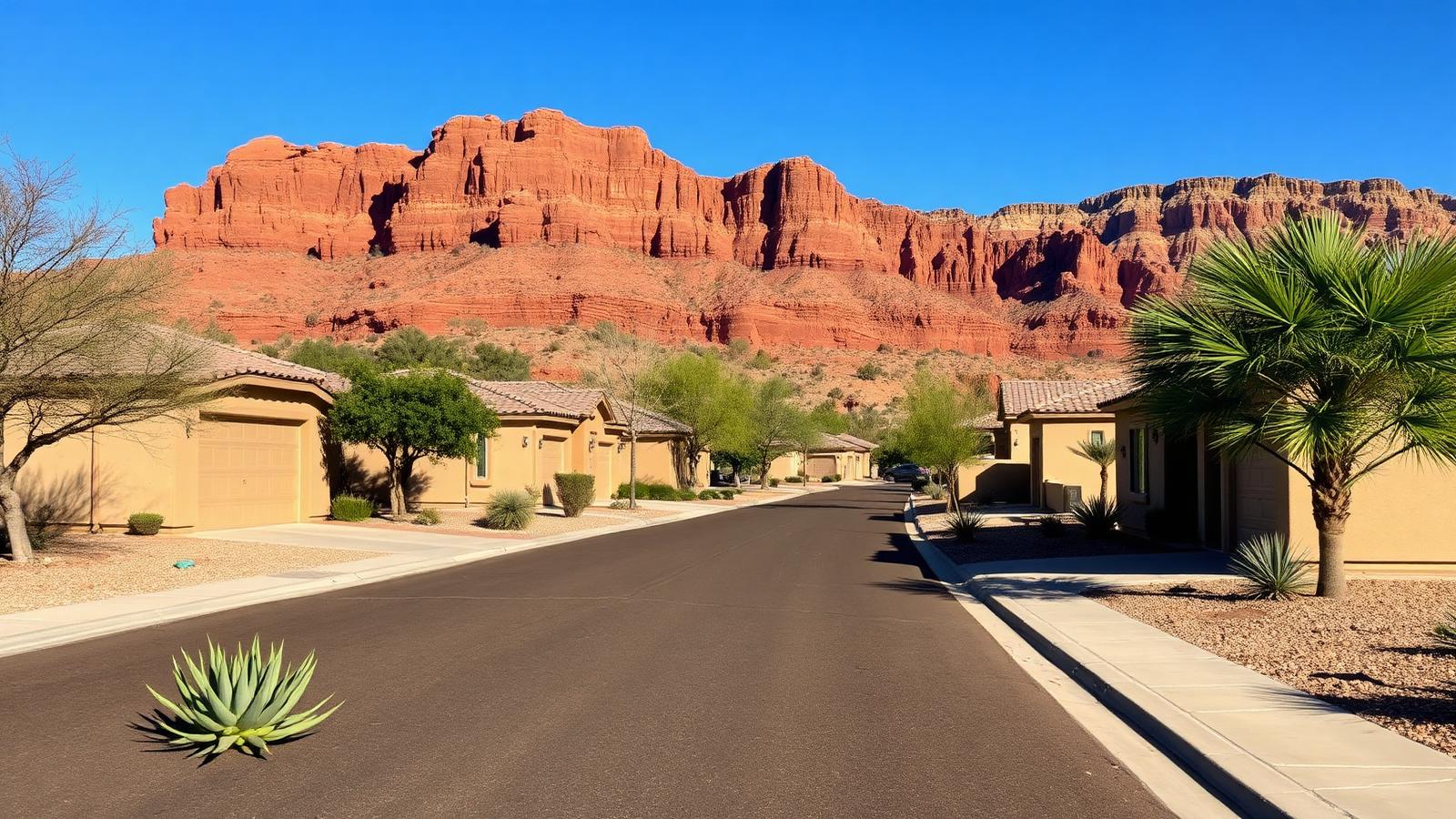
The housing stock reads differently than anywhere else in Utah. Stucco and tile roofs instead of brick. Block privacy walls instead of wood fences. Xeriscape gravel yards on drip irrigation instead of lawns and sprinkler systems. Bloomington, Bloomington Hills and Green Valley hold established homes and active-adult communities; Little Valley and Washington Fields carry most of the new construction; Downtown, Dixie Downs and Middleton hold older stock and the small-business trade; Entrada, Sunbrook, Red Cliffs, Foremaster Ridge and Desert Hills sit against the rock.
Zion National Park is an hour away, and tourism follows it — short-term rentals, vacation homes and second properties whose owners buy trade work from another state entirely, often without ever standing in the driveway. That buyer decides from a phone, on trust signals alone. So does the household that moved from Henderson last spring and has no neighbor to call.
Search: an open market growing faster than its competition
Washington County's search competition has not kept pace with its population. Our SEO work goes wide early — Google Business Profile authority, review cadence, and neighborhood coverage across Bloomington, Bloomington Hills, Green Valley, Little Valley, Washington Fields, Dixie Downs, Middleton, Tonaquint, Sunbrook, Entrada, Red Cliffs, Desert Hills and Fort Pierce, plus Washington, Santa Clara, Ivins, Hurricane, La Verkin, Toquerville, Leeds, Springdale and Cedar City. Breadth compounds faster than depth in a market this open.
Google advertising: buy the heat, not the calendar
Paid search here earns its keep on one thing above all others: an air conditioner that quit at 108 degrees. That is the emergency this market generates, and it concentrates hard from June through September. We run Local Services Ads for trades, segment the valley along the I-15 corridor from Washington through St. George toward Bloomington, and weight spend into the cooling season instead of spreading a flat monthly amount across a year that has no second emergency peak.
Social advertising: recent movers and part-year residents
Facebook is unusually strong in St. George and TikTok unusually weak — a direct consequence of the age mix. Recent-mover, new-homeowner, snowbird and second-home-owner targeting on Meta reaches exactly the households with no existing contractor, and HOA-dense master-planned communities make social proof travel fast between neighbors who already compare notes in person.
Web design: legibility beats cleverness here
An older buyer on a phone in bright sun needs large type, an obvious phone number, a named human being, and plain language about what things cost and where you work. We build sites as conversion infrastructure — fast, structured for crawlers and AI answer engines, with explicit Washington County geography and a booking path an out-of-state second-home owner can finish in one sitting.
How the four channels compound in St. George
Web design sets the conversion surface for a trust-first audience. SEO claims an unusually wide position set while Washington County competition stays soft. Google advertising covers the cooling emergency while organic rankings mature. Paid social works the recent-mover and second-home streams and retargets everyone the other three touched. Sold separately, nobody owns the handoff from paid to organic — and in a market adding households this fast, that handoff is most of the value.
One accountable team runs all four, which in St. George means knowing when organic search has started supplying demand you were paying for, and knowing to load budget into May before the first sustained heat wave rather than spending flat through a mild winter.
The St. George attribution advantage
Extentus reports qualified inbound by channel and by neighborhood, cost per qualified inbound, and the pages responsible, so budget moves between paid and organic are measured decisions. In a market where one season carries most of the emergency demand, that reporting is the difference between a plan and a guess.
The four services Extentus runs in St. George
- Search Engine Optimization
- The channel you own — map-pack rankings, reviews and service-area pages that keep producing after the work is done.
- Google Advertising
- The channel with a volume dial — paid search and Local Services Ads tuned to the hours demand actually spikes.
- Social Advertising
- The channel that builds the pipeline — demand created in homeowners before they ever search.
- Web Design
- Where the other three cash out — fast, mobile-first pages built to convert visits into booked jobs.
Install all four in St. George
One framework, one accountable record: qualified inbound by channel and by St. George district, cost per qualified inbound, and the exact pages responsible.
St. George marketing questions, answered
Climate and demographics. St. George sits in hot southern Utah desert at about 2,860 feet, where cooling is the mechanical season and there is effectively no furnace emergency season or freeze-thaw concrete cycle to plan around. Its growth comes from retirement and second-home migration out of California, Nevada and the Las Vegas valley rather than tech or university payroll, so the median buyer is older, more trust-driven, and frequently new to the area with no contractor relationships at all.
Inside St. George: Downtown, Bloomington, Bloomington Hills, Bloomington Ranches, Green Valley, Little Valley, Washington Fields, Dixie Downs, Middleton, Tonaquint, Sunbrook, Entrada, Red Cliffs, Foremaster Ridge, Desert Hills, Fort Pierce, Shadow Mountain, Cottonwood Cove and Millcreek. Across the region: Washington, Santa Clara, Ivins, Hurricane, La Verkin, Toquerville, Leeds, Springdale, Diamond Valley, Dammeron Valley, Veyo, Central, New Harmony, Enterprise, Cedar City and Mesquite, Nevada.
One season carries most of the urgency. Triple-digit heat from June into September drives air conditioning failures, refrigerant and rooftop unit work, and irrigation repair, while tourism around Zion National Park and the arrival of part-year residents shift demand in spring and fall. Because there is no winter emergency peak, Extentus loads paid budget ahead of the cooling season and leans on organic search and retargeting through the mild months instead of spending a flat monthly amount.