Ready to advertise in El Paso?
Call now — 385-985-0003El Paso · Google Advertising
Google advertising in El Paso: bidding a market 550 miles from its nearest rival
No other large Texas metro sits this alone. El Paso is closer to three other state capitals than to Houston, closer to Ciudad Juárez than to any comparable American city, and it runs on a desert calendar nobody in Dallas or Austin has to plan around. Google advertising here means bidding a plumbing, HVAC, fencing, concrete or epoxy flooring business into the exact hour a dust storm, a monsoon cell or a Fort Bliss PCS wave creates demand — in a market with almost no out-of-town competition diluting the click price.
The short answer
Google advertising in El Paso means paid search and Local Services Ads bought against desert-specific and border-specific intent — swamp cooler conversions, dust-loaded AC filters, monsoon drainage failures, hard-water fixture damage — bid separately for West Side, Northeast, Fort Bliss and the Lower Valley. Extentus runs bilingual English/Spanish campaigns, drive-time targeting across a long, mountain-split city, call tracking and reporting in booked jobs rather than clicks.
No. 1 The dust hits first
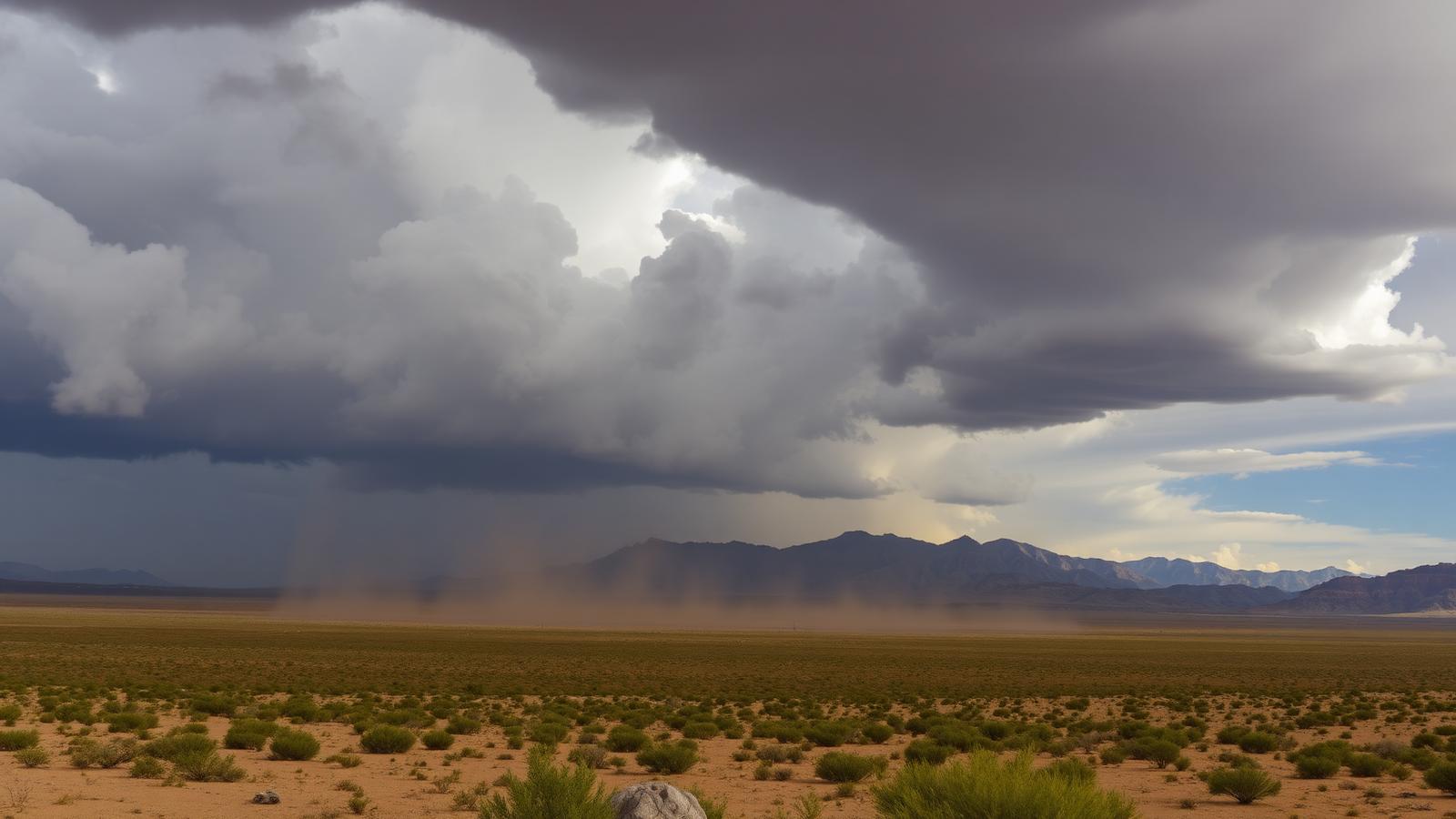
A dust wall rolls off the Chihuahuan Desert floor, and by evening every AC filter in the city is choking.
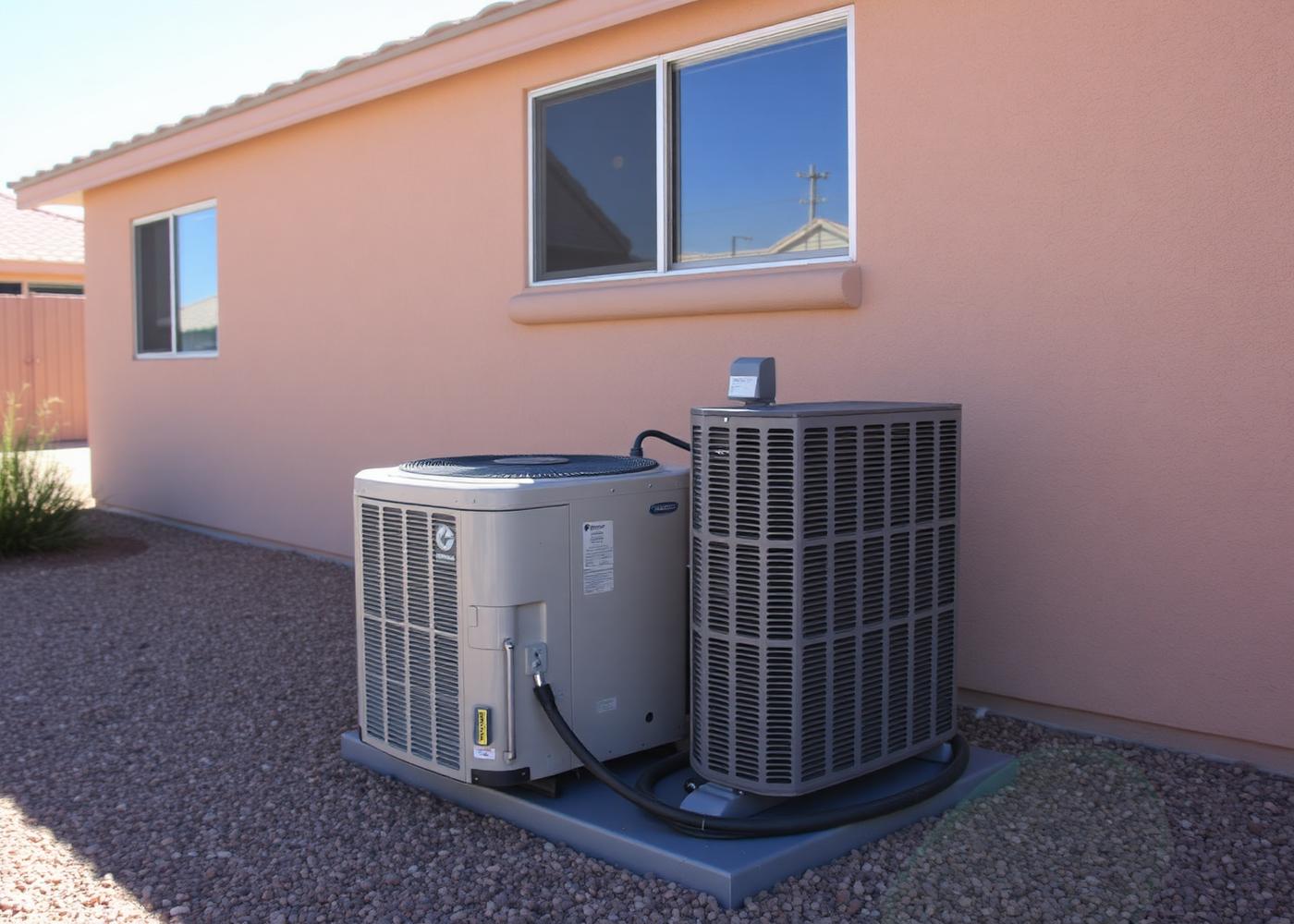
This is the part of the job an operator moving in from Houston never expects. El Paso gets roughly nine inches of rain a year and single-digit humidity most afternoons, so the desert does not soften anything — it just blows. A spring dust event can drop visibility on Interstate 10 to nothing and load thousands of AC filters with grit inside a single afternoon, and by the next morning "ac not cooling" and "ac repair el paso" spike in a way no calendar predicts.
Six weeks later the monsoon arrives instead. July through September brings short, violent downpours rather than sustained rain, and on caliche subsoil that barely drains, an arroyo backs up in twenty minutes. Roof leaks, block-wall fence failures and flooded lower-lying yards in the Lower and Mission Valleys generate a burst of search activity that has nothing to do with anyone's marketing plan and everything to do with radar.
Neither window waits for a ranking to catch up. A page that took a year to earn its place in organic results is still sitting in the same spot the morning after the storm. A bid can move in the same ninety seconds the search does, and in a market this thin on competitors, the business that is already positioned when the window opens usually keeps the lead.
No. 2 A market that argues with itself
One desert city, split by a mountain range and a river, arguing with itself over what a lead is worth.
El Paso is roughly 680,000 people inside the city and about 865,000 across the county, and it is genuinely isolated — the nearest comparable Texas metro is 550 miles away. That isolation is a gift for paid search: none of the private-equity roll-ups fighting over Dallas or Houston clicks bother extending a campaign out here, so the auction stays comparatively calm. What replaces that competition is geography. The Franklin Mountains split the West Side from Northeast El Paso so completely that a crew based on one side treats a job on the other as a real drive, not a short hop, and Fort Bliss sits mostly on the Northeast and East sides, adjacent to a very different customer base than the Lower Valley along the river.
The trade mix shifts by desk. Northeast El Paso, heavy with Fort Bliss housing and PCS-driven turnover, runs high on move-related plumbing and HVAC inspection searches almost year-round. The West Side, newer and higher-income, searches refrigerated-air upgrades and epoxy garage floors. The Lower Valley and Mission Valley, older housing stock along the river, lean toward hard-water fixture repair and evaporative-cooler patch jobs rather than full conversions. Horizon City, Socorro, San Elizario, Clint and Fabens run their own smaller, cheaper auctions entirely, and Sunland Park sits across the state line in New Mexico with its own rules. One flat citywide campaign either overpays for Northeast intent everywhere else or underbids the West Side into invisibility.
Add the language layer most Texas metros can skip: with Ciudad Juárez next door and a genuinely bilingual population moving across the Bridge of the Americas, Ysleta-Zaragoza and Paso del Norte ports of entry daily, a Spanish-language ad set targeting the right desks is not a nice-to-have here — it is a real slice of searchable demand that an English-only account leaves sitting on the table.
No. 3 The account structure
Screened placement first, then desks, then a Spanish-language layer that actually earns its budget.
Local Services Ads first wherever the trade qualifies for Google-screened placement, since it sits above the paid results and prices per lead rather than per click — license, insurance and background verification handled up front, then active dispute management so a wrong-number or out-of-area lead gets credited back instead of eaten silently.
Paid search sits on top of that, structured by desk rather than one citywide pool: Northeast/Fort Bliss, West Side, Lower Valley/Mission Valley, and a smaller combined campaign for Horizon City, Socorro and the outer county. Emergency campaigns — no cooling, water heater failure, flooded yard after a monsoon cell — run call-only during peak hours with bid schedules that lift the moment radar or a dust advisory says demand is about to spike, not on a generic nine-to-five. A parallel Spanish-language ad group targets the same desks with independently written creative, not machine-translated copy, because a literal translation of an English ad reads as exactly that to a bilingual searcher.
The negative keyword list carries its own local weight here: strip DIY, how-to, parts, rental, salary and job-seeker traffic, plus anything reading as a maquiladora or industrial facility inquiry when the account is built for residential and small commercial trade work. Call tracking on every line, and reporting broken out by desk, because a $30 cost per lead in the Lower Valley and a $70 cost per lead on the West Side describe two different businesses sharing one dashboard.
No. 4 The number that makes it work
Cheaper clicks, real ticket size, and a market too thin for anyone to outspend you.
A campaign paying $9 a click on the West Side that books one in three calls into a five-figure conversion is working.
El Paso's cost per click runs well under Dallas or Austin, and the reason is structural: fewer national roll-ups bother bidding a market this isolated, so an independent contractor's budget stretches further per lead than it would anywhere else in Texas. That does not mean the ticket size is small. A full evaporative-to-refrigerated-air conversion, driven by another summer of triple-digit afternoons, routinely runs into five figures, and a hard-water-damaged water heater and fixture replacement across a Fort Bliss rental turnover adds up fast across a single PCS wave.
One evaporative-to-refrigerated conversion booked at $9,600 a month is $115,200 a year from a single recurring campaign line — the kind of number that turns a modest monthly ad spend into an obvious decision once it is tracked to the job rather than to the click.
The number that matters is cost per booked job against that ticket, by desk, not cost per click in isolation. A campaign paying $3 a click across the whole county that books diagnostic visits an hour from the shop in Socorro is not, no matter how good the click price looks in the dashboard.
No. 5 What paid search alone misses
The fastest lever in the market — and the one with no memory of its own.
An organic ranking for "plumber el paso tx" keeps showing up whether or not this month's budget got approved on time; a Google Ads campaign stops producing calls the hour spend stops. Paid search is unmatched at aiming a business at the exact afternoon a dust event or a monsoon cell creates demand, but it builds nothing that survives being turned off. Social advertising creates demand for the projects nobody has decided on yet — a swamp-cooler conversion nobody was actively searching until the ad suggested it — and web design decides what every one of those visitors, from any channel, is actually worth once they land.
In a market this thin on competition, paid search alone is enough to look busy. It is not enough to compound. Layered under a real organic base and a site built to convert, it becomes the fast-response layer for a desert calendar, rather than the whole plan on its own.
Google Advertising is one of four. The El Paso Master Framework page makes the case for running all four together, and what running only one costs a El Paso service business.
Where we run google ads in El Paso
Google Advertising for service businesses across El Paso and El Paso County, plus the satellite towns crews already drive to. Every district below is targeted by name in campaigns, pages and profile service areas — not folded into a single city radius.
- El Paso districts
- Downtown El Paso · Sunset Heights · Kern Place · Mission Hills · Central El Paso · Northeast El Paso · West Side · Upper Valley · Lower Valley · Mission Valley · East Side · Far East El Paso · Cielo Vista · Eastwood · Fort Bliss · Castner Range · Coronado · Montecillo
- Beyond the county line
- Horizon City · Socorro · San Elizario · Clint · Fabens · Canutillo · Vinton · Anthony · Sunland Park NM · Santa Teresa NM · El Paso County · Doña Ana County
- ZIP codes covered
- 79901 · 79902 · 79903 · 79904 · 79905 · 79907 · 79908 · 79911 · 79912 · 79915 · 79922 · 79924 · 79925 · 79927 · 79928 · 79930 · 79932 · 79934 · 79935 · 79936 · 79938 · 88021
No. 6 A calendar no other Texas metro shares
Dust, monsoon, freeze and PCS turnover — four seasons, none of them like Dallas's.
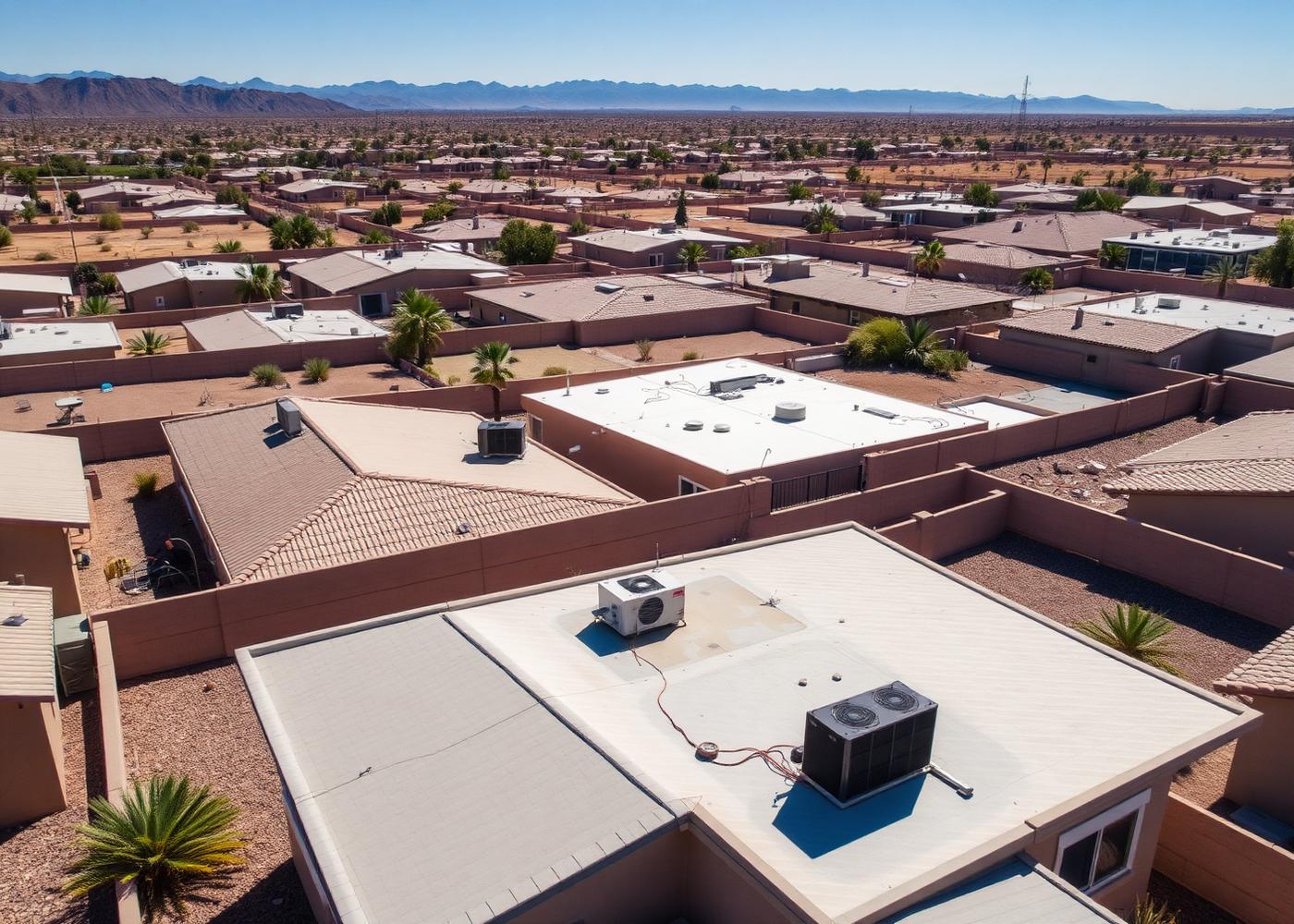
The checkable local reality: El Paso sits in the Chihuahuan Desert on roughly nine inches of annual rainfall, so its demand calendar runs on dust and short violent storms rather than sustained weather systems. Spring dust events load AC filters and abrade exterior finishes citywide within hours. Monsoon season, July through September, drops hard, fast rain onto caliche subsoil and undersized arroyo drainage, producing flooding and roof-leak searches concentrated in the Lower and Mission Valleys. Winter still brings the occasional hard freeze against block-wall and stucco construction rather than clay slabs, a different failure mode than the rest of Texas sees.
Underneath all of it, Fort Bliss — one of the largest Army installations in the country — drives a steady churn of PCS-related housing turnover independent of any season, keeping inspection, repair-and-list and move-in service searches running year-round across Northeast and East El Paso. Extentus bids each of those forces by desk and by month, and reports what each one actually cost per booked job.
Google Ads in El Paso — questions, answered
Both, run as separate ad groups rather than one translated set — El Paso's genuinely bilingual, border-adjacent population searches in both languages depending on the moment, and a natively written Spanish ad targeting the same desk as its English counterpart consistently outperforms a literal translation, because it reads as written for the searcher rather than converted for them.
Northeast El Paso sits next to Fort Bliss, where PCS-driven housing turnover keeps repair and inspection intent high and fairly price-insensitive, while the West Side skews toward higher-income households comparison shopping refrigerated-air upgrades and larger remodel projects. Splitting the budget by desk instead of running one citywide number lets each side bid at the price its actual buyer behavior supports.
Yes — a dust event can spike AC-repair search volume across the whole city within hours, and a monsoon cell can do the same for drainage and roof-leak searches in the Lower Valley by that evening, in both cases for about seventy-two hours before falling back. Bid schedules that lift the moment a dust advisory or storm cell is confirmed capture that window; a flat daily budget usually misses most of it.
The rest of the El Paso set
- SEO
Search Engine Optimization in El Paso
The channel that keeps working after the ad budget runs dry. A Google Business Profile built for El Paso's trade searches, service pages for the Westside, Northeast, Lower Valley and Horizon City, and a review pace that outlasts any franchise call center dialing in from Phoenix.
Open page - Social Ads
Social Advertising in El Paso
The channel that manufactures demand rather than waiting for it. Facebook and Instagram campaigns built from your own El Paso job sites, aimed at the West Side, Northeast, Fort Bliss, Horizon City and Lower Valley pockets where desert wear and PCS turnover create the work.
Open page - Web Design
Web Design in El Paso
Fast, bilingual-ready sites for a desert trade market: click-to-call up front, swamp-cooler-to-refrigerated language, Fort Bliss PCS urgency, and location pages for a city stretched thin between the Franklins and the border.
Open page - All four — recommended
The Master Framework in El Paso
All four channels, installed together for El Paso's border-trade, bilingual, desert-climate market. One strategy across SEO, Google advertising, social advertising and web design, with spend shifted as heat, dust and monsoon season demand it — and one accountable number.
Open page