El Paso, Texas
SEO, Google Ads, Social and Web Design in El Paso — Built for the Border Economy
El Paso is its own market, full stop. The nearest large Texas metro is 550 miles east, and the city sits against Ciudad Juárez as one binational trade and labor pool of roughly 2.7 million people. Long, narrow, split down the middle by the Franklin Mountains, and running on desert weather and Army rotation instead of hurricanes or a tech boom, it rewards a marketing plan built for exactly this place and punishes one copied from anywhere else.
Five dedicated El Paso pages
Each discipline has its own El Paso page — its own local search data, its own market detail, its own URL.
- SEO
Search Engine Optimization in El Paso
The channel that keeps working after the ad budget runs dry. A Google Business Profile built for El Paso's trade searches, service pages for the Westside, Northeast, Lower Valley and Horizon City, and a review pace that outlasts any franchise call center dialing in from Phoenix.
Open page - Google Ads
Google Advertising in El Paso
The channel built for a border desert. Paid search and Local Services Ads bid by side of the mountain and by season — dust, monsoon, freeze — with Spanish-language variants and negatives tuned to a market that behaves nothing like the rest of Texas.
Open page - Social Ads
Social Advertising in El Paso
The channel that manufactures demand rather than waiting for it. Facebook and Instagram campaigns built from your own El Paso job sites, aimed at the West Side, Northeast, Fort Bliss, Horizon City and Lower Valley pockets where desert wear and PCS turnover create the work.
Open page - Web Design
Web Design in El Paso
Fast, bilingual-ready sites for a desert trade market: click-to-call up front, swamp-cooler-to-refrigerated language, Fort Bliss PCS urgency, and location pages for a city stretched thin between the Franklins and the border.
Open page - All four — recommended
The Master Framework in El Paso
All four channels, installed together for El Paso's border-trade, bilingual, desert-climate market. One strategy across SEO, Google advertising, social advertising and web design, with spend shifted as heat, dust and monsoon season demand it — and one accountable number.
Open page
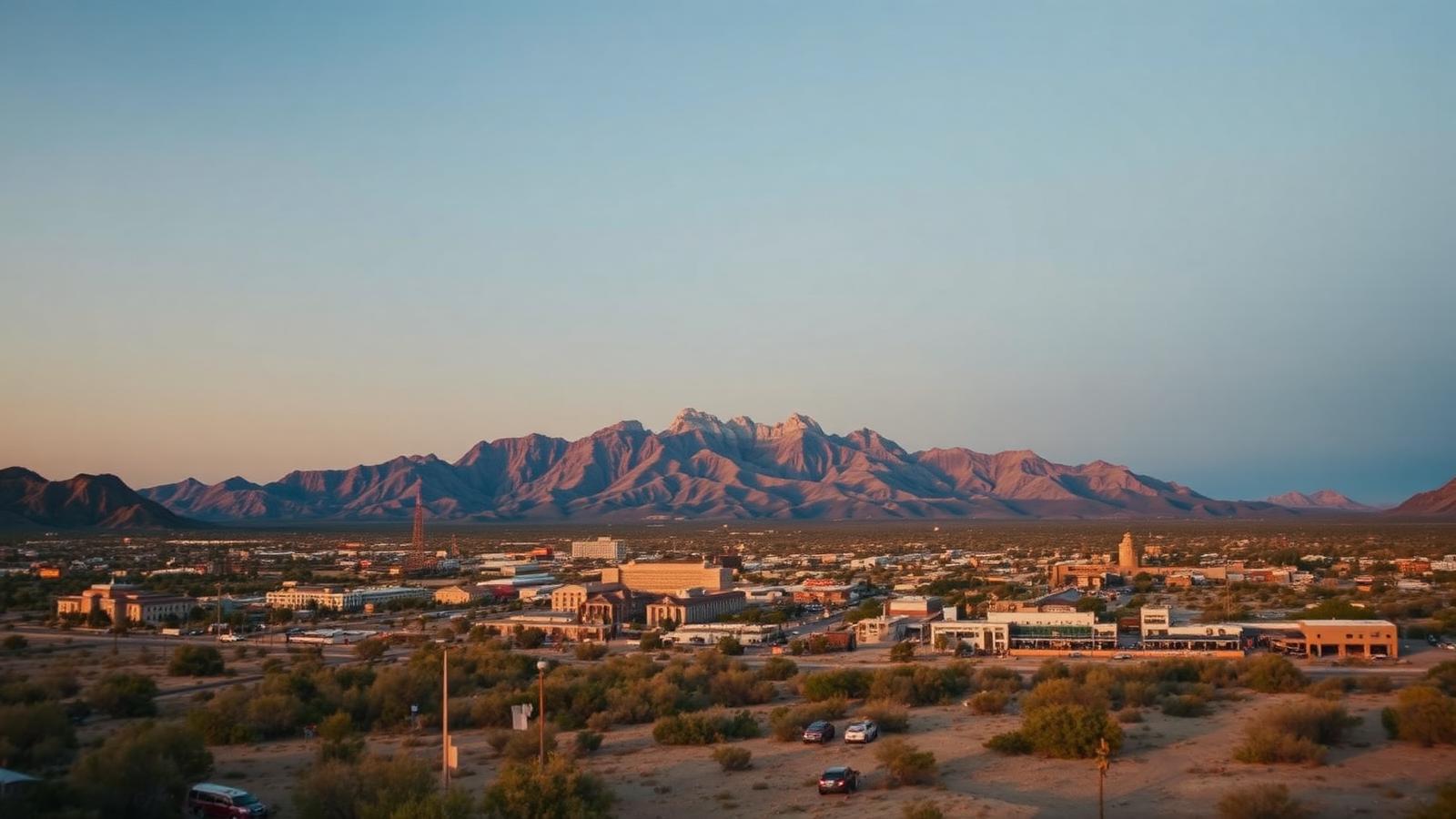
About 680,000 people live inside the city, roughly 865,000 across El Paso County, spread thin along Interstate 10 between the Franklin Mountains and the Rio Grande. The Franklins split the city in two in a way that matters for how homeowners search and how crews route: West Side neighborhoods climbing toward the mountain read and buy differently than Northeast El Paso around Fort Bliss, and both differ again from the Lower Valley and Mission Valley running southeast toward Socorro and San Elizario. Add Horizon City, Canutillo up the valley toward Santa Teresa, and Sunland Park just across the New Mexico line, and a single citywide page or one radius of paid ads misses most of what actually drives here.
The economy underneath all of it is cross-border trade: maquiladora manufacturing in Juárez, warehousing and logistics stacked along I-10, and daily commuting through the Bridge of the Americas, Ysleta-Zaragoza and Paso del Norte ports of entry. A large share of the market is bilingual, and Spanish-language search and ad copy is not an add-on here — it is how a meaningful slice of homeowners actually look for a plumber or a fence contractor.
What makes El Paso a different game
Two forces set the calendar. First, desert heat and dust: summer afternoons routinely clear 100 degrees, and blowing sand loads air filters and abrades stucco and paint faster than a coastal city ever sees. A real slice of the housing stock still runs evaporative — swamp — coolers rather than refrigerated air, so evaporative-to-refrigerated-air conversion is a standing job category here, not a niche upsell. Hard, mineral-heavy water shortens the life of water heaters and fixtures across the whole city, which keeps plumbing and water-treatment demand steady year-round rather than tied to one storm season.
Second, Fort Bliss. It is one of the largest Army installations in the country, and permanent-change-of-station rotation drives constant rental turnover, move-in and move-out repair work, and a large veteran homeowner base around Northeast El Paso. That turnover is predictable by season in a way most cities' housing markets are not, and a marketing plan that ignores the PCS calendar is leaving reliable demand on the table.
Search: rank block by block, not city-wide
Our SEO work in El Paso starts with Google Business Profile strength and review volume, then builds out real pages for West Side, Northeast, Central, the Lower Valley, Horizon City, Socorro, Canutillo and Sunland Park — each written around what that area's homes actually need, whether that is a swamp-cooler conversion on the West Side or hard-water fixture repair in the Lower Valley. That specificity is what a homeowner types into Google and what an AI answer engine ends up quoting back.
Google advertising: bid the ports, the base, and the heat
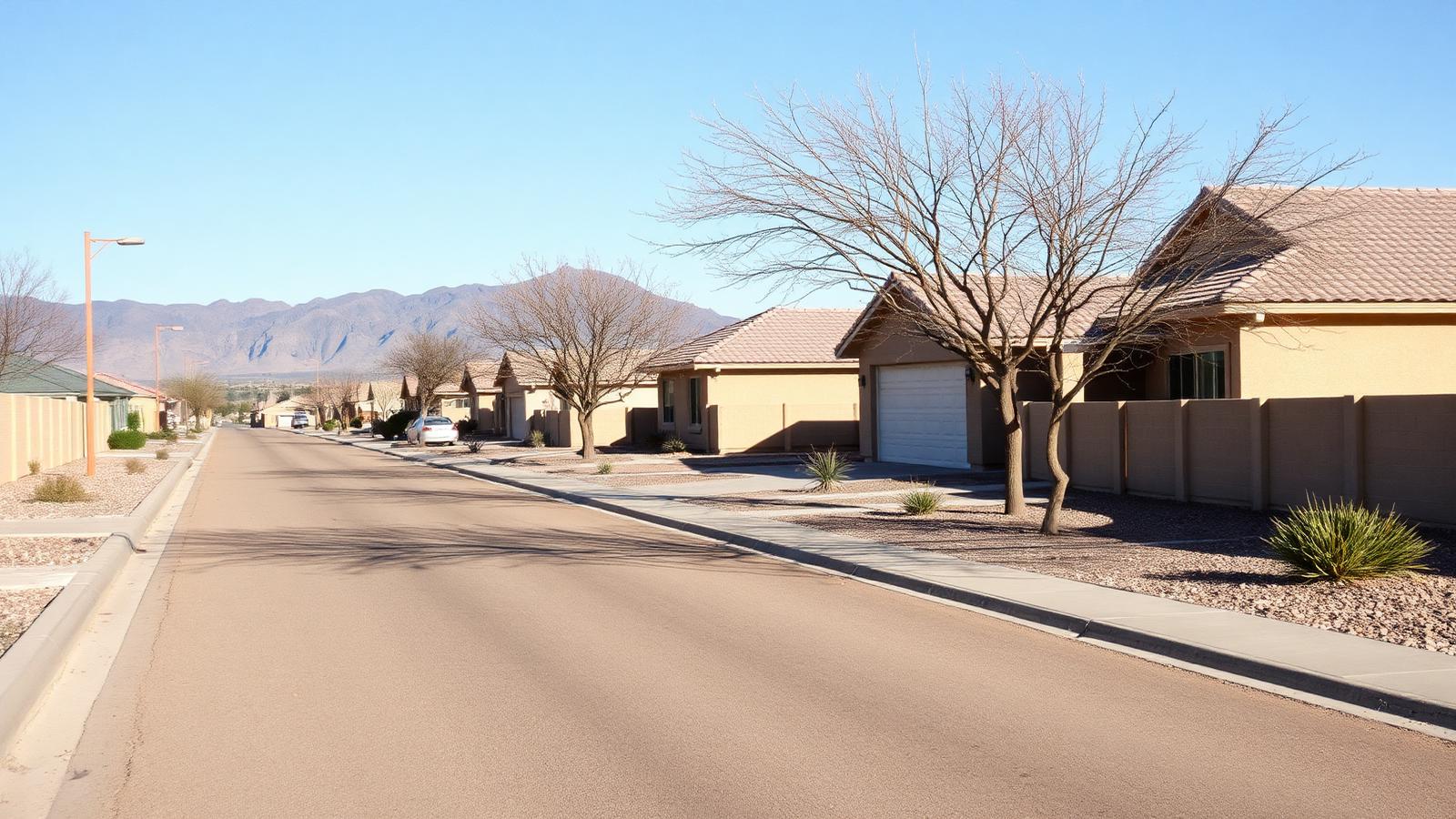
Paid search and Local Services Ads move on the days rankings cannot: the first 105-degree week of June, a July monsoon downpour that overwhelms an arroyo, or a Fort Bliss unit rotating out on a Friday. Campaigns are built by area — West Side, Northeast, Lower Valley — with drive time across the Franklins respected instead of a blind radius, and negatives that strip DIY and parts searches before they burn budget.
Social advertising: reach the deferred project
Stucco repair, block-wall replacement, xeriscape and desert landscaping, patio covers and epoxy garage floors rarely start with a Google search — homeowners decide after seeing the work. Social advertising in El Paso puts real job-site photography from West Side hillside lots or Horizon City new-builds in front of the right neighborhoods, in English and Spanish, before the decision is made rather than after.
Web design: the trust layer for a bilingual, base-driven market
Every click, from a Juárez commuter searching on a lunch break to a Fort Bliss family searching before a move, lands on the same page. Our El Paso builds run fast on a phone, keep click-to-call fixed in the header, offer a genuine Spanish-language track rather than a machine-translated afterthought, and carry LocalBusiness, Service and FAQ schema naming West Side, Northeast, the Lower Valley and Horizon City by name so answer engines can cite the business directly.
How the four channels work as one framework in El Paso
SEO carries the steady baseline across West Side, Northeast, the Lower Valley and the outlying towns. Google advertising covers the heat spike, the monsoon downpour and the PCS rush that rankings cannot flex around fast enough. Social advertising surfaces the deferred jobs — the stucco crack, the failing block wall, the swamp cooler nobody has replaced yet — that never produce a search at all. Web design converts every one of those channels and is what lets an AI answer name your business instead of a competitor's. One short sentence carries the return: a single evaporative-to-refrigerated conversion job worth $8,200 becomes $98,400 a year if the pipeline delivers one a month, and that is the kind of math a fragmented four-vendor setup rarely tracks cleanly.
The master framework: one system, four disciplines, one El Paso market
Run separately, each channel pays retail and leaves gaps: SEO alone misses the heat-spike week, paid alone burns budget on searches that were never going to convert, social alone has no landing page built to close, and a beautiful website with no traffic behind it converts nothing. Installed together as a single framework — with one report tracking qualified inbound by area, not a stack of disconnected dashboards — the four disciplines lower each other's cost and cover the border market's actual calendar: monsoon season, the summer heat run, and every Fort Bliss rotation in between.
The four services Extentus runs in El Paso
- Search Engine Optimization
- The channel you own — map-pack rankings, reviews and service-area pages that keep producing after the work is done.
- Google Advertising
- The channel with a volume dial — paid search and Local Services Ads tuned to the hours demand actually spikes.
- Social Advertising
- The channel that builds the pipeline — demand created in homeowners before they ever search.
- Web Design
- Where the other three cash out — fast, mobile-first pages built to convert visits into booked jobs.
Install all four in El Paso
One framework, one accountable record: qualified inbound by channel and by El Paso district, cost per qualified inbound, and the exact pages responsible.
El Paso marketing questions, answered
Because the Franklin Mountains physically split the city, and West Side, Northeast El Paso, the Lower Valley, Horizon City, Socorro, Canutillo and Sunland Park all have different housing stock, different climate exposure and different drive times. A single citywide page or one wide paid-ad radius reads as generic to both Google and to homeowners, and it wastes ad spend routing leads across a mountain range a crew won't drive to profitably. Area-specific pages built around what actually fails in that part of town perform better and cost less to run.
With about 9 inches of rain a year, single-digit humidity, and summers regularly over 100 degrees, demand here is driven by dust load on HVAC filters, evaporative-to-refrigerated-air conversions, hard-water damage to fixtures and water heaters, and stucco or block-wall wear rather than the storm and freeze cycles that drive marketing in wetter Texas metros. Campaigns and content built around a generic Texas weather calendar miss most of what El Paso homeowners are actually searching for.
Yes. Fort Bliss is one of the largest Army installations in the country, and its permanent-change-of-station rotation creates a predictable cycle of rental turnover, move-out repair work, and buyer or seller inspection punch lists concentrated around Northeast El Paso. That cycle is more reliable than storm-driven demand elsewhere in Texas, and a marketing plan that tracks the PCS calendar captures work a generic plan leaves on the table.