Ready to rank in Austin?
Call now — 385-985-0003Austin SEO · Travis County
SEO in Austin: a metro adding people faster than it adds contractors, where the search decides who gets the call
Whether you run a plumbing company, an HVAC business, a fencing, concrete or epoxy flooring crew, or any local service company, Austin homeowners search before they call — and half of them moved here recently enough that they have no one to ask. Local SEO is what determines whether that search actually lands on your business name.
The short answer
SEO in Austin means earning the Google map pack and organic results for Central Texas service searches — ac repair, emergency plumbing, water heater replacement, fencing, concrete and driveway work, patios and epoxy flooring, plus their neighborhood variants. Extentus builds Google Business Profile authority, review velocity and real service-area pages for South Austin, East Austin, Mueller, Hyde Park, Westlake, Circle C, Round Rock, Cedar Park, Leander, Pflugerville, Georgetown, Kyle and Buda, then reports booked jobs.
The condenser fails (1 of 6)
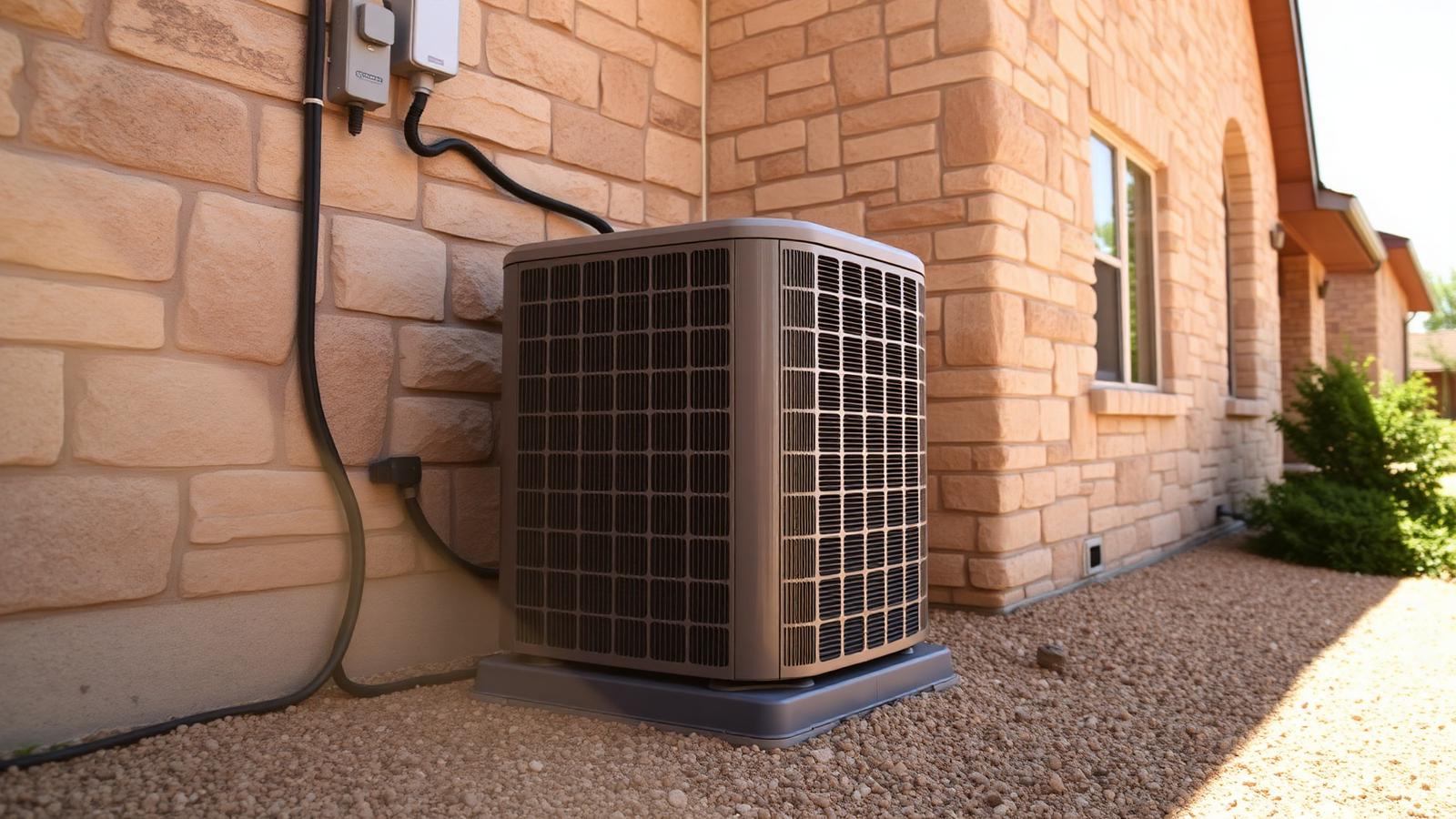
It is the third week of August, the condenser in a Circle C house gives up at 4pm, and the thermostat reads 88 inside.
It is 104 degrees outside and has been for a fortnight. The owner bought the house eighteen months ago after relocating for work, knows no tradespeople in Texas, and has a phone. They type "ac repair austin" or "ac repair near me," and they call one of the three businesses Google puts in the map pack. That whole process, from typing the search to dialing the number, takes less than two minutes.
The same shape repeats across every trade in Central Texas. A slab leak under a Hyde Park bungalow with cast iron plumbing older than the neighborhood's zoning. A cedar privacy fence in Round Rock that a spring hailstorm and four summers of UV have finished off. A driveway in Pflugerville cracking as Blackland Prairie clay swells and shrinks with each drought-then-deluge cycle. An epoxy garage floor peeling in a Leander two-car that gets afternoon sun through an open door all summer.
Local SEO in Austin is not brand work. It is whether your business is the one that appears at the moment a homeowner with no local network and no patience stops asking around and starts searching.
The growth-market difference (2 of 6)
Austin is a growth market, not a mature one — the customer base turns over faster than the contractor base.
Austin has roughly 980,000 residents inside a Travis County of about 1.3 million and a five-county metro of some 2.5 million, and it has spent the last fifteen years as one of the fastest-growing large metros in the United States. That single fact changes the search math for every trade. In a mature market most service work is assigned by referral inside networks built over decades. In Austin a large share of homeowners in any given year are new — new to the house, new to the state, and completely without a plumber, an HVAC company or a fence guy. They do not ask a neighbor. They search.
The physical conditions are Texan, not coastal. Heat is the dominant load: Austin summers routinely run weeks of triple-digit afternoons, and 2023's stretch of 45 days at or above 105 degrees is the local benchmark. Systems do not fail gently in that; they fail at full load, on the hottest afternoon, all at once across a subdivision. Winter is the mirror image — the February 2021 freeze that burst pipes across Central Texas is why every Austin homeowner now knows what a slab leak and a repipe cost. Between them sit expansive clay soils east of MoPac that move enough to crack driveways, patios and foundations, hard limestone-fed water that scales water heaters and fixtures years early, hail on the spring line, and a construction boom that has put hundreds of thousands of new slabs, fences and HVAC systems into the ground in Round Rock, Georgetown, Leander, Kyle, Buda and Manor over a decade — all of them now aging into their first replacement cycle simultaneously.
It also changes who your competition is. Austin's growth attracted private-equity-backed HVAC and plumbing consolidators, national franchises and lead-reseller platforms, all of which spend real money on visibility here. Most of them do not have a local reputation; they have a budget. That is the opening. A homeowner comparing a franchise call center against a company whose reviews name their own subdivision picks the second one — but only if the second one is visible.
And Google weights proximity heavily. The metro reads as bands along I-35 and the tollways: the urban core, then a suburban ring at Round Rock, Cedar Park, Pflugerville and Buda, then Georgetown, Leander, Hutto, Kyle and Dripping Springs further out. A single citywide page ranks near your shop and nowhere else — which is why so many Austin contractors feel busy in four ZIP codes and invisible across a metro of 2.5 million people.
The build (3 of 6)
The build order: profile, proof, then the growth-ring pages.
Google Business Profile first, because for home service search it is the single largest ranking input: correct primary category, every service named the way Austin customers type it — ac not cooling, emergency repipe, water heater replacement, cedar fence installation, driveway replacement, garage floor coating — an honest service-area definition across the city and the suburban ring, real job photos with recognizable Central Texas context, and hours that reflect whether you actually answer at 8pm in August.
Reviews should arrive as a steady drip, not one forty-review push, collected at the end of every job with owner replies that name the street and the scope. When a third of your buyers are newcomers with nobody local to ask, a review reading "replaced a 4-ton system in Circle C during the August heat wave" outperforms a paid ad, because the next Circle C homeowner sees their own street and their own problem inside it.
Then the pages. One page per service, and one page per neighborhood or suburb you actually serve — South Austin, East Austin, Mueller, Hyde Park, Zilker, Travis Heights, Westlake, Circle C, Steiner Ranch, North Austin, Round Rock, Cedar Park, Leander, Pflugerville, Hutto, Georgetown, Kyle, Buda, Manor and Dripping Springs — because in a metro this wide, that page layer is what lets you rank past a five-mile radius without opening a second location. None of it works if the pages themselves load slowly on a phone in a driveway or arrive without the LocalBusiness and Service markup that tells Google, and increasingly an AI answer engine, exactly what you do and where.
The payoff (4 of 6)
The math on a metro of 2.5 million people adding more every month.
Take an Austin HVAC business with an average repair ticket near $450 and a replacement close around $10,000 — the systems are large because the cooling load is brutal, and Austin's newer housing stock skews toward bigger conditioned square footage.
Add plumbing repipes and water heater replacements pulled forward by hard water and freeze damage, fencing and concrete on a decade of new subdivisions hitting replacement age, and elective coatings on garages nobody parks in during August. A modest map-pack share across a cluster of repair and neighborhood terms across Travis and Williamson counties puts a hundred or more qualified calls a month within reach, and a handful of the replacement jobs out of that pool pays for a year of the work.
Compare that to what a bought lead costs. Resellers and shared-lead platforms in Austin rent a lead priced by the seller, hand it to your competitors the same afternoon, and set the price against consolidator budgets rather than what the job is worth to you. Ranking organically is front-loaded work that keeps paying afterward, and because heat, clay and hard water never let up, a Round Rock or South Austin page published this quarter keeps producing calls as those houses keep aging into failure.
The trade-off (5 of 6)
Only SEO keeps working after the invoice is closed.
Paid search rents the emergency for as long as the budget runs. Social ads talk a homeowner into the epoxy garage or the shade structure they had shelved for three summers. The website converts whoever lands on it, and in a metro full of relocated buyers with no reference points it has to also prove the business is real. Organic search is the one that keeps compounding — a Cedar Park page published this quarter still earns calls three years out, and a well-groomed Google Business Profile keeps outranking competitors who arrived later.
The cost is responsiveness. When the year's first 105-degree day hits and a thousand condensers quit between Kyle and Georgetown in one afternoon, a ranking cannot move — only a bid can. That split is intentional: search holds the baseline, paid media covers the spike. Rely on organic alone and the phones go quiet exactly when demand triples; rely on ads alone and every call is rented forever against consolidator budgets. The Austin framework page walks through why both stay in the mix.
Search Engine Optimization is one of four. The Austin Master Framework page makes the case for running all four together, and what running only one costs a Austin service business.

Where we run seo in Austin
Search Engine Optimization for service businesses across Austin and Travis County, plus the satellite towns crews already drive to. Every district below is targeted by name in campaigns, pages and profile service areas — not folded into a single city radius.
- Austin districts
- Downtown Austin · East Austin · South Congress · Zilker · Travis Heights · Hyde Park · Clarksville · Mueller · Rosedale · Crestview · North Loop · Circle C Ranch · Southpark Meadows · Westlake Hills · Barton Creek · Steiner Ranch · The Domain · Del Valle
- Beyond the county line
- Round Rock · Cedar Park · Leander · Pflugerville · Hutto · Georgetown · Kyle · Buda · Manor · Dripping Springs · Bee Cave · Lakeway · San Marcos · Travis County · Williamson County · Hays County
- ZIP codes covered
- 78701 · 78702 · 78703 · 78704 · 78705 · 78717 · 78722 · 78723 · 78724 · 78727 · 78731 · 78735 · 78739 · 78741 · 78745 · 78746 · 78748 · 78749 · 78750 · 78751 · 78752 · 78753 · 78756 · 78757 · 78758 · 78759
The Travis County baseline (6 of 6)
Heat, clay, hard water and a decade of new construction are the demand drivers here.
None of this is a guess. Austin counts roughly 980,000 residents inside a Travis County of about 1.3 million and a metro of some 2.5 million, and it has ranked among the country's fastest-growing large metros for well over a decade, with growth landing hardest in Williamson and Hays counties — Round Rock, Georgetown, Leander, Hutto, Kyle and Buda. Employment has broadened well past state government and the University of Texas into a substantial technology and semiconductor base, including major manufacturing investment north and east of the city.
The climate sets the calendar. Summers run long strings of triple-digit afternoons — 2023 delivered 45 days at or above 105 degrees — which pushes cooling systems to failure at peak load rather than gradually. Winter delivers the opposite risk on rare but expensive occasions; the February 2021 statewide freeze burst pipes across Central Texas and reset what local homeowners expect to pay for plumbing. Spring brings hail. Underneath it all, expansive clay soil east of the Balcones fault moves with every drought-and-deluge cycle, cracking slabs, driveways and patios, and limestone-hard water shortens the life of water heaters and fixtures.
And the newest driver is simply age. The subdivisions that went up during the boom are now ten to twenty years old, which is exactly when original HVAC systems, fences, water heaters and driveways come due at once, across whole streets. Extentus builds the ranking layer in Austin that routes that replacement wave to your crew instead of a competitor's.
SEO in Austin — questions, answered
Austin's citywide head terms are genuinely competitive — the metro's growth attracted national franchises, private-equity-backed HVAC and plumbing groups, and lead resellers who all spend heavily on visibility. But in Austin, real search intent skews heavily toward specific neighborhoods and suburbs rather than the city as a whole, and that is the layer where an independent shop beats the consolidators first. Searches tied to South Austin, East Austin, Circle C, Round Rock, Cedar Park, Pflugerville, Leander, Kyle and Buda are achievable in months, and they convert better than citywide terms because the searcher has already told you where the job is.
Because Austin's customer base turns over faster than almost anywhere in Texas. A large share of homeowners in any given year are new to the house or new to the state, with no plumber, HVAC company or fence contractor to call — so a higher proportion of work is assigned by search rather than referral. The physical drivers are also specific: extreme sustained summer heat rather than Gulf humidity, expansive clay soil east of MoPac that cracks concrete and moves foundations, limestone-hard water that shortens water heater life, spring hail, and a decade of new construction in Williamson and Hays counties now aging into its first replacement cycle.
Yes, materially. It means your page layer has to follow the growth ring, not the city limits — Round Rock, Cedar Park, Leander, Pflugerville, Hutto, Georgetown, Kyle, Buda and Manor behave as their own markets with their own housing ages and their own competitors. It also means content should speak to what actually fails on a ten-to-twenty-year-old Central Texas house: original builder-grade HVAC at end of life, cedar fencing weathered by UV and hail, driveways and patios cracked by clay movement, water heaters scaled by hard water, and freeze-damaged plumbing. That is what people type, and it is what AI answer engines quote.
The rest of the Austin set
- Google Ads
Google Advertising in Austin
The channel you can turn up in an hour. Google Ads and Local Services Ads bid by Austin neighborhood, suburb and hour — heat waves, freeze events and hail weeks bought deliberately, with qualified calls as the only number that counts.
Open page - Social Ads
Social Advertising in Austin
The channel that creates demand instead of harvesting it. Meta, Instagram and TikTok creative shot on your own Central Texas job sites, aimed at the Austin neighborhoods and suburbs where the housing matches the work.
Open page - Web Design
Web Design in Austin
The multiplier. A fast, credible site with click-to-call, separate emergency and project paths, proof from Central Texas job sites, and the schema layer that lets Google and AI answer engines cite your business by name.
Open page - All four — recommended
The Master Framework in Austin
All four, installed together and reported as one. The argument the whole business rests on — localized to Austin's growth ring, its triple-digit summers, its freeze risk and the consolidator budgets bidding against you.
Open page