Ready to advertise in Dayton?
Call now — 385-985-0003Dayton · Google Advertising
Google Ads in Dayton: the budget belongs to the hours the weather and the move calendar create.
Hail crosses Huber Heights at four in the afternoon and by six every roofer in the Miami Valley is being searched for at once. A furnace quits in a 1954 Belmont ranch on the coldest night in January. A family closing on a Beavercreek house in July needs three trades before the movers arrive. Dayton's paid demand is not a smooth line — it is a series of sharp, forecastable windows, and Google Ads is the only channel that can be standing there the moment one opens.
The short answer
Google Ads in Dayton works by concentrating budget into the hours demand actually spikes: severe storm events across the Miami Valley, the June-through-August relocation window around Wright-Patterson Air Force Base, and winter no-heat and frozen-line emergencies. Extentus runs call-focused campaigns for urgent services, Local Services Ads where a trade qualifies, and suburb-weighted targeting across Montgomery and Greene counties, then attributes every call to a campaign and suburb so cost per booked job stays visible rather than buried in click reports.
Beat 01 · Flat monthly spend loses money here
Dayton demand arrives in bursts, so a level daily budget is wrong nearly every day.
A steady spend rate is comfortable to plan and wrong in practice. On an ordinary Tuesday in October it is buying clicks nobody needed to click. On the evening a storm line crosses Montgomery County, it caps out in an hour and hands the rest of the surge to whoever was willing to spend more.
Dayton's bursts are unusually forecastable. Severe weather is watched days out. Cold snaps are watched days out. The relocation window happens on the same calendar every single year. That makes it possible to hold reserve budget deliberately and release it into the hours that pay.
So the structure is built around that: baseline coverage for steady service demand, and surge capacity that activates when the forecast or the calendar says it should.
Beat 02 · Storm response is measured in hours, not days
After hail or wind, the Miami Valley's search volume for roofing and tree work spikes and then decays fast.
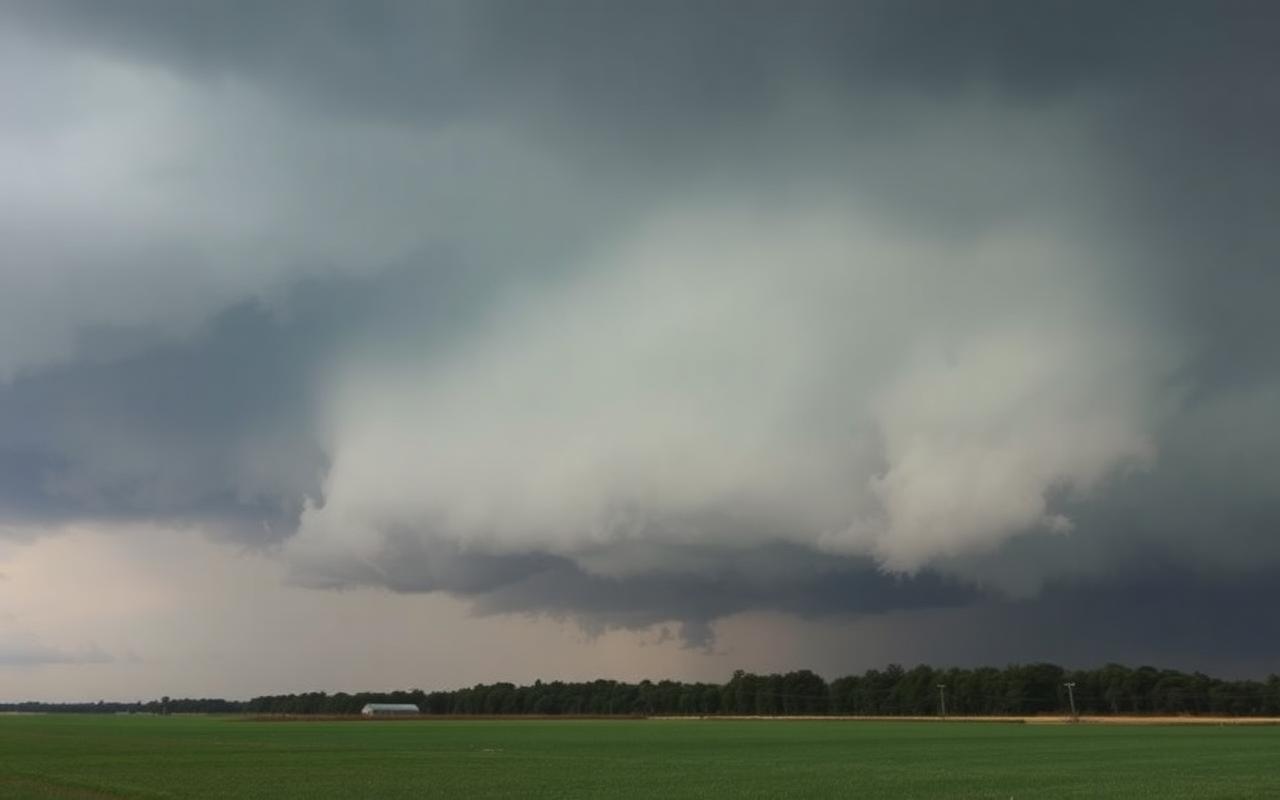
This region takes severe weather seriously for good reason — the Memorial Day 2019 outbreak sent fifteen tornadoes through the Miami Valley in a single night, and hail and straight-line wind arrive in ordinary years too. The searching starts before the rain stops: roof, siding, gutter, fence, and tree work, all at once, in the affected townships.
The window is short. Most of those homeowners will have made a call within forty-eight hours, and much of the volume is gone within a week. Campaigns that need a human to notice and adjust them arrive after the money moved.
So storm coverage is pre-built and pre-approved: ad groups, extensions, and landing pages ready, geography tightened to the affected corridor, and budget released on the forecast rather than after the invoices.

Beat 03 · The move window is a second, quieter surge
June through August concentrates inspection repairs, pre-sale work, and new-homeowner projects.
The relocation cycle around Wright-Patterson clusters closings and moves into summer. That produces a distinct kind of paid demand: inspection-driven repairs on a deadline, pre-sale concrete and roofing work, and brand-new homeowners buying their first local service with no shortlist and a short decision window.
It rewards different creative. These searchers respond to clarity — availability, timeline, straightforward pricing context, and reviews that make sense to someone with no local reference points. Loyalty language and 'serving Dayton since' framing means very little to them.
Geographically it concentrates too: Fairborn, Beavercreek, Riverside, Huber Heights, and Vandalia carry more of it than the metro average, which is exactly the kind of weighting a properly built account can express.
Beat 04 · Roughly 810,000 people in the metro
About 810,000 people live in the Dayton metro — enough demand, thin enough competition to win outright.
That figure sets the ceiling and the opportunity at once. It is a real market with year-round trade demand, and it is small enough that competition on most trade terms is a handful of serious advertisers rather than dozens.
The consequence is that clicks are affordable and share is achievable. A well-run account here does not scrape a sliver of an enormous market; it can hold a genuine majority of impression share on the terms that matter, at costs a mid-size business can carry.
It also means waste is unforgivable. In a metro this size there is no volume cushion to hide a badly matched keyword, so negatives, match types, and geography get maintained continuously rather than set once.
Beat 05 · Emergency intent needs a phone, not a form
No-heat, burst-pipe, and post-storm searches convert on a call within minutes.
A homeowner in a cold Riverside house at eleven at night is not filling out a contact form. Neither is someone standing in a basement with water rising past the sump. Call-focused campaigns, correct hours, and a human answering are the whole conversion path.
Landing pages carry their share: service area named plainly, response time stated, license and insurance visible, and a tap-to-call target that works on the first try on a phone in a dim basement.
Local Services Ads sit above all of it when a trade qualifies, and the verified badge does real work with an audience that has no local history to draw on. Getting a business through that verification is part of the build, not an afterthought.
Google Advertising is one of four. The Dayton Master Framework page makes the case for running all four together, and what running only one costs a Dayton service business.
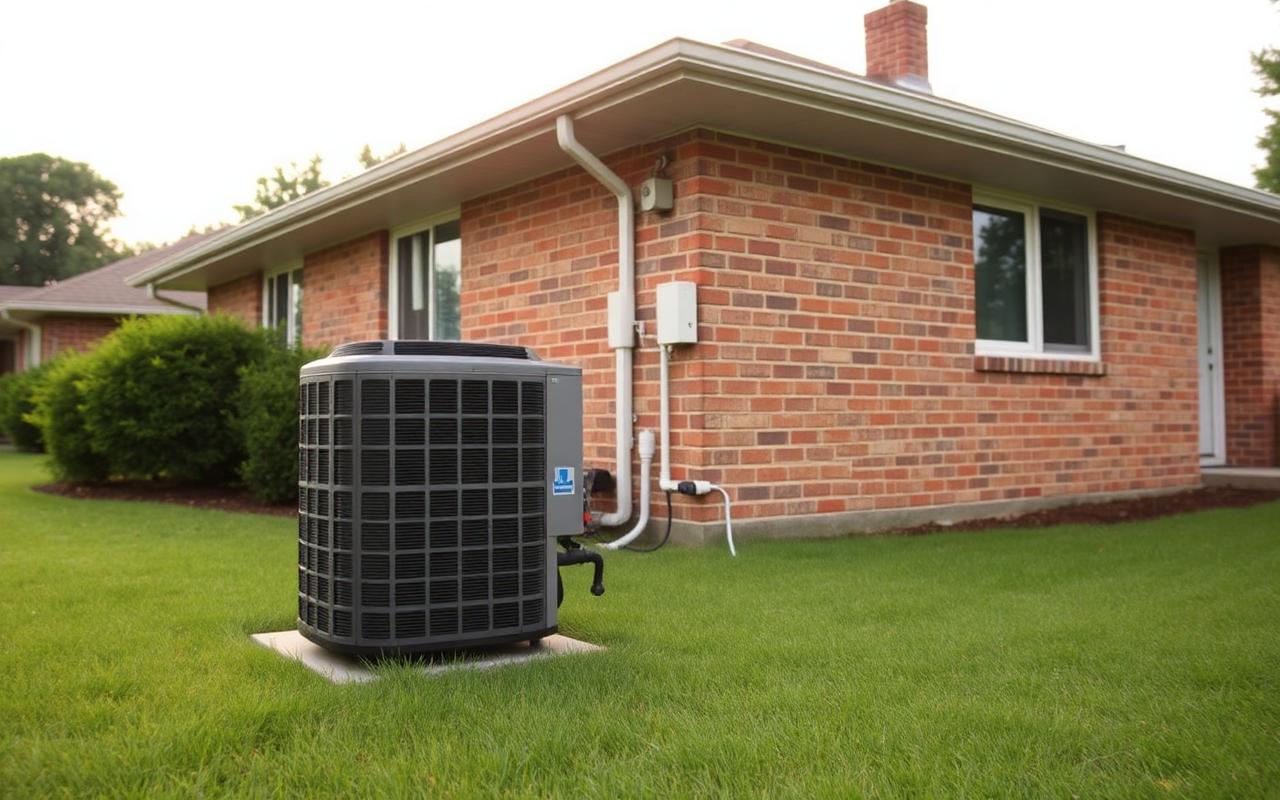
Where we run google ads in Dayton
Google Advertising for service businesses across Dayton and Montgomery County, plus the satellite towns crews already drive to. Every district below is targeted by name in campaigns, pages and profile service areas — not folded into a single city radius.
- Dayton districts
- Downtown Dayton · Oregon District · South Park · St. Anne's Hill · Grafton Hill · McPherson Town · Old North Dayton · Belmont · Walnut Hills · Twin Towers · Linden Heights · Hillcrest · Santa Clara · Five Oaks · Dayton View · Wolf Creek · Residence Park · Edgemont · Carillon · University of Dayton area · Webster Station · Fairview · Northridge · Riverdale · Great Miami River corridor · Mad River corridor · Stillwater River corridor
- Beyond the county line
- Kettering · Oakwood · Beavercreek · Fairborn · Centerville · Huber Heights · Miamisburg · Springboro · West Carrollton · Vandalia · Riverside · Trotwood · Moraine · Germantown · Brookville · Englewood · Union · Clayton · New Lebanon · Xenia · Yellow Springs · Bellbrook · Waynesville · Tipp City · Troy · Piqua · Franklin · Carlisle · Middletown · Wilmington · Eaton · Greenville · Wright-Patterson Air Force Base · Montgomery County · Greene County · Miami County · Warren County · Preble County · Darke County · Clark County · Miami Valley · Great Miami River valley · Southwest Ohio
- ZIP codes covered
- 45402 · 45403 · 45404 · 45405 · 45406 · 45409 · 45410 · 45414 · 45415 · 45416 · 45417 · 45418 · 45419 · 45420 · 45424 · 45426 · 45427 · 45428 · 45429 · 45430 · 45431 · 45432 · 45433 · 45434 · 45435 · 45439 · 45440 · 45449 · 45458 · 45459 · 45322 · 45324 · 45342 · 45343 · 45345 · 45354 · 45356 · 45373 · 45377 · 45385 · 45387 · 45301 · 45305 · 45306 · 45308 · 45309 · 45311 · 45314 · 45315 · 45317 · 45318 · 45320 · 45325 · 45327 · 45331 · 45370
Beat 06 · One ledger, cost per booked job by suburb
Every call is attributed to a campaign, suburb, page, and season.
Clicks and impressions are diagnostics. The number that matters is what a booked job costs, broken out by service and community, and it should be visible without asking for it.
So every call and form is tracked to the outcome. When Beavercreek furnace work books at a third the cost of a Trotwood campaign, budget moves and the reason is on the page rather than in an argument.
That ledger is also what makes paid search compound with the rest. Organic depth lowers what paid has to buy, social warms the audience before the emergency, and the site converts what all three send — with one team accountable for the total.
Google Ads in Dayton — questions, answered
Less than in Columbus or Cincinnati for comparable presence, because the field is thinner. What matters more than the monthly number is how it is distributed: baseline coverage for steady service searches, plus reserve capacity released into severe-storm events, cold snaps, and the June-through-August relocation window. Spending the same amount every day in a market with bursty demand is the most common way budget disappears here.
Everything is pre-built so nothing has to be assembled during the surge. Roofing, siding, gutter, fence, and tree ad groups sit ready with their own landing pages, geography can be tightened to the affected townships within minutes, and reserve budget releases on the forecast rather than after the storm has passed. The spike decays inside a week, so response speed is the entire advantage.
Directly. Closings and moves concentrate in summer, which produces inspection-driven repairs on deadlines and brand-new homeowners buying local services for the first time. Those campaigns are weighted toward Fairborn, Beavercreek, Riverside, Huber Heights, and Vandalia, and the ad copy is written for someone with no local reference points — availability, timeline, and clear pricing context rather than tenure claims.
The rest of the Dayton set
- SEO
Search Engine Optimization in Dayton
Dayton rewards being findable before you are known. A Google Business Profile built around real Miami Valley buyer behavior — post-storm roof calls, PCS-cycle inspection repairs, spring water in levee-district basements, freeze-thaw driveway cracking — is what separates a business that owns the map pack from one sitting on page two. By anchoring your presence across Montgomery and Greene counties and out through Kettering, Beavercreek, Centerville, Fairborn, Huber Heights, and Miamisburg, Extentus makes sure your business is the first name a newly arrived household finds.
Open page - Social Ads
Social Advertising in Dayton
In the Miami Valley, paid social is a pipeline instrument. It puts finished fence lines, poured patios, garage floors, and remodels in front of Montgomery and Greene County households months before they search — which matters twice as much in a market where a large share of homeowners moved here recently and know nobody. Extentus runs it against real project seasons: demand built through winter so spring opens booked, and a distinct arrival-window push through summer.
Open page - Web Design
Web Design in Dayton
A Dayton trade website has two jobs at once: satisfy a technically literate audience that reads details closely, and make immediate sense to a household that arrived in the Miami Valley six weeks ago. Extentus builds fast, mobile-first sites with real project proof from Montgomery and Greene County jobs, plain process and materials detail, visible reviews and credentials, and service-area pages for Kettering, Beavercreek, Fairborn, Centerville, Huber Heights, and Miamisburg that both homeowners and search engines treat as genuine.
Open page - All four — recommended
The Master Framework in Dayton
Extentus installs search, Google advertising, paid social, and web design as one system with one team and one ledger. In the Miami Valley that matters twice over: budgets are moderate so waste is fatal, and a large share of demand comes from households newly arrived around Wright-Patterson who choose whoever is most visible and most credible at the moment they start looking. Four coordinated channels win that moment. Four disconnected vendors take turns missing it.
Open page