Dayton, Ohio
Web Design and SEO in Dayton, Ohio — Built for an Aerospace Town
Dayton invented powered flight and never stopped being an engineering town. Wright-Patterson Air Force Base sits at the edge of the metro as the largest single-site employer in Ohio, feeding a research, avionics, and defense-contract economy that keeps thousands of households moving in and out on assignment cycles. Marketing here has to be built for that: a Montgomery County market where a meaningful slice of demand arrives brand new every summer with no idea who to call.
Five dedicated Dayton pages
Each discipline has its own Dayton page — its own local search data, its own market detail, its own URL.
- SEO
Search Engine Optimization in Dayton
Dayton rewards being findable before you are known. A Google Business Profile built around real Miami Valley buyer behavior — post-storm roof calls, PCS-cycle inspection repairs, spring water in levee-district basements, freeze-thaw driveway cracking — is what separates a business that owns the map pack from one sitting on page two. By anchoring your presence across Montgomery and Greene counties and out through Kettering, Beavercreek, Centerville, Fairborn, Huber Heights, and Miamisburg, Extentus makes sure your business is the first name a newly arrived household finds.
Open page - Google Ads
Google Advertising in Dayton
Paid search in Dayton is about presence in specific hours, not steady monthly spend. Extentus builds campaigns around the Miami Valley's real triggers — severe storms in spring and summer, the June-through-August relocation window around Wright-Patterson, cold snaps and thaw cycles in winter — with call-only coverage for emergencies, Local Services Ads where they qualify, and geographic weighting toward Kettering, Beavercreek, Fairborn, Centerville, and Huber Heights.
Open page - Social Ads
Social Advertising in Dayton
In the Miami Valley, paid social is a pipeline instrument. It puts finished fence lines, poured patios, garage floors, and remodels in front of Montgomery and Greene County households months before they search — which matters twice as much in a market where a large share of homeowners moved here recently and know nobody. Extentus runs it against real project seasons: demand built through winter so spring opens booked, and a distinct arrival-window push through summer.
Open page - Web Design
Web Design in Dayton
A Dayton trade website has two jobs at once: satisfy a technically literate audience that reads details closely, and make immediate sense to a household that arrived in the Miami Valley six weeks ago. Extentus builds fast, mobile-first sites with real project proof from Montgomery and Greene County jobs, plain process and materials detail, visible reviews and credentials, and service-area pages for Kettering, Beavercreek, Fairborn, Centerville, Huber Heights, and Miamisburg that both homeowners and search engines treat as genuine.
Open page - All four — recommended
The Master Framework in Dayton
Extentus installs search, Google advertising, paid social, and web design as one system with one team and one ledger. In the Miami Valley that matters twice over: budgets are moderate so waste is fatal, and a large share of demand comes from households newly arrived around Wright-Patterson who choose whoever is most visible and most credible at the moment they start looking. Four coordinated channels win that moment. Four disconnected vendors take turns missing it.
Open page
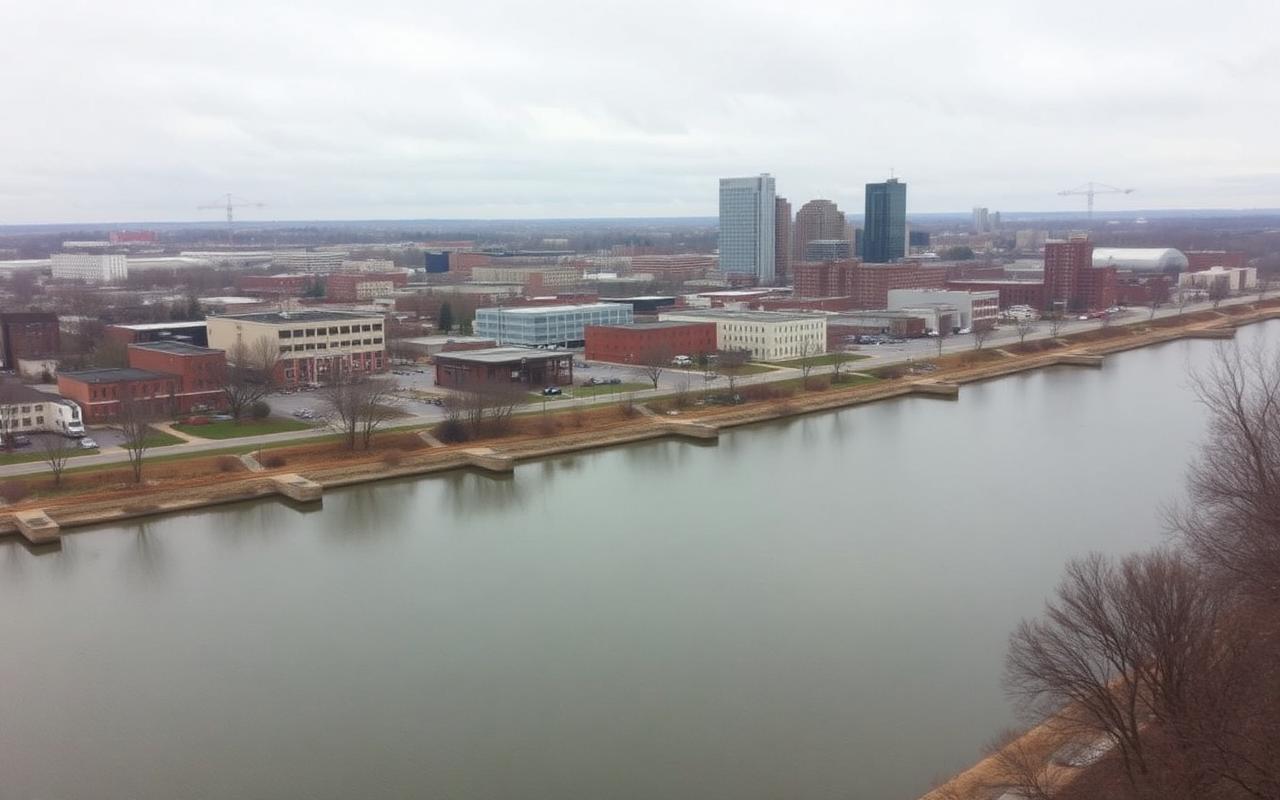
Dayton's identity is aviation. The Wright brothers built and tested their aircraft here before the world believed it was possible, and the aerospace research culture they started never left — it consolidated into Wright-Patterson, the Air Force Research Laboratory, and the ring of engineering firms, machine shops, and defense subcontractors that grew up around them. That gives the metro a technical, credential-respecting business culture and a housing market that behaves unlike anywhere else in Ohio, because permanent-change-of-station moves rotate families through Fairborn, Beavercreek, Riverside, and Huber Heights every two to four years.
Extentus installs search, Google advertising, paid social, and web design as one system instead of four separate contracts. In Dayton that pairing is unusually productive: the metro is mid-size and modestly priced to advertise in, but its demand pool refreshes constantly with newly arrived households who have no existing contractor relationships — so whoever is visible and credible at the moment of arrival wins the whole relationship, not just one job.
What makes the Dayton market distinct
Three forces shape it. First, the base economy: military and civilian defense households arriving, departing, buying, selling, and fixing up on assignment timelines rather than personal ones. Second, the rivers: the Great Miami, Mad, and Stillwater converge downtown behind the Miami Conservancy District's dry dams and levees, built after the catastrophic 1913 flood, which means grading, drainage, sump, and basement water work is a permanent category here. Third, severe weather: the 2019 Memorial Day tornado outbreak put fifteen tornadoes through this region in one night, and roof, siding, tree, and fence demand still moves with the storm calendar.
Search: a market that refreshes its own demand
Most local search markets grow slowly. Dayton's turns over. Every summer, households new to Fairborn, Beavercreek, Centerville, Kettering, Huber Heights, and Vandalia search for plumbers, HVAC companies, fence installers, and concrete contractors with no shortlist at all. The trade that owns the map pack in those suburbs is not competing against relationships — it is the first relationship.
Google advertising: storm season and move season
The paid calendar has two Dayton-specific spikes on top of the normal seasons. Late spring through midsummer brings severe storms crossing the Miami Valley plain — hail, straight-line wind, and the tornado risk this region takes seriously — plus the PCS move window that concentrates inspection-driven repair work into June, July, and August. Winter adds ordinary furnace and frozen-line emergencies through Montgomery, Greene, and Miami counties.

Social advertising: introducing yourself before the need
Paid social is how a Dayton trade becomes familiar to a household that arrived four months ago. Fencing for a new backyard, epoxy floors in a base-adjacent garage, a patio for a family that will only be here three years and wants to use it now, driveway replacement before a sale — projects sell on visibility and proof, not on the emergency.
Web design: engineers read the details
This is a town of engineers, avionics technicians, and defense-contract project managers. Vague claims land poorly. Specifics — process, materials, warranty terms, real photos of comparable Oakwood, Belmont, or Huber Heights houses — land well, and the site has to deliver them fast on a phone.
How the four channels compound in Dayton
Organic depth across Montgomery and Greene counties lowers the cost of every paid click. Paid search catches the post-storm roof call and the no-heat call within the hour. Paid social builds the fence, patio, and garage-floor pipeline through the months when nothing is broken. The site converts all of it and answers the technical questions this audience actually asks. Installed together, they turn constant population turnover from a risk into a renewable source of new customers.
The Dayton attribution advantage
Because so much demand is new arrivals, knowing which channel produced which job matters more here than in a stable market. Every inbound gets sorted by channel, suburb, page, and season, so budget follows the Beavercreek fence job and the Fairborn furnace call that actually produced revenue — instead of a flat number copied from a metro twice the size.
The four services Extentus runs in Dayton
- Search Engine Optimization
- The channel you own — map-pack rankings, reviews and service-area pages that keep producing after the work is done.
- Google Advertising
- The channel with a volume dial — paid search and Local Services Ads tuned to the hours demand actually spikes.
- Social Advertising
- The channel that builds the pipeline — demand created in homeowners before they ever search.
- Web Design
- Where the other three cash out — fast, mobile-first pages built to convert visits into booked jobs.
Install all four in Dayton
One framework, one accountable record: qualified inbound by channel and by Dayton district, cost per qualified inbound, and the exact pages responsible.
Dayton marketing questions, answered
Scale and turnover. Columbus is a fast-growing capital and tech market with new-construction pricing, Cleveland is a large Great Lakes metro in the snowbelt, and Cincinnati is a river-and-hills market with a diversified headquarters economy. Dayton is a mid-size metro of roughly 810,000 built around aviation and aerospace, anchored by Wright-Patterson, where a large share of households rotate through on two-to-four-year assignment cycles. Demand refreshes constantly, budgets are moderate, and visibility at the moment of arrival matters more than long-standing reputation.
Substantially. With roughly 35,000 people working at the base, the surrounding suburbs — Fairborn, Beavercreek, Riverside, Huber Heights, and Vandalia — see a predictable summer move window. That produces inspection-driven repairs, pre-sale projects, and brand-new households with no contractor shortlist. Campaigns aligned to that cycle, with content that speaks plainly to someone who has lived here for six weeks, capture work that generic citywide advertising never sees.
More than most markets. Three rivers converge downtown behind the levee and dry-dam system built after the 1913 flood, so drainage, grading, sump, and basement water work is a standing category rather than an occasional one. And the region takes severe weather seriously for good reason — the 2019 Memorial Day outbreak sent fifteen tornadoes through the Miami Valley in a single night. Roof, siding, fence, and tree work spikes hard after storms, and campaigns built to respond within hours capture it.