Cleveland · Web Design
Web design in Cleveland: sites built to be believed by a skeptical buyer standing in a wet basement.
A Cleveland homeowner with water spreading across a basement floor is not evaluating your brand. They are holding a phone in one hand, standing somewhere with bad signal, deciding in about eight seconds whether your business looks real. That is the actual design brief in this market — not aesthetics, credibility. Cleveland buyers compare quotes, read reviews carefully, and have long memories for companies that overpromised. A site full of stock photos of houses that look nothing like theirs fails immediately, while an honest site with real photos of real work on a 1920s double converts a stranger into a scheduled call.
The short answer
Web design for Cleveland trades is a credibility problem before it is a design problem. Buyers here compare multiple quotes, read reviews closely, and mostly arrive on a phone during an urgent situation, so sites need to load fast, prove the work with real photos of comparable pre-1940 Cleveland housing, state pricing honestly, and make calling effortless. Extentus builds mobile-first sites with service-area depth across Cuyahoga County, structured data for every ZIP served, and conversion tracking that shows which page produced the call.
Beat 01 · The visitor is usually in a bad situation
Most Cleveland trade site visits happen on a phone, in a hurry, during something going wrong.
The design assumptions that work for a corporate marketing site fail for a Cleveland contractor. The visitor is standing in a basement, or outside next to a heaved driveway, or in a cold kitchen at eleven at night. They are on a phone. They may have one bar. They have already opened two competitors in other tabs.
That means load speed is a conversion feature, not a technical nicety. Every unnecessary script, oversized hero image and third-party widget costs calls, and it costs them most severely on exactly the visits that were most likely to convert. Cleveland's older neighborhoods also have uneven mobile coverage, which compounds the problem.
So the build starts from the phone and the emergency: tap-to-call in the thumb zone, service and coverage visible without scrolling, no interstitials, no chat widget that hijacks the viewport, and a form that works if someone would rather type than talk at midnight.
Beat 02 · Proof is the design system
Real photographs of real Cleveland work do more for conversion than any visual treatment.
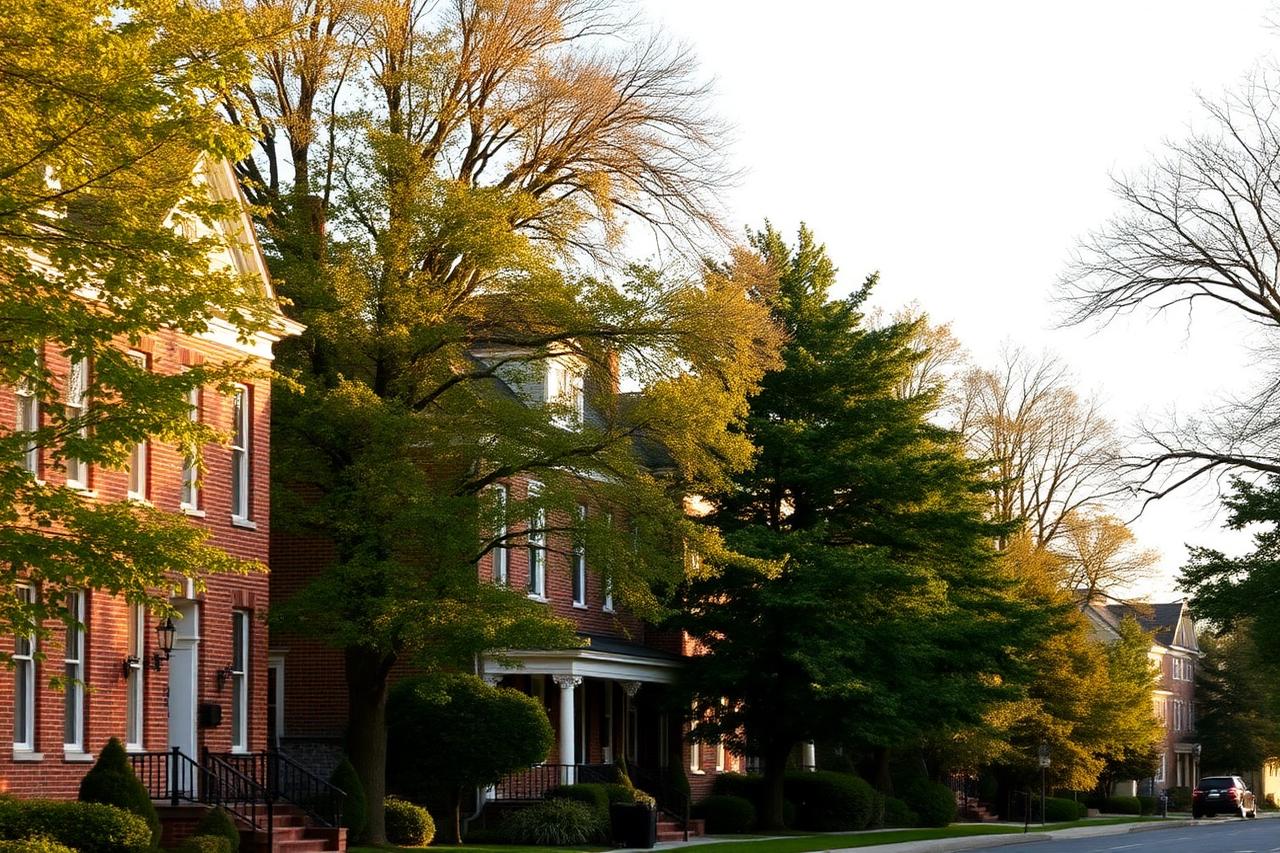
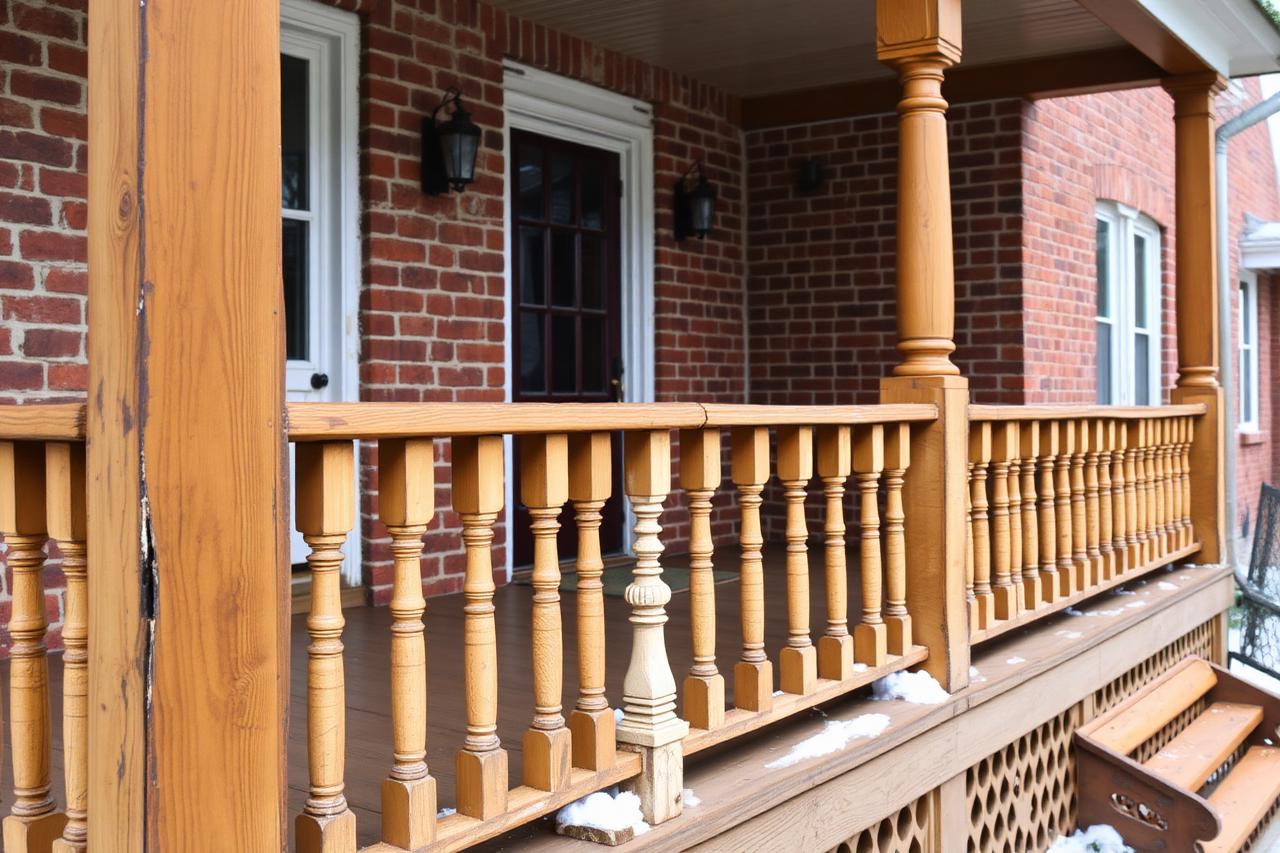
Cleveland homeowners recognize their own housing instantly. A photo gallery of new-construction suburbs tells a Parma bungalow owner that this company works somewhere else. A gallery showing a stone foundation, a rebuilt porch on a brick double, a driveway poured between two houses eleven feet apart — that tells them the company works here.
So project photography becomes the primary content type, organized by housing type and neighborhood rather than by service alone. Before-and-after pairs shot from the same angle. Mid-job photos that show framing, footings and pipe rather than only the finished surface. Reviews placed next to the projects they describe instead of collected on a testimonials page nobody visits.
License numbers, insurance, warranty terms and service-area maps belong in the same neighborhood of the page. In a market where a homeowner has been burned or knows someone who was, removing doubt is the design work.
Beat 03 · Honest pricing language converts better than hidden pricing
Old-house work has unknowns, and saying so out loud earns more calls than pretending it does not.
Every Cleveland trade faces the same tension: a homeowner wants a number, and a pre-1940 house will not give you one until you open a wall. Most sites resolve that by saying nothing about price, which reads as evasion to a buyer already collecting three quotes.
The better pattern is a stated range plus the honest reasons it moves: the age of the lateral, whether the foundation is stone or block, whether the panel can carry the load, how far the crew has to haul concrete between two close-set houses. That framing does two things at once — it filters out shoppers who were never going to hire, and it earns trust from the ones who will.
It also shortens the sales conversation. A homeowner who read the range and the reasons arrives at the estimate already halfway sold, instead of treating the number as an opening position to be negotiated down.
Beat 04 · Under three seconds on a phone, or the call goes elsewhere
A trade site should be interactive in under about three seconds on mobile — Cleveland's urgent visits do not wait.
Aim for interactivity in roughly three seconds or less on a mid-range phone over a mediocre connection. That is not a vanity metric in this market; it is the difference between a call and a back button during the exact visit that had the highest intent of the week.
Hitting it requires discipline rather than heroics: images sized and compressed for the viewport they actually render in, fonts loaded without blocking, no tracking pile-up, no page builder shipping forty kilobytes of unused CSS, and server-rendered content so the first paint carries real information rather than a spinner.
It compounds with everything else too. Faster pages rank better, convert more of the expensive paid clicks a snowbelt January produces, and make retargeting cheaper because more visitors actually land. Speed is the one improvement that pays into all four channels at once.
Beat 05 · Service-area depth that matches where the trucks go
Cuyahoga County plus Lake, Lorain, Medina, and Geauga need real pages, not a list of city names.
A footer stuffed with sixty city names does nothing. What works is genuine depth for the places a business actually serves: a Lakewood page that talks about narrow lots and shared driveways, a Cleveland Heights page that talks about slate roofs and snowbelt loads, a Parma page about bungalow crawlspaces and driveway heave, an Avon or Brunswick page that acknowledges newer stock and different problems.
Each page carries its own proof photos, its own neighborhood references and its own structured data with the ZIP codes served. That is what makes a service-area claim credible to both a homeowner and a search engine, and it is what lets paid campaigns send snowbelt traffic to a page that speaks to the snowbelt.
It also prevents the most common failure in this market: a business that reads as downtown-only losing every Mentor, Medina and North Ridgeville homeowner to a smaller shop that simply looked local.
Web Design is one of four. The Cleveland Master Framework page makes the case for running all four together, and what running only one costs a Cleveland service business.
Where we run web design in Cleveland
Web Design for service businesses across Cleveland and Cuyahoga County, plus the satellite towns crews already drive to. Every district below is targeted by name in campaigns, pages and profile service areas — not folded into a single city radius.
- Cleveland districts
- Downtown Cleveland · Warehouse District · Ohio City · Tremont · Detroit-Shoreway · Gordon Square · Old Brooklyn · Slavic Village · Broadway-Slavic Village · Collinwood · Glenville · University Circle · Little Italy · Fairfax · Buckeye-Shaker · Hough · Clark-Fulton · Edgewater · Kamm's Corners · West Park · Lee-Harvard · Central · Cudell · Stockyards · The Flats
- Beyond the county line
- Lakewood · Parma · Parma Heights · Cleveland Heights · Shaker Heights · University Heights · South Euclid · Euclid · Garfield Heights · Maple Heights · Bedford · Brook Park · Berea · Middleburg Heights · Strongsville · North Royalton · Broadview Heights · Independence · Westlake · Rocky River · Fairview Park · North Olmsted · Olmsted Falls · Beachwood · Mayfield Heights · Solon · Willoughby · Mentor · Painesville · Chardon · Avon · Avon Lake · North Ridgeville · Elyria · Brunswick · Medina · Cuyahoga County · Lake County · Lorain County · Medina County · Geauga County · Northeast Ohio · Lake Erie south shore · Cuyahoga River valley
- ZIP codes covered
- 44101 · 44102 · 44103 · 44104 · 44105 · 44106 · 44107 · 44108 · 44109 · 44110 · 44111 · 44112 · 44113 · 44114 · 44115 · 44116 · 44117 · 44118 · 44119 · 44120 · 44121 · 44122 · 44123 · 44124 · 44125 · 44126 · 44127 · 44128 · 44129 · 44130 · 44131 · 44132 · 44133 · 44134 · 44135 · 44136 · 44137 · 44138 · 44139 · 44140 · 44141 · 44142 · 44143 · 44144 · 44145 · 44146 · 44147 · 44149 · 44192 · 44011 · 44012 · 44017 · 44022 · 44026 · 44035 · 44039 · 44060 · 44094 · 44095 · 44256 · 44212

Beat 06 · The site is where the whole system gets paid
Search depth, storm-timed paid search, and winter paid social all cash out on the same pages.
Every other channel in the Cleveland system ends here. Organic rankings across Cuyahoga County send visitors to these pages. Paid search during a lake-effect band sends its most expensive clicks here. Winter paid social sends months of accumulated renovation intent here. If the site leaks, all three leak.
So conversion instrumentation is part of the build, not an afterthought: call tracking by page and channel, form attribution, and event tracking on the specific actions that precede a booked job. That is what makes the whole ledger honest, and what tells us whether a snowbelt landing page or a west-side concrete page earned its budget.
Built together, the four channels stop competing for credit. Search lowers the cost of paid, paid catches the emergencies search cannot time, social builds the demand neither can find, and the site turns all of it into scheduled work. One team, one ledger, one accountable party.
Web Design in Cleveland — questions, answered
Credibility and speed. Most visits happen on a phone during an urgent problem, often on a weak signal, so the site needs to be interactive in about three seconds and lead with real photographs of completed work on comparable older Cleveland homes. Visible license and insurance details, honest pricing ranges, and tap-to-call placement do more for conversion here than any visual styling.
Publish ranges and the reasons they move. Pre-1940 housing carries genuine unknowns — the condition of a clay lateral, whether a foundation is stone or block, panel capacity, access between close-set houses — and explaining that earns more trust than saying nothing. It also filters out shoppers and shortens the estimate conversation with serious buyers.
Yes, when they carry real content. A Lakewood page about narrow lots and shared driveways, a Cleveland Heights page about slate roofs and snowbelt loads, and a Parma page about bungalow crawlspaces all convert and rank. A footer list of city names with no substance behind it does neither, and it makes the business look like it works nowhere in particular.
The rest of the Cleveland set
- SEO
Search Engine Optimization in Cleveland
Cleveland's trade market rewards businesses that treat repair demand as the main event. A Google Business Profile built around real Cleveland buyer behavior — no-heat calls in the east-side snowbelt, sewer and basement water work in the older wards near the Cuyahoga, freeze-thaw concrete failures every spring across Parma and Old Brooklyn — is what separates a business that ranks from one that gets buried under three generations of entrenched family competitors. By anchoring your presence across Cuyahoga County and out into Lake, Lorain, Medina, and Geauga, Extentus makes sure your business shows up wherever the next old house fails.
Open page - Google Ads
Google Advertising in Cleveland
Cleveland paid search rewards precision about time and place. Lake-effect snow concentrates emergency demand on the eastern snowbelt while the west side stays clear, spring freeze-thaw splits concrete across Parma and Old Brooklyn, and summer downpours push basement water calls through the older wards near the Cuyahoga. Extentus builds campaigns that shift budget and geotargeting with those events instead of averaging them away, so a trade pays for the calls it can actually win.
Open page - Social Ads
Social Advertising in Cleveland
Cleveland's project work is renovation work, and renovation decisions take months. Paid social is where a trade business builds that demand through a long winter — before-and-after proof from homes on the same kind of street, neighborhood-level targeting across Lakewood, Parma, Old Brooklyn and the inner ring, and retargeting that keeps a business present through a decision the homeowner makes slowly. Extentus runs it so the compressed spring-to-fall build season starts already booked.
Open page - Framework
The Extentus Framework in Cleveland
SEO, Google advertising, paid social and web design are not four purchases. In Cleveland they are one system with one calendar: organic depth across Cuyahoga County lowers the cost of every paid click, storm-timed paid search catches the snowbelt emergency the hour it happens, winter paid social builds the renovation pipeline neither can find, and the site converts all of it with proof instead of promises. One team, one ledger, one accountable party.
Open page