Cincinnati · Web Design
Web design in Cincinnati: a site that proves you have worked on a house like theirs.
Cincinnati homeowners are careful buyers in a market full of long-established family businesses. A homeowner in an 1890s brick Italianate in Northside is asking a very specific question when they land on a contractor's site: have you actually worked on masonry this old, on a lot this tight, on a hill this steep? A homeowner in a 2003 colonial in Mason is asking a different one. A site that answers only one of those questions loses half the metro, and a site that loads slowly on a phone in a wet basement loses the emergency call entirely.
The short answer
Web design in Cincinnati has to serve two very different buyers: owners of 19th-century brick housing in the basin and owners of newer suburban homes in Butler, Warren and Clermont counties. Extentus builds fast mobile-first sites with real project proof on comparable housing and hillside lots, honest pricing ranges, genuine service-area pages across the tri-state, one-tap calling for storm emergencies, and the structured data local search and answer engines rely on.
Beat 01 · Two housing markets, one site
Cincinnati's split between old basin brick and newer suburban stock has to be visible on the site.
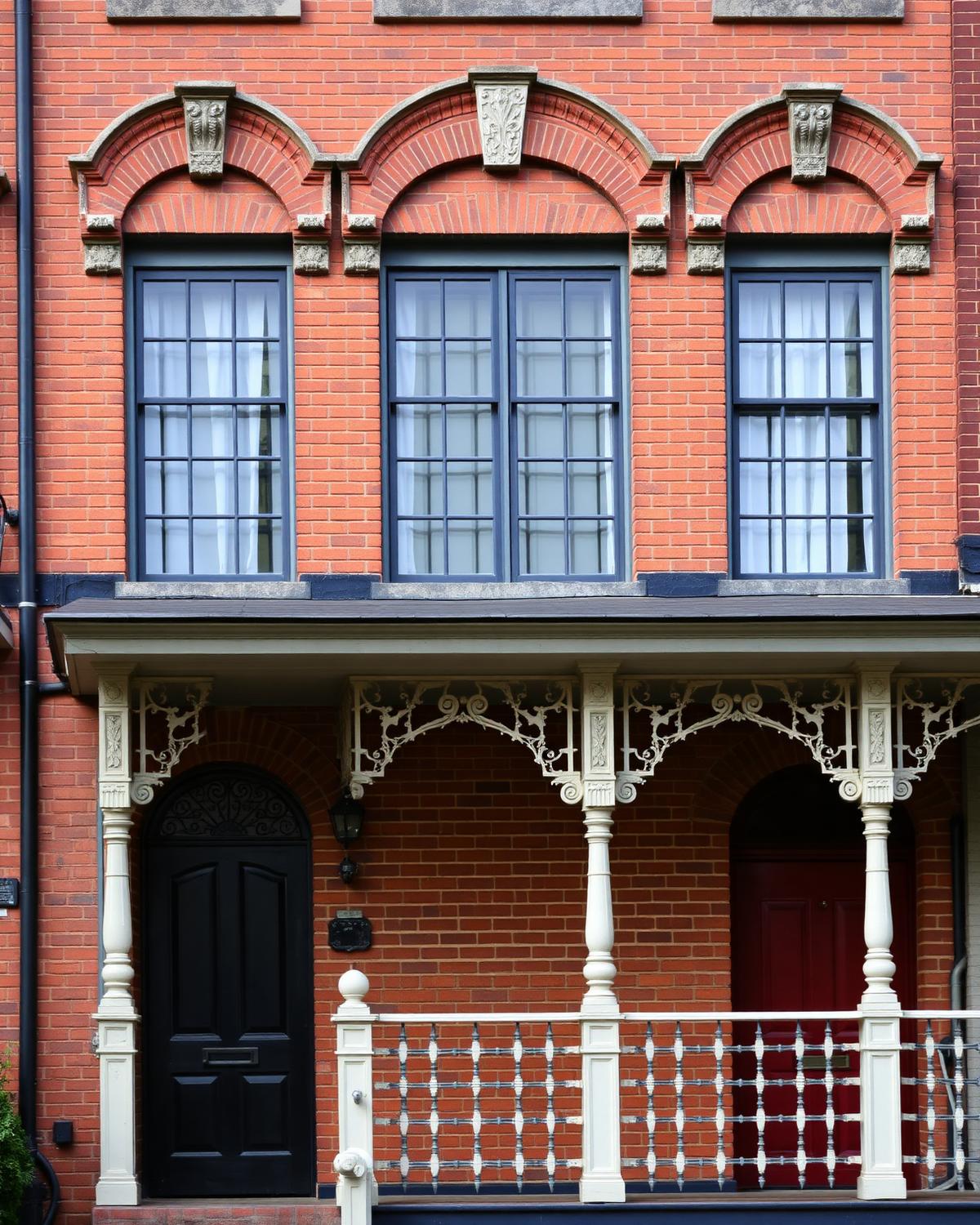
The basin and the older hillside neighborhoods are dominated by pre-1940 brick — Italianates, doubles, foursquares — with masonry, cast iron and clay lateral problems that newer housing never has. Out past I-275, the housing is largely 1980s through 2000s suburban with an entirely different failure set.
A single generic portfolio serves neither. The site has to let a visitor find their own housing type quickly, because recognition is what creates trust in the first fifteen seconds.
Organizing proof by housing type and by neighborhood does that. It also gives search engines and answer engines specific, quotable material about the work rather than vague service copy.
Beat 02 · Speed decides the emergency call
A homeowner standing in four inches of water gives a slow site about three seconds.
Cincinnati's storm-driven demand means a meaningful share of the highest-value traffic arrives on a phone, in a hurry, from a wet basement or a dead furnace. Every second of load time in that moment is a lost job.
So pages are built lean: compressed imagery, minimal script, no bloated builders, phone number reachable in one tap on every screen. The performance target is not a score, it is the call.
That same speed lowers paid search costs and helps organic rankings, which is why performance work pays for itself across all four channels rather than one.

Beat 03 · Pricing honesty converts in this market
Cincinnati buyers compare quotes carefully — vagueness reads as risk.
This is not a market where homeowners call the first result. They gather three quotes, read reviews, and ask neighbors. A site that publishes real ranges and explains what drives cost on a hillside lot or an old masonry job earns the call from people who are already halfway sold.
It also filters. Publishing ranges keeps the estimate calendar full of qualified appointments instead of price shoppers who were never going to buy.
Process transparency does the same work: what happens on day one, how long it takes, what the crew protects, how change orders are handled. Nervous buyers hire the business that removed the uncertainty.
Beat 04 · About 3 seconds of patience on mobile
Roughly three seconds is all a phone visitor gives a contractor site before leaving.
That threshold governs every design decision. Above-the-fold content has to state the trade, the service area and the phone number immediately — no slow hero video, no carousel, no cookie wall stacked on top of a slow page.
It also governs forms. Long multi-step forms fail on phones; short forms with a visible phone alternative capture both the person who wants to type and the person who needs to talk right now.
Every element that does not help a visitor recognize the business, trust it, or contact it is weight. In a market where the best leads arrive mid-emergency, weight is expensive.
Beat 05 · Service-area depth across three states
Real location pages, not a footer list of every city in the tri-state.
A Cincinnati business's footprint frequently crosses into Northern Kentucky and sometimes into southeastern Indiana. Search treats those as separate markets, and homeowners there notice whether a site speaks to them.
Genuine location pages carry specifics: the housing common in that suburb, the problems it produces, real projects completed nearby. Thin pages that swap a city name into the same paragraph get ignored by everyone.
Paired with correct service-area structured data, that depth is what lets one site rank credibly on both sides of the river instead of only where the shop happens to sit.
Web Design is one of four. The Cincinnati Master Framework page makes the case for running all four together, and what running only one costs a Cincinnati service business.
Where we run web design in Cincinnati
Web Design for service businesses across Cincinnati and Hamilton County, plus the satellite towns crews already drive to. Every district below is targeted by name in campaigns, pages and profile service areas — not folded into a single city radius.
- Cincinnati districts
- Downtown Cincinnati · Over-the-Rhine · Mount Adams · Mount Auburn · Walnut Hills · East Walnut Hills · Hyde Park · Oakley · Mount Lookout · Clifton · Corryville · Northside · Camp Washington · Price Hill · East Price Hill · West Price Hill · Westwood · College Hill · Mount Airy · Madisonville · Pleasant Ridge · Kennedy Heights · Bond Hill · Sayler Park · Riverside · California · Columbia-Tusculum
- Beyond the county line
- Norwood · Wyoming · Madeira · Mariemont · Blue Ash · Montgomery · Sharonville · Springdale · Reading · Deer Park · Silverton · Loveland · Milford · Anderson Township · Green Township · Colerain Township · Delhi Township · Mount Healthy · Forest Park · Fairfield · Hamilton · Mason · West Chester · Liberty Township · Lebanon · Springboro · Batavia · Amelia · Bethel · Harrison · Cleves · Covington · Newport · Bellevue · Fort Thomas · Fort Wright · Erlanger · Florence · Independence · Union · Lawrenceburg · Hamilton County · Butler County · Warren County · Clermont County · Northern Kentucky · Ohio River valley · Mill Creek valley · Little Miami River valley
- ZIP codes covered
- 45202 · 45203 · 45204 · 45205 · 45206 · 45207 · 45208 · 45209 · 45211 · 45212 · 45213 · 45214 · 45215 · 45216 · 45217 · 45219 · 45220 · 45223 · 45224 · 45225 · 45226 · 45227 · 45229 · 45230 · 45231 · 45232 · 45233 · 45236 · 45237 · 45238 · 45239 · 45240 · 45241 · 45242 · 45243 · 45244 · 45245 · 45246 · 45247 · 45248 · 45249 · 45251 · 45252 · 45255 · 45140 · 45150 · 45174 · 45011 · 45014 · 45036 · 45039 · 45040 · 45044 · 45050 · 45069 · 45102 · 41011 · 41014 · 41015 · 41017 · 41042 · 41048 · 41071 · 41075 · 41076

Beat 06 · The site is where the other three channels land
In Cincinnati, web design is not decoration — it is the conversion layer for search, paid, and social.
Organic rankings, paid clicks and social-warmed visitors all end on the same pages. Improving those pages raises the return on every channel simultaneously, which is why the site is never treated as a separate project here.
That is also why it is built alongside the campaigns rather than before them: the pages that need to exist are the pages the neighborhoods, seasons and trades actually demand.
One team builds all four, so nothing gets blamed on the other guy — and every lead is attributed to the channel, neighborhood and season that produced it.
Web Design in Cincinnati — questions, answered
Proof on comparable local housing — both 19th-century basin brick and newer suburban stock — plus hillside project photography, honest pricing ranges, genuine service-area pages for the Ohio and Northern Kentucky suburbs served, one-tap calling for storm emergencies, and local structured data. Templates provide layout; none of those specifics come with one.
A focused trade site typically takes four to eight weeks depending on how much real project photography and copy exists at the start. Sites with genuine service-area depth across the tri-state take longer because each location page requires real local content rather than a swapped city name, but that depth is exactly what makes them rank.
Not when it is handled correctly. Existing URLs are preserved or permanently redirected, content that already ranks is kept and strengthened rather than discarded, structured data is carried over, and performance improves. Rankings usually rise after launch because speed, content depth and internal structure all improve at once.
The rest of the Cincinnati set
- SEO
Search Engine Optimization in Cincinnati
Cincinnati's trade market rewards businesses that respect the terrain. A Google Business Profile built around real Cincinnati buyer behavior — storm-driven basement water in the Mill Creek and Little Miami valleys, hillside settlement and retaining wall work across Price Hill and Mount Auburn, cast iron and clay failures in basin brick housing, cooling failures through humid August — is what separates a business that ranks from one buried under long-established family competitors. By anchoring your presence across Hamilton County and out into Butler, Warren, Clermont and Northern Kentucky, Extentus makes sure your business shows up wherever the hill or the river creates the next job.
Open page - Google Ads
Google Advertising in Cincinnati
Paid search in Cincinnati is a timing discipline. The metro's demand spikes come from storm runoff in the river and creek valleys, brutal July and August humidity, and late-winter freeze-thaw on graded lots — not from a single winter storm pattern. Extentus builds campaigns that shift budget by valley, hillside and county as conditions change, runs Local Services Ads alongside search where the trade qualifies, and tracks every call back to the neighborhood and the weather week that produced it.
Open page - Social Ads
Social Advertising in Cincinnati
Cincinnati's outdoor build season is short and its terrain is demanding, which makes paid social unusually effective here. Extentus runs Meta campaigns that put real hillside project proof in front of homeowners in the specific neighborhoods and suburbs a business can serve — Hyde Park, Oakley, Anderson Township, Mason, West Chester and across the river through Northern Kentucky — so the winter builds a pipeline instead of a lull, and spring starts with the schedule already filling.
Open page - All four — recommended
The Master Framework in Cincinnati
The Master Framework is the argument the whole company is built on — that SEO, Google advertising, social advertising and web design only work when they are installed together. In Cincinnati that means organic depth across Hamilton County and the tri-state, paid search held in reserve for storm hours, paid social building hillside project demand through winter, and a site fast and specific enough to convert all three. One team, one ledger, attribution by neighborhood, trade and season.
Open page