Buffalo, New York
SEO, Google Ads, Social and Web Design in Buffalo — Built for Lake-Effect Winters, Century-Old Doubles and a Value-Driven Market
Buffalo sits on the shore of Lake Erie, and that single fact drives more local demand than almost anything else a business owner will spend money to fix. Lake-effect snow bands can bury the Southtowns while downtown stays clear, wind off the water tests fences and roofs, and the freeze-thaw cycle that follows every storm eats concrete alive. Layer a housing stock built mostly before the Second World War onto that climate, add a Rust Belt economy that has genuinely reinvented itself around medicine, higher education and renewable energy, and you get a market that rewards a contractor or service business that markets like it actually lives here.
Five dedicated Buffalo pages
Each discipline has its own Buffalo page — its own local search data, its own market detail, its own URL.
- SEO
Search Engine Optimization in Buffalo
The channel that keeps producing calls in a city where lake-effect winters and century-old doubles set the pace of demand. A Google Business Profile built for Buffalo's permit offices, a heating-first service list instead of a cooling-first one, neighborhood and suburb pages for Elmwood Village, North Buffalo, South Buffalo, Amherst, Williamsville, Cheektowaga, Tonawanda, West Seneca and Orchard Park, and enough review-backed, New York-licensed proof to outrank a national franchise that has never priced a job against Buffalo's snow totals.
Open page - Google Ads
Google Advertising in Buffalo
The channel built for a market where a lake-effect band can bury Hamburg while Amherst stays dry the same afternoon. Paid search and Local Services Ads bid Buffalo's storm-prone Southtowns, its steadier northern suburbs, and the short spring-through-fall outdoor build season as separate markets, with reporting tied to booked jobs across Erie County instead of raw clicks.
Open page - Social Ads
Social Advertising in Buffalo
The Western New York channel that creates the job before anyone types a query for it. Facebook and Instagram campaigns built from your own Buffalo-area job sites, aimed street by street across South Buffalo, the West Side, North Buffalo, Elmwood Village and the Southtowns, plus Amherst, Williamsville, Cheektowaga, Tonawanda, Kenmore, West Seneca, Hamburg, Orchard Park, Lancaster, Clarence, Grand Island and Niagara Falls — a market with a real winter indoor-remodel season and a much cheaper, local-loyal social auction than a coastal metro.
Open page - Web Design
Web Design in Buffalo
Sites built for a Buffalo buyer who is cold, careful with money, or checking credentials before committing: a click-to-call button sized for gloves that still loads fast on a weak cell signal during a storm, plain after-hours and emergency-availability language for plumbing and HVAC failures, pricing and value messaging that respects an affordable Rust Belt housing market instead of quoting like a coastal metro, visible New York State licensing and insurance for the buyer who checks before they call, real project galleries from century-old wood-frame doubles and Southtowns homes, and named pages for Buffalo, Amherst, Williamsville, Cheektowaga, Tonawanda, Kenmore, West Seneca, Lackawanna, Hamburg, Orchard Park, Lancaster, Clarence, Grand Island and Niagara Falls instead of one page pretending Erie and Niagara counties are a single neighborhood.
Open page - All four — recommended
The Master Framework in Buffalo
All four channels, installed together for Buffalo's lake-effect winter, its storm-driven emergency spikes, its short outdoor build season and its spread across Amherst, Williamsville, Cheektowaga, Tonawanda, Kenmore, West Seneca, Lackawanna, Hamburg, Orchard Park, Lancaster, Depew, Clarence and Grand Island. One strategy across SEO, Google advertising, social advertising and web design, with spend shifted the moment a storm band moves through Erie County — and one accountable number.
Open page
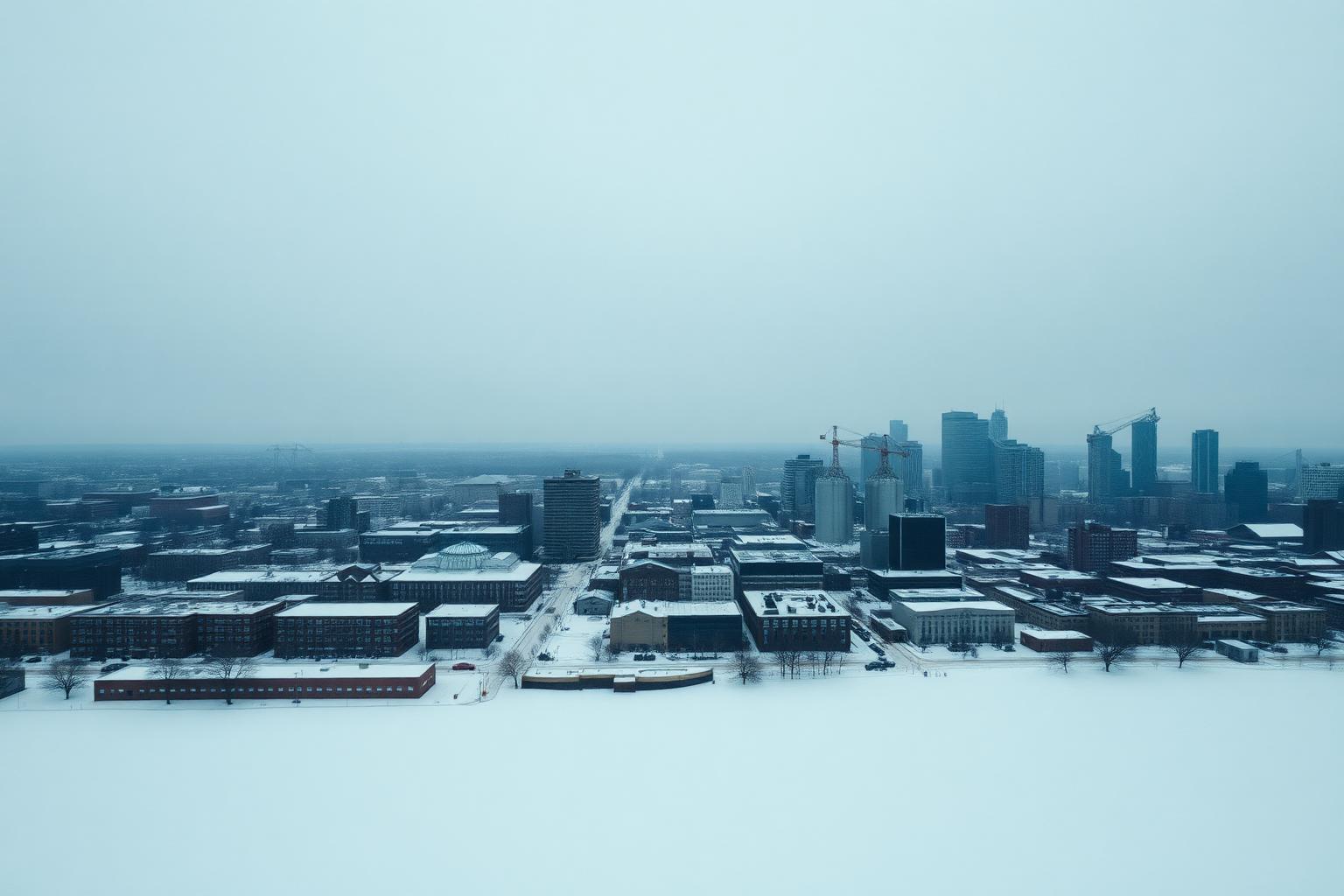
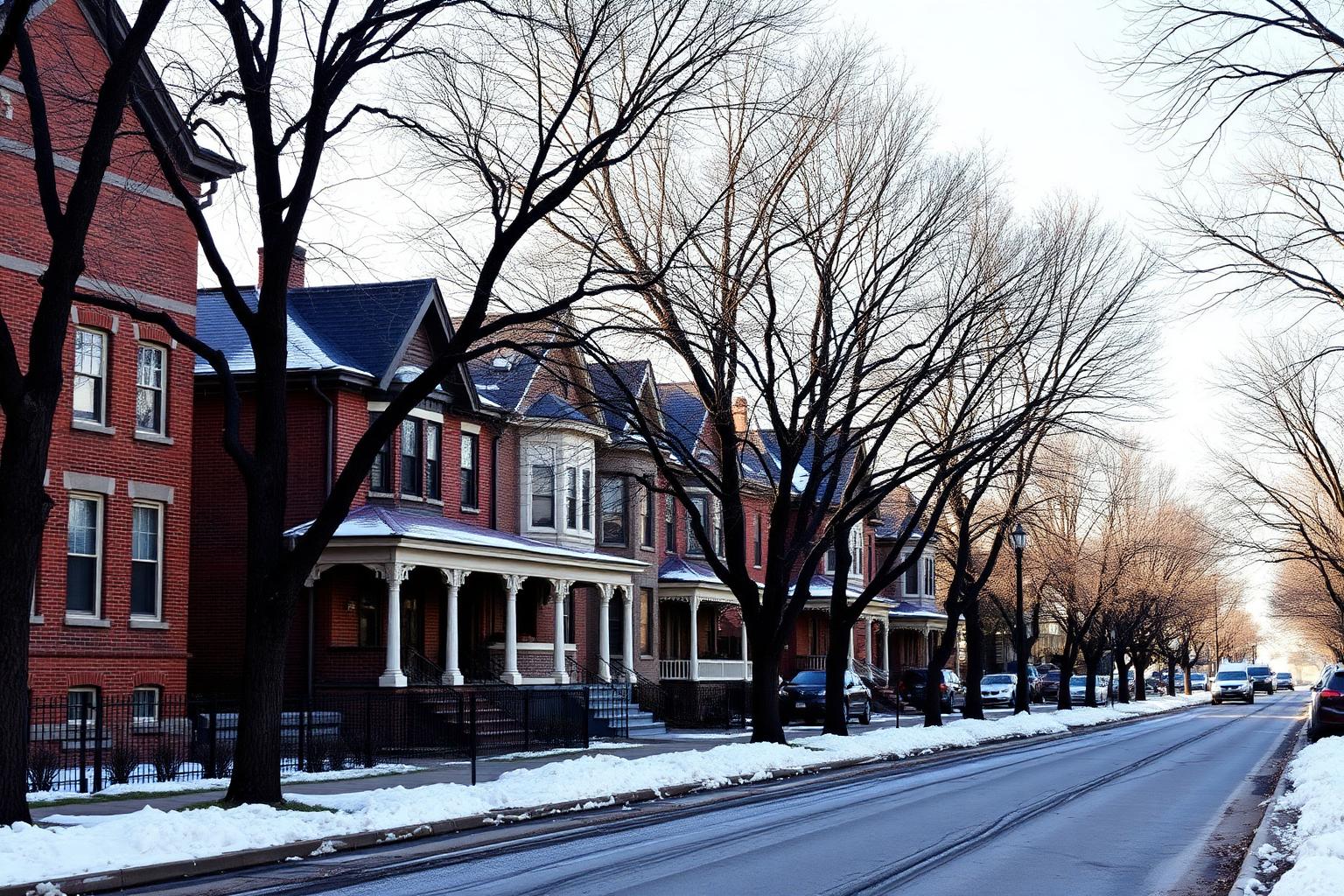
Buffalo is really a cluster of distinct places wearing one city limit. Elmwood Village and North Buffalo hold walkable blocks of Victorians and Craftsman-era homes with mature trees and porch culture. The West Side and Black Rock mix immigrant-owned small businesses with wood-frame double houses that have sheltered two families apiece for a hundred years. South Buffalo keeps its own identity entirely, still shaped by the neighborhoods that grew up around the old steel plants along the lake. None of that is served by one generic page, and none of it searches the same way.
Then there is the ring of towns that behave as their own economies: Amherst and Williamsville to the north with newer construction and university-adjacent households, Cheektowaga and Depew wrapped around the airport corridor, Tonawanda and Kenmore along the Niagara River, West Seneca and Lackawanna south of the city, and Hamburg and Orchard Park further into the Southtowns snowbelt where lake-effect totals routinely dwarf what falls downtown. Add Lancaster, Clarence, Grand Island and Niagara Falls to the north, and a single Erie County business can legitimately serve a dozen markets with a dozen different expectations — but only if its marketing actually names them.
What actually makes Buffalo its own market
Three things separate Buffalo from a generic upstate market. First, the lake. Bands of lake-effect snow off Lake Erie can drop several feet on Hamburg, Orchard Park and West Seneca while Elmwood Village gets a dusting, and the same wind off the water drives ice shoves onto shoreline properties and piles snow load onto fences, carports and low-slope roofs that were never built for it. Second, the age of the housing. A large share of Buffalo's homes were built before 1940 — wood-frame doubles, Victorians, Craftsman bungalows — with original plumbing, tight crawlspaces, and concrete steps and driveways that have absorbed decades of road salt and freeze-thaw cycling until they spall, crack and heave. Third, the economics: Buffalo residents pay meaningfully less for housing than Albany or downstate New York, and that price expectation follows straight through to what a homeowner is willing to pay for a fence, a driveway or a website. A pitch built for Manhattan pricing simply does not land here, and a marketing plan that ignores that fact wastes budget from the first click.
Buffalo's economy has also genuinely changed. The Rust Belt narrative still shapes how outsiders think about the city, but the real story on the ground is the Buffalo Niagara Medical Campus anchoring a healthcare and research corridor downtown, a strong higher-education base pulling steady population into the market, and a growing footprint of renewable-energy and advanced manufacturing employers rebuilding the tax base the old steel economy left behind. That shift means more dual-income households renovating older homes, more institutional buyers evaluating vendors on documentation and reviews, and a genuinely competitive local search field that a business with a fast site and real local proof can still win outright.
SEO: neighborhoods, snowbelt towns and the searches that actually happen here
Buffalo SEO starts with a Google Business Profile built around the categories homeowners here actually type — furnace repair and boiler replacement alongside general HVAC, sump pump and frozen-pipe work alongside general plumbing, fence repair after a heavy snow season, driveway and sidewalk resurfacing after a hard freeze-thaw spring, and epoxy garage flooring as a genuinely popular upgrade in a market full of unfinished basements and detached garages. From there, dedicated pages for Elmwood Village, North Buffalo, South Buffalo, Black Rock and the West Side sit alongside pages for Amherst, Williamsville, Cheektowaga, Tonawanda, Kenmore, West Seneca, Lackawanna, Hamburg, Orchard Park, Lancaster, Depew, Clarence, Grand Island and Niagara Falls — because a homeowner in Orchard Park and a homeowner in Amherst are searching from genuinely different starting points.
Google advertising: buy the lake-effect event and the spring thaw
Paid search performs best in Buffalo when it is built around real weather events rather than a flat monthly budget. A lake-effect band that dumps three feet on Hamburg overnight produces immediate calls for emergency fence repair, roof and gutter damage, and no-heat furnace failures. The spring melt produces the second wave, when homeowners across the Southtowns and the city alike discover the driveway, steps or walkway that the winter's salt and freeze-thaw cycling finally cracked through. Campaigns that shift budget and copy between heating-emergency terms in winter and concrete, fencing and epoxy terms from April through the fall consistently outperform a campaign that says the same thing in January and July, and geo-targeting by named town keeps spend where the storms and the thaw actually hit hardest.
Social advertising: sell the long winter and the short build season
A Buffalo winter keeps people indoors and planning for months at a time, which makes social advertising unusually effective for basement finishing, epoxy floor upgrades and heating-system replacement — projects homeowners research in February for work they intend to book in April. Real photography from an Elmwood Village porch rebuild, a West Seneca fence replacement or a Hamburg driveway pour outperforms generic stock imagery in a market this proud of its own neighborhoods, and it reaches an audience that already trusts word of mouth over anything that looks like a big out-of-town operator.
Web design: built for a value-conscious buyer making a fast decision
Buffalo homeowners compare price more readily than buyers in higher-cost markets, so a site has to earn trust quickly without over-promising on cost. Our builds load fast on a phone during a storm, keep click-to-call fixed on screen, state licensing and insurance plainly, show transparent pricing ranges that match local expectations rather than downstate assumptions, publish real project galleries from the city's older housing stock, and carry LocalBusiness, Service and FAQ schema naming Buffalo and its surrounding Erie County towns so answer engines can cite the business directly when someone asks a question in plain language.
How the four channels compound in Buffalo
SEO holds the everyday repair and remodel baseline across the city's neighborhoods and the towns that ring it. Google advertising captures the trigger moments — the storm that just hit, the driveway that just cracked. Social advertising builds the indoor-season project pipeline that spring outdoor work depends on. Web design decides whether any of that traffic actually converts into a booked, permitted job at a price the market will bear. Run separately, each piece is mistimed for half a Buffalo year; run together under one report showing qualified leads by channel and by town, they cover the whole calendar the lake actually hands this market.
The master framework: one system for a lake-driven, value-conscious market
SEO alone misses the overnight lake-effect surge that sends someone straight to Google Ads. Paid alone rents attention it never keeps once the season turns. Social alone builds interest with no fast, trustworthy site to land it on. And a fast site with no visibility converts nothing at all. Installed as one framework, the four disciplines track together — snowbelt storm response in the Southtowns, everyday plumbing and HVAC repair in century-old homes, a compressed outdoor build season for fencing and concrete, and pricing that respects what Buffalo homeowners actually expect to pay.
The four services Extentus runs in Buffalo
- Search Engine Optimization
- The channel you own — map-pack rankings, reviews and service-area pages that keep producing after the work is done.
- Google Advertising
- The channel with a volume dial — paid search and Local Services Ads tuned to the hours demand actually spikes.
- Social Advertising
- The channel that builds the pipeline — demand created in homeowners before they ever search.
- Web Design
- Where the other three cash out — fast, mobile-first pages built to convert visits into booked jobs.
Install all four in Buffalo
One framework, one accountable record: qualified inbound by channel and by Buffalo district, cost per qualified inbound, and the exact pages responsible.
Buffalo marketing questions, answered
Because it creates sudden, hyper-local demand spikes that a flat citywide campaign misses. A single band can drop feet of snow on Hamburg or Orchard Park while downtown Buffalo stays nearly clear, so fence, roofing, HVAC and plumbing businesses need town-level pages and storm-responsive ad budgets rather than one generic Buffalo message.
Treat each as its own market. Amherst and Williamsville skew newer construction and university-adjacent, Cheektowaga and Depew cluster around the airport corridor, West Seneca and Lackawanna sit south of the city, and Hamburg and Orchard Park take the heaviest snowbelt totals. Each has its own housing stock, price expectations and search behavior, so each deserves its own page and its own ad targeting rather than a single Buffalo-wide catch-all.
Yes. A large share of homes in Elmwood Village, North Buffalo, the West Side and Black Rock predate 1940, meaning original plumbing, wood-frame double construction, and concrete steps and driveways worn down by decades of road salt and freeze-thaw cycling. Buyers search in repair-and-retrofit language, not new-construction language, and they respond best to project photography from homes that actually look like theirs.