Los Angeles · Master Framework
The Master Framework in Los Angeles: four disciplines, one countywide system
A plumber working out of Van Nuys can pull up the four invoices without opening the folder: an SEO retainer that never mentions Sherman Oaks or Encino by name, a Google ads account still spending flat through the week a Santa Ana wind event triggers a run on emergency calls across the Valley, a social page that hasn't posted since before the last red-flag warning, and a website built years ago that still lists a landline nobody answers. Four invoices, four separate stories, and not one of them can point to a single Valley job it actually closed. Los Angeles County holds close to ten million people spread across a basin bigger than some states, and it is the single most contested market in the country for contractor and home-services advertising. That is not a bigger version of a mid-size city. It is dozens of distinct submarkets stitched together by freeways, and it punishes anyone who markets to it as one place.
The short answer
The Master Framework is Extentus installing SEO, Google advertising, social advertising and web design together as one Los Angeles marketing system, with a single strategy across the Westside, the San Fernando Valley, the South Bay, the Eastside and the greater basin, and one accountable record of qualified inbound by channel and by neighborhood, with budget shifted in days rather than weeks when Santa Ana winds, wildfire risk, or a surge of renovation demand in older housing stock changes what the market needs.
Beat 01 · Four vendors, one blind spot each
None of the four ever sees the whole picture.
Every fall, forecasters start tracking Santa Ana wind events, and every homeowner from Sherman Oaks to San Pedro knows what that means: downed fences, damaged roofs, and a spike in calls for emergency tree removal, fencing repair and generator installs the moment the winds die down. A generic SEO vendor working off a national template has no idea that pattern exists, because nothing about a Santa Ana wind event shows up in a keyword tool built for a market with four seasons. A paid account run from out of state holds the same flat daily budget through red-flag week that it held in June. A social vendor is posting stock photography that could be a house in Phoenix or Dallas. A web design vendor built a site during a different ownership era and the contact form still routes to an inbox nobody checks.
Any one of those gaps is easy to excuse on its own, which is exactly how all four of them survive an entire Los Angeles wildfire season. No single vendor is responsible for noticing the other three are also missing it, and in a market this fragmented, that blind spot compounds fast, quarter after quarter.
Beat 02 · A ten-million-person basin with its own weather, housing stock and traffic economics
Los Angeles runs on rhythms no outside agency tracks by default.
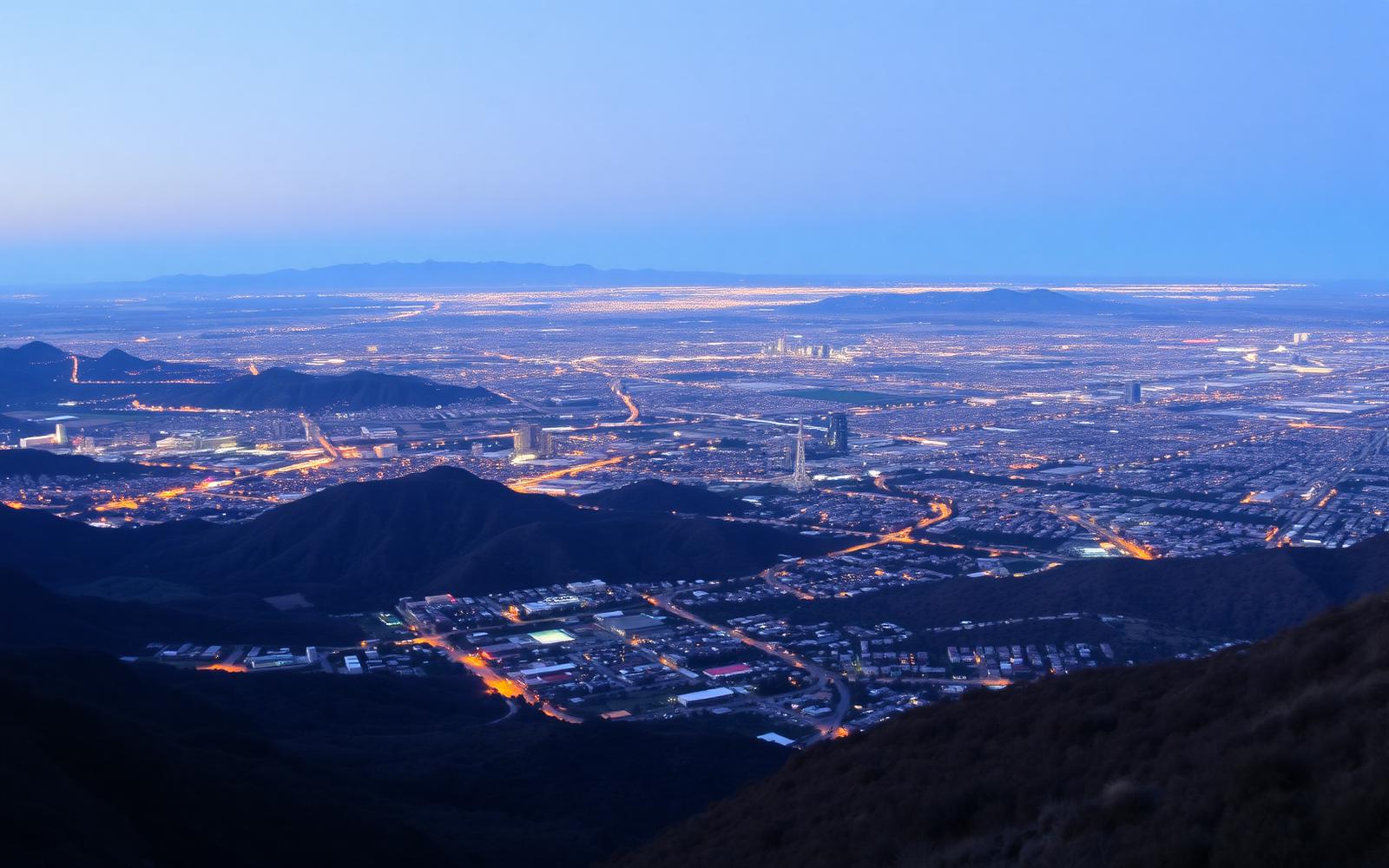
Los Angeles County holds close to ten million residents, more people than 40 individual states, spread across a basin that runs from the Pacific at Venice and Santa Monica to the foothills above Pasadena and out through the San Fernando Valley to Woodland Hills and Calabasas. That scale creates the densest contractor competition in the country: plumbing, HVAC, fencing, concrete and epoxy flooring companies bidding against dozens of rivals in every submarket, often before a homeowner has finished typing a search. A dry Mediterranean climate means most of the county gets almost no rain for months at a stretch, which keeps roofing, drainage and irrigation demand steady year-round rather than seasonal, while the same dryness combines with Santa Ana winds each fall to drive wildfire risk that spikes fencing, tree, roofing and emergency repair calls in specific weeks, not evenly across the year.
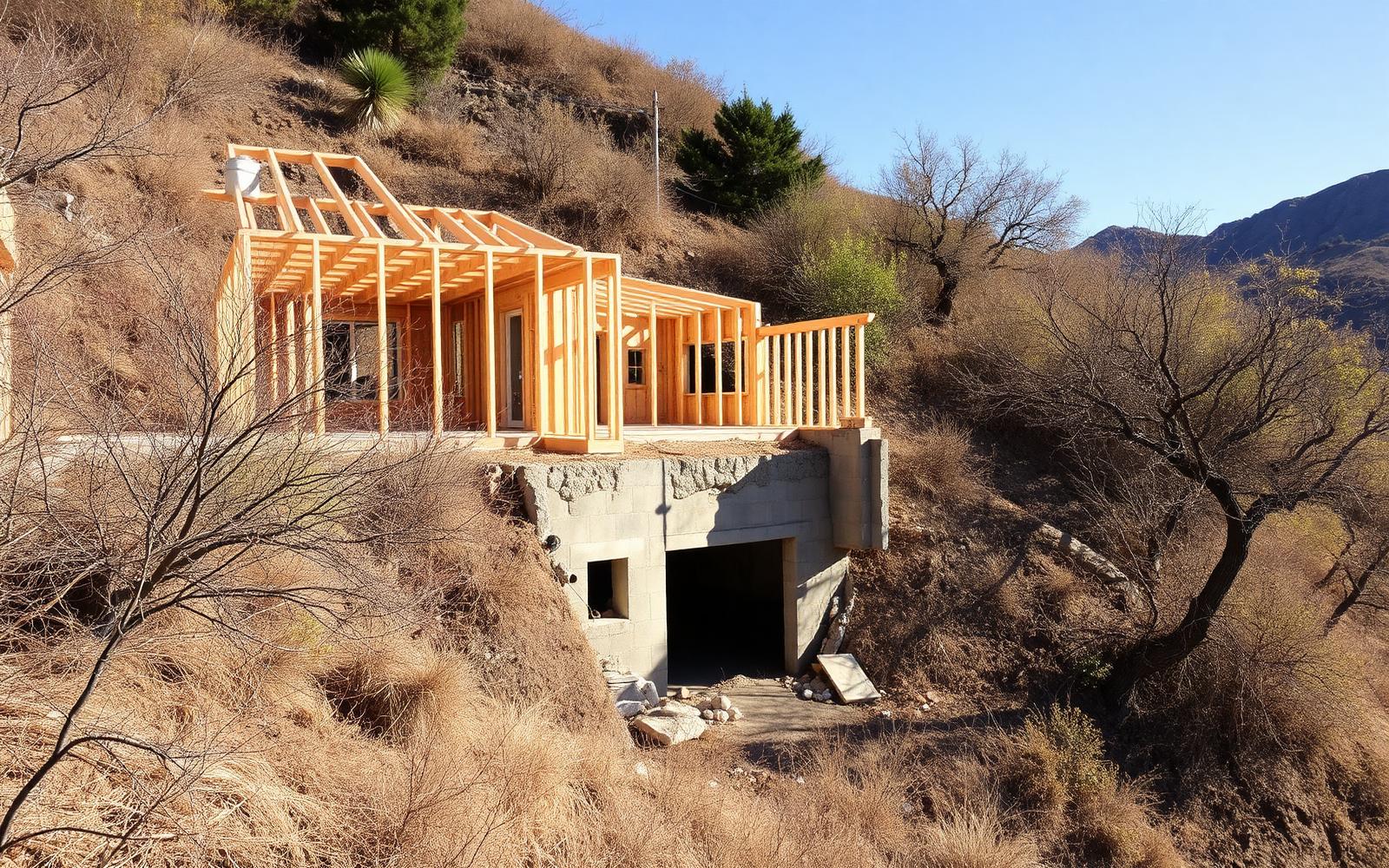
Underneath the weather sits an aging housing stock. Huge stretches of Los Angeles were built in the 1920s through the 1960s, from West Adams bungalows to Sherman Oaks ranch homes, and that vintage housing drives a constant renovation cycle: rewiring, replumbing, foundation work, and a surge in accessory dwelling unit construction as homeowners add ADUs to aging lots under state and city incentives. Every one of those jobs runs through CSLB licensing at the state level and a maze of Los Angeles City and Los Angeles County permitting that varies block by block, and homeowners increasingly check that licensing before they ever pick up the phone.
Geography is the final variable, and it is the one outside agencies get wrong most often. Drive time, not distance, defines the market: a contractor based in Torrance is not a realistic option for a homeowner in Burbank, no matter how good the reviews, because the freeway drive-time economics across the basin make cross-town jobs impractical during rush hour. That is why Los Angeles marketing has to be built submarket by submarket — the Westside (Santa Monica, Venice, Culver City), the San Fernando Valley (Sherman Oaks, Studio City, Van Nuys, Woodland Hills, Encino, Northridge), the South Bay (Torrance, San Pedro, Long Beach), the Eastside and northeast pockets (Silver Lake, Highland Park), and the surrounding cities of Glendale, Burbank, Pasadena, Calabasas and Santa Clarita — rather than treated as one undifferentiated metro.
Beat 03 · Four channels, four separate jobs
Each discipline covers ground the other three cannot reach.
SEO builds the layer that holds regardless of that month's budget, ranking a business across the Valley, the Westside and the South Bay for the searches that happen every week of the year, not just during fire season. The full case is on the Los Angeles SEO page: /locations/california/los-angeles/seo.
Google advertising covers what rankings cannot reach fast enough — a Santa Ana wind event pushing fencing and roofing calls past what organic traffic can absorb, or a heat wave in Northridge and Woodland Hills that needs an HVAC crew this week, not next month. That case is on the Google advertising page: /locations/california/los-angeles/google-advertising.
Social advertising reaches the homeowner who hasn't searched yet: the Highland Park family whose aging plumbing hasn't failed but will, or the Culver City buyer weighing an ADU who doesn't yet know which local contractor to trust. That argument is on the social advertising page: /locations/california/los-angeles/social-advertising.
Web design turns all three into booked jobs, with a site fast enough to load on a phone during a freeway commute and licensing information displayed clearly enough to satisfy a California buyer who checks CSLB status before calling anyone. See the full case on the web design page: /locations/california/los-angeles/web-design.
Beat 04 · One number that moves with the wind and the season
Coordinated channels compound; separated channels leak.
One sentence makes the stakes plain — a single $9,500 epoxy flooring or foundation job repeated twice a month is $228,000 a year, and that repetition only happens when all four channels are aimed at the same houses instead of competing with each other for the same clicks in the country's most contested ad market.
Run apart, agency-side Los Angeles terms are cheap to enter and mostly ignored, which is exactly the trap: a plumbing, HVAC, fencing, concrete or epoxy flooring business can rank or run ads without ever showing up for the trade searches that actually convert, because those clicks cost real money and nobody is coordinating when to spend it against a wind advisory or a heat wave. Run together, SEO lowers what every paid click has to work for, the fast-loading website multiplies the value of traffic from any source, and social keeps the pipeline full through the calmer months. One record holds all four: qualified inbound sorted by channel, by submarket, and by trade, so no vendor gets to claim a call twice.
One shared record is what lets spend follow the basin's actual conditions in real time — into fencing, roofing and tree service the moment a red-flag warning is issued, into HVAC and cooling the moment a Valley heat wave lands, into concrete and drainage work ahead of the rare but serious winter storm season. A forecast of a multi-day Santa Ana event should shift paid spend toward emergency repair searches before the winds arrive, not after the next invoice cycle closes.
Beat 05 · Not a fifth service, a single spine
The shortest case: coordination, not addition.
Each sibling page argues why its own discipline earns its place in Los Angeles. This page argues something different: none of the four should be bought separately here, because wildfire season, an aging housing stock's renovation cycle, and the country's densest contractor competition all move at once across dozens of submarkets, and only one accountable team can shift spend across all four the moment any of them change.
Where we run master framework in Los Angeles
The Master Framework for service businesses across Los Angeles and Los Angeles County, plus the satellite towns crews already drive to. Every district below is targeted by name in campaigns, pages and profile service areas — not folded into a single city radius.
- Los Angeles districts
- Downtown Los Angeles · Silver Lake · Echo Park · Highland Park · Eagle Rock · Los Feliz · Hollywood · Mid-City · Koreatown · West Adams · Venice · Mar Vista · Palms · Westchester · Brentwood · Pacific Palisades · Sherman Oaks · Studio City · Van Nuys · North Hollywood · Encino · Tarzana · Woodland Hills · Northridge · Granada Hills · Sylmar · San Pedro · Boyle Heights · Watts · Sun Valley
- Beyond the county line
- Glendale · Burbank · Pasadena · Santa Monica · Culver City · Inglewood · Torrance · Long Beach · Beverly Hills · West Hollywood · Alhambra · Monterey Park · El Segundo · Manhattan Beach · Redondo Beach · Calabasas · Agoura Hills · Santa Clarita · La Canada Flintridge · South Pasadena · Whittier · Downey · Compton · Carson · Los Angeles County
- ZIP codes covered
- 90001 · 90003 · 90004 · 90005 · 90006 · 90011 · 90012 · 90015 · 90016 · 90019 · 90020 · 90024 · 90026 · 90027 · 90028 · 90029 · 90031 · 90034 · 90035 · 90036 · 90037 · 90039 · 90041 · 90042 · 90043 · 90045 · 90046 · 90048 · 90049 · 90056 · 90059 · 90061 · 90062 · 90063 · 90064 · 90065 · 90066 · 90068 · 90069 · 90210 · 90232 · 90247 · 90272 · 90291 · 90402 · 91001 · 91040 · 91042 · 91205 · 91303 · 91311 · 91316 · 91325 · 91331 · 91335 · 91342 · 91343 · 91344 · 91352 · 91356 · 91364 · 91367 · 91401 · 91402 · 91405 · 91411 · 91423 · 91436 · 91501 · 91601 · 91604 · 91605 · 91606 · 91607
Beat 06 · The Los Angeles close
A basin-wide market that rewards businesses built for its conditions.
Los Angeles sits in an unusual position: the single largest, most fragmented contractor market in the country, with more submarkets and more rival bids per lead than almost anywhere else in the United States. That scale punishes a generic approach and rewards a business that shows up ready for a Santa Ana wind advisory, ready for a homeowner permitting an ADU under Los Angeles City rules, and built to handle the freeway drive-time reality that makes a Torrance crew irrelevant to a Burbank job. What it punishes even harder is four separate vendors who never once compared calendars, let alone submarket boundaries or CSLB requirements, with each other.
The Master Framework installs SEO, Google advertising, social advertising and web design as one system, built around Los Angeles County's wildfire and wind season, its dry Mediterranean climate, its ADU-driven renovation boom, and the specific pockets of Silver Lake, Highland Park, Sherman Oaks, Studio City, Van Nuys, Woodland Hills, Encino, Northridge, Venice, West Adams, San Pedro, Glendale, Burbank, Pasadena, Santa Monica, Culver City, Torrance, Long Beach, Calabasas and Santa Clarita. Extentus installs all four on one Los Angeles engagement with a single record of what the market actually returned, instead of four vendors each defending their own slice of a ten-million-person basin.
Master Framework in Los Angeles — questions, answered
Because a Santa Ana wind event drives a real, short-window surge in demand for fencing, roofing, tree removal and emergency repair across specific submarkets, while wildfire risk keeps homeowners researching contractors well before an event hits. Paid advertising and social campaigns timed to that window catch demand a flat, year-round budget misses, while SEO keeps the business visible through both the calm months and the fire season spikes.
Yes. Los Angeles County's roughly ten million residents support far more plumbing, HVAC, fencing, concrete and epoxy flooring businesses bidding on the same searches than almost any other U.S. market, which pushes click costs and ranking difficulty higher than a national template accounts for. Coordinating SEO, paid, social and web design together is what lets a business compete on more than budget alone.
Because a homeowner in Sherman Oaks isn't realistically hiring a crew based in Torrance during rush hour, no matter the reviews, so targeting and content built around real submarkets — the Westside, the San Fernando Valley, the South Bay, the Eastside — convert far better than treating Los Angeles as one undifferentiated metro. CSLB licensing and Los Angeles City and County permitting details, addressed directly, also match what buyers are already researching before they call.
The four Los Angeles pages, individually
Each discipline's own Los Angeles page — its own local search data, its own market detail, its own URL.
- SEO
Search Engine Optimization in Los Angeles
The channel that keeps producing calls whether the canyons are calm or the Santa Anas are blowing. A Google Business Profile built for LA's hillside, fire-rebuild and old-housing searches, service pages for Silver Lake, Sherman Oaks, Van Nuys, Venice and beyond, and enough CSLB-aware, review-backed proof to outlast a call center that has never dealt with LA City permitting.
Open page - Google Ads
Google Advertising in Los Angeles
The channel built for the country's most competitive home-services auction. Paid search and Local Services Ads bid Los Angeles by neighborhood and freeway corridor against wildfire and Santa Ana wind spikes, inland heat waves and CSLB licensing realities, with reporting tied to booked jobs instead of clicks.
Open page - Social Ads
Social Advertising in Los Angeles
The Los Angeles channel that creates the job before anyone types a query for it. Facebook and Instagram campaigns built from your own LA job sites, aimed street by street across Silver Lake, Highland Park, Sherman Oaks, Culver City and the surrounding suburbs where finish quality, not just price, is what actually closes the job.
Open page - Web Design
Web Design in Los Angeles
Fast, visually credible sites built for a Los Angeles trade market where thousands of contractors chase the same searches and the website is the tiebreaker: CSLB license numbers and LA City/County permit language placed up front, English/Spanish built in from the start, mobile-first for both traffic-stalled commutes and job-site lookups, and service-area pages naming Glendale, Burbank, Pasadena, Santa Monica, Culver City, Torrance and Long Beach instead of one blended metro page.
Open page