Los Angeles, California
SEO, Google Ads, Social and Web Design in Los Angeles — Built for the Most Crowded Trade Market in America
Los Angeles is not a bigger version of another market. It is a hundred distinct submarkets stacked inside one county of roughly ten million people, and it holds more licensed plumbing, HVAC, fencing, concrete and coating companies chasing the same handful of searches than anywhere else in the country. Winning here is less about shouting louder and more about being unmistakably the obvious choice inside a few named neighborhoods.
Five dedicated Los Angeles pages
Each discipline has its own Los Angeles page — its own local search data, its own market detail, its own URL.
- SEO
Search Engine Optimization in Los Angeles
The channel that keeps producing calls whether the canyons are calm or the Santa Anas are blowing. A Google Business Profile built for LA's hillside, fire-rebuild and old-housing searches, service pages for Silver Lake, Sherman Oaks, Van Nuys, Venice and beyond, and enough CSLB-aware, review-backed proof to outlast a call center that has never dealt with LA City permitting.
Open page - Google Ads
Google Advertising in Los Angeles
The channel built for the country's most competitive home-services auction. Paid search and Local Services Ads bid Los Angeles by neighborhood and freeway corridor against wildfire and Santa Ana wind spikes, inland heat waves and CSLB licensing realities, with reporting tied to booked jobs instead of clicks.
Open page - Social Ads
Social Advertising in Los Angeles
The Los Angeles channel that creates the job before anyone types a query for it. Facebook and Instagram campaigns built from your own LA job sites, aimed street by street across Silver Lake, Highland Park, Sherman Oaks, Culver City and the surrounding suburbs where finish quality, not just price, is what actually closes the job.
Open page - Web Design
Web Design in Los Angeles
Fast, visually credible sites built for a Los Angeles trade market where thousands of contractors chase the same searches and the website is the tiebreaker: CSLB license numbers and LA City/County permit language placed up front, English/Spanish built in from the start, mobile-first for both traffic-stalled commutes and job-site lookups, and service-area pages naming Glendale, Burbank, Pasadena, Santa Monica, Culver City, Torrance and Long Beach instead of one blended metro page.
Open page - All four — recommended
The Master Framework in Los Angeles
All four channels, installed together for Los Angeles's freeway-divided submarkets, wildfire and Santa Ana-driven demand spikes, and the country's densest contractor competition. One strategy across SEO, Google advertising, social advertising and web design, with spend shifted the moment a red-flag warning lands or a Valley heat wave breaks — and one accountable number.
Open page
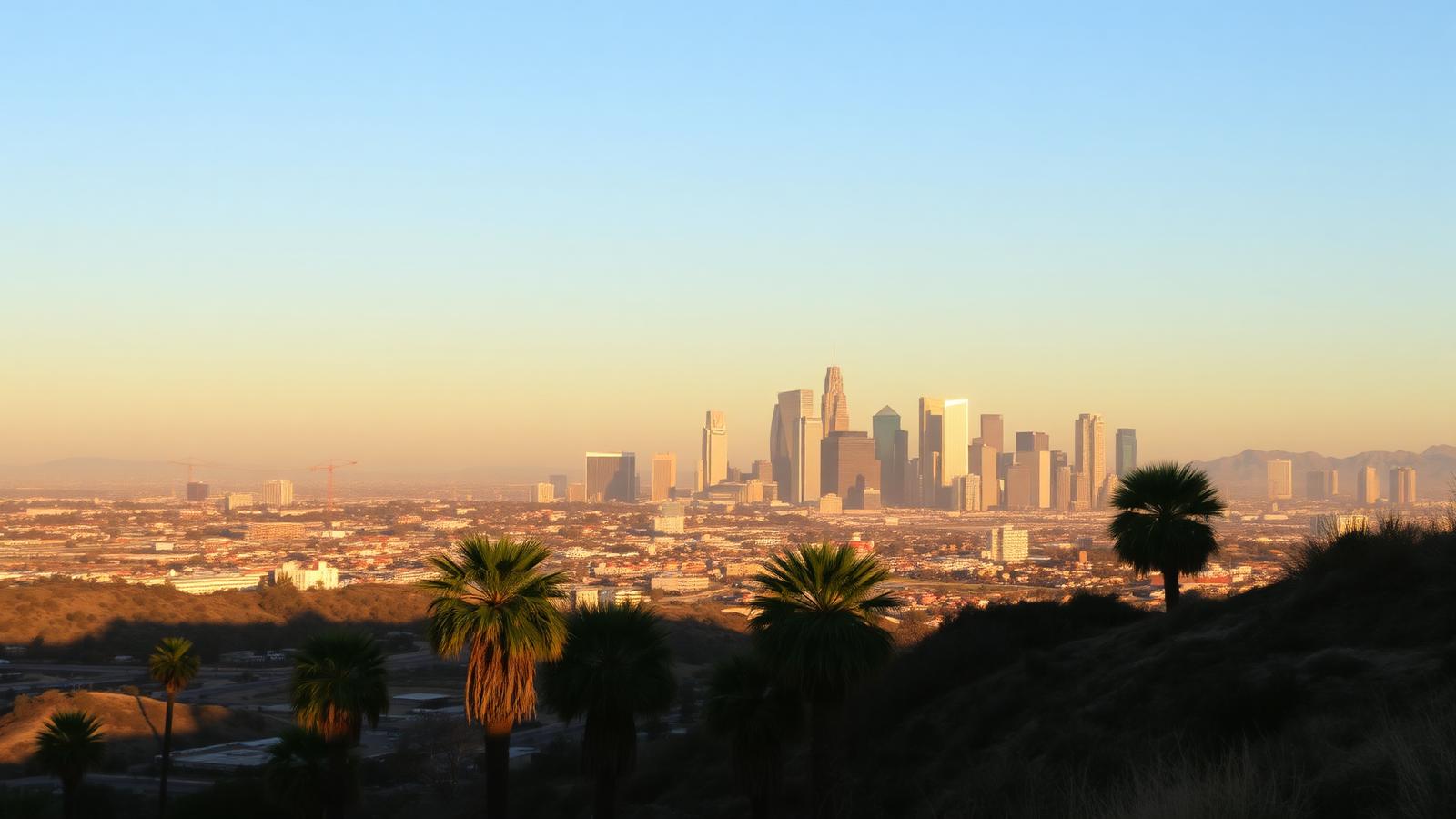
Roughly 3.8 million people live inside the city limits and close to ten million across Los Angeles County. That scale creates the paradox every trade business here runs into: enormous demand and almost no ability to be seen citywide. A crew working out of Van Nuys and a crew working out of San Pedro are technically in the same market and functionally in different businesses, separated by an hour of freeway and two completely different housing stocks.
The map does the sorting. Silver Lake, Echo Park, Highland Park, Eagle Rock, West Adams and Boyle Heights hold pre-1940 stock — galvanized supply lines, clay sewer laterals, panels that were never sized for a heat pump, hillside lots with retaining walls older than the driveway. The San Fernando Valley runs hotter than the coast by fifteen degrees on the same afternoon, which puts Sherman Oaks, Studio City, Van Nuys, Encino, Woodland Hills and Northridge on a cooling calendar the Westside never feels. Venice, Mar Vista, Palms and Westchester deal with salt-air corrosion and tight lots. Then the market spills into Glendale, Burbank, Pasadena, Santa Monica, Culver City, Torrance, Long Beach, Calabasas and Santa Clarita, each with its own drive time and its own price ceiling.
What actually makes Los Angeles its own market
Three things, and none of them is size alone. First, competitive density: for any given repair search there are dozens of licensed companies and several venture-funded aggregators bidding on the same click, so undifferentiated marketing simply funds the auction. Second, geography as economics — a job in Pacific Palisades and a job in Sylmar can carry the same ticket and wildly different profit once drive time is priced in, which means targeting has to be drawn by named area, not by radius. Third, risk: wildfire exposure, hillside and canyon lots, and older housing stock generate repeat, high-ticket work that a generic service page never speaks to.
California's regulatory floor sharpens all of it. CSLB licensing, LA City and LA County permitting with different counters and timelines, Title 24 energy compliance, and utility coordination make documentation part of the sale. In a metro this crowded, publishing a license number and a plain permit-and-inspection path is one of the cheapest ways to look like the serious option.
Search: win named neighborhoods, not the city
Our SEO work in Los Angeles starts with a Google Business Profile built around a real service area and a review pace that names places. Then it builds genuine pages for Silver Lake, Highland Park, West Adams, Boyle Heights, Venice, Sherman Oaks, Studio City, Van Nuys, Encino, Woodland Hills, Northridge and San Pedro, plus Glendale, Burbank, Pasadena, Santa Monica, Culver City, Torrance, Long Beach and Calabasas — each written around what breaks in that housing stock and which permit counter handles it.
Google advertising: buy the wind event, the inland heat and the rebuild
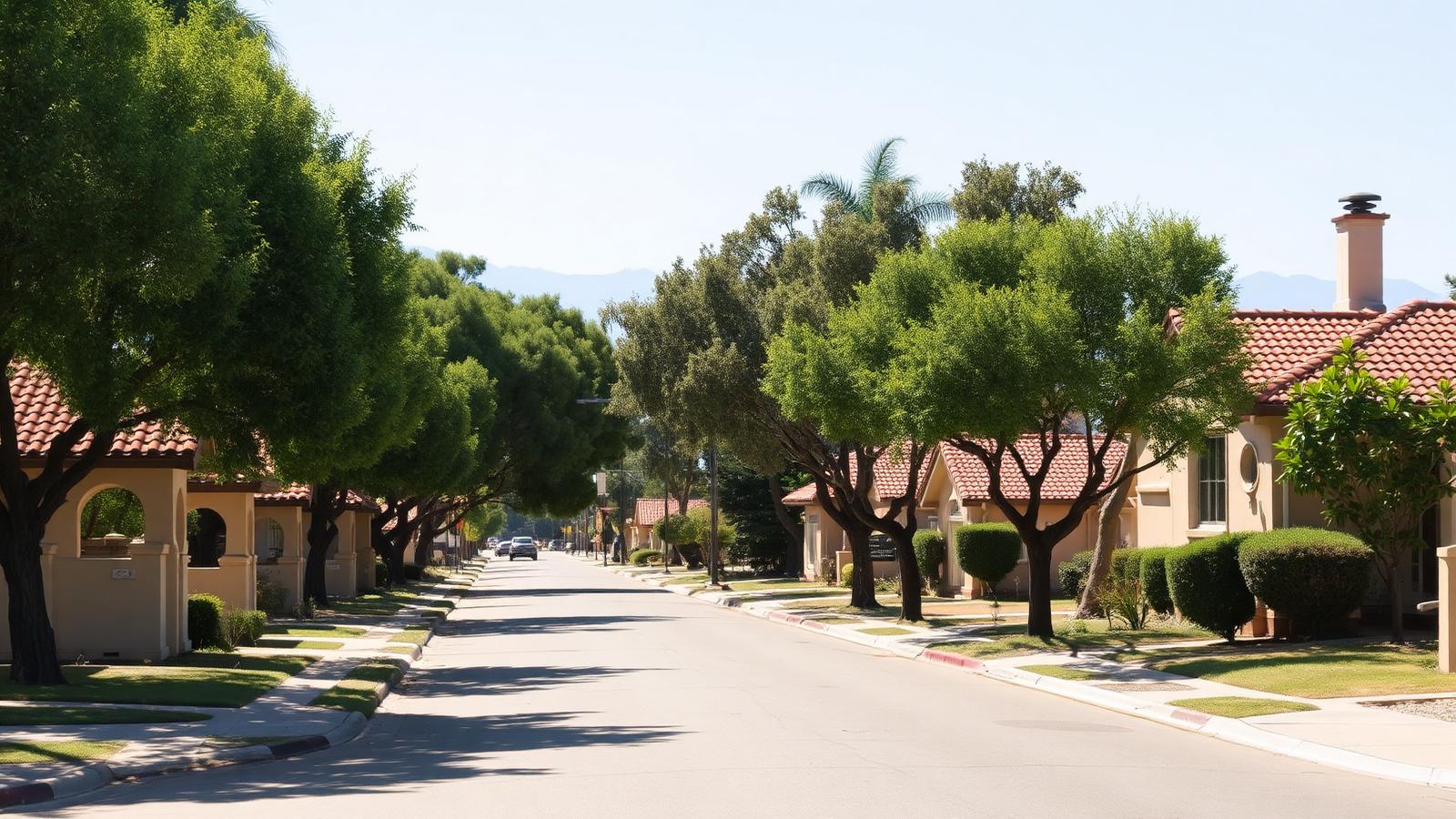
Paid search covers what rankings cannot move fast enough to catch: the morning after a Santa Ana event when fence lines are down across a foothill tract, the third day above 100 in the Valley, the rebuild permit that just cleared in a canyon community. Campaigns are split by submarket rather than by mileage, because Westside, Valley and South Bay calls convert at different values and carry different drive-time costs.
Social advertising: the work no one types into a search bar
Epoxy garage floors, patio covers and shade structures, drought-tolerant landscape conversions, fence replacement, ADU concrete and remodel work — these are decided visually, often after seeing a finished job a few streets over. In the most image-literate consumer market in the country, real job-site photography aimed at specific neighborhoods outperforms any amount of copy.
Web design: the tiebreaker in a crowded field
When a homeowner in Pasadena has six licensed options open in six tabs, the site is the decision. Our Los Angeles builds load fast on a phone in stopped traffic, keep click-to-call fixed on screen, handle English and Spanish inquiries without an awkward translation layer, put the CSLB number and permit practice above the fold, and carry LocalBusiness, Service and FAQ schema naming Glendale, Burbank, Pasadena, Santa Monica, Culver City, Torrance and Long Beach so answer engines cite the business instead of a national directory.
How the four channels compound in Los Angeles
SEO holds the everyday baseline inside a handful of named neighborhoods. Google advertising takes the spikes this climate hands out. Social advertising manufactures the discretionary projects that never produce a query. Web design decides whether any of it becomes a booked, permitted job. One line carries the argument: a single $12,400 fence-line rebuild a month is $148,800 a year, and a four-vendor arrangement almost never tracks cleanly enough to say which channel produced it.
The master framework: one system across a hundred submarkets
Bought separately, each channel pays retail and leaves a gap. SEO alone misses the wind event. Paid alone rents every call at Los Angeles click prices forever. Social alone creates interest with nowhere to send it. A fast site with nothing feeding it converts nothing. Installed together, with one report showing qualified inbound by channel and by submarket, the four cover an actual Los Angeles year — the long dry summer, the fire and wind season, the short wet weeks, and the steady renovation cycle underneath all of it.
The four services Extentus runs in Los Angeles
- Search Engine Optimization
- The channel you own — map-pack rankings, reviews and service-area pages that keep producing after the work is done.
- Google Advertising
- The channel with a volume dial — paid search and Local Services Ads tuned to the hours demand actually spikes.
- Social Advertising
- The channel that builds the pipeline — demand created in homeowners before they ever search.
- Web Design
- Where the other three cash out — fast, mobile-first pages built to convert visits into booked jobs.
Install all four in Los Angeles
One framework, one accountable record: qualified inbound by channel and by Los Angeles district, cost per qualified inbound, and the exact pages responsible.
Los Angeles marketing questions, answered
Yes, but not citywide. Los Angeles rewards depth over reach: a plumbing, HVAC, fencing or concrete company that genuinely owns Highland Park, Eagle Rock and Glendale will out-earn a company spread thinly across the whole county at the same budget. Local ranking and local ad auctions both reward proximity and activity, so the winning play is to pick a few named areas, dominate them with real pages and real reviews, then expand outward one submarket at a time.
Because drive time and housing stock make them different businesses. Pre-1940 homes in West Adams and Boyle Heights generate repipes, sewer laterals and panel upgrades. The San Fernando Valley runs materially hotter than the coast and drives cooling replacement. Venice and the South Bay add salt-air corrosion and tight-lot access. Canyon and foothill communities carry wildfire exposure, defensible-space fencing and multi-year rebuild work. Averaging those into one radius and one message wastes most of the budget, so each gets its own pages, its own bids and its own reporting line.
It creates demand that is both urgent and long-tailed. A Santa Ana wind event can flatten fence lines across a whole foothill tract overnight, which is an immediate paid-search moment. Rebuild work after a fire runs for years and involves permitting, inspection and insurance documentation, which is an organic and web-design problem: the businesses that publish a clear, plainly written account of how they handle permits, inspections and hillside conditions are the ones homeowners shortlist.