West Valley, Utah
Marketing in West Valley, Written for Utah's Most Diverse City
West Valley is the second-largest city in Utah and the most culturally diverse one, and neither of those facts is a footnote — they are the market. This is a dense, affordable, working-class west-side city of roughly 140,000 people packed onto a flat grid between Redwood Road and the Oquirrh foothills, where a contractor's reputation travels through families, congregations and neighbors before it ever travels through an ad.
Five dedicated West Valley pages
Each discipline has its own West Valley page — its own local search data, its own market detail, its own URL.
- SEO
Search Engine Optimization in West Valley
The channel that claims Utah's second-largest, most diverse city before a Salt Lake-focused competitor notices it's a market of its own. A Google Business Profile built around West Valley's real job mix — furnace and swamp-cooler replacement, sewer line repair, driveway and garage-floor work, fencing between mid-century lots across Granger, Hunter, Chesterfield, the Oquirrh foothills and the Cyprus area — paired with review proof from real neighborhood jobs, gives a local plumbing, HVAC, concrete or fencing crew a search position a downtown-aimed agency has no reason to build.
Open page - Google Ads
Google Advertising in West Valley
The channel built for a compact, working-class city where the money is wasted the moment it drifts east. Local Services Ads carry the licensed trades, the radius holds tight to the west side instead of chasing east-bench Salt Lake volume, spend shifts toward the first hard freeze and the first triple-digit week when furnace and AC calls spike, and bilingual ad paths run wherever the business can genuinely follow through in Spanish.
Open page - Social Ads
Social Advertising in West Valley
The West Valley channel built around a referral market that already works: Facebook and Instagram campaigns geo-fenced to West Ridge, Lake Park, Hunter Hollow, Granger Hills, Westbrook and the Jordan River corridor, run in English and Spanish where the business can genuinely serve it, showing real local finished work — a repoured driveway, a vinyl fence line, an epoxied garage floor — to households one degree removed from someone who already trusts the name.
Open page - Web Design
Web Design in West Valley
Sites built for a dense, referral-first west side: fast loading on ordinary phones, service area named across Decker Lake, the 5600 West corridor, Bangerter Highway, and Silver Creek, plus Taylorsville and West Jordan next door, real west-side project photos instead of stock, plain pricing for households on a tight budget, and a genuine Spanish path where the business can back it up.
Open page - All four — recommended
The Master Framework in West Valley
All four channels, installed together for Utah's second-largest and most diverse city, where trust travels through families and neighbors first and gets verified online second. One strategy across SEO, Google advertising, social advertising and web design, tuned to a dense working-class grid where terms are still cheap because everyone else is aimed at Salt Lake, with one accountable number.
Open page
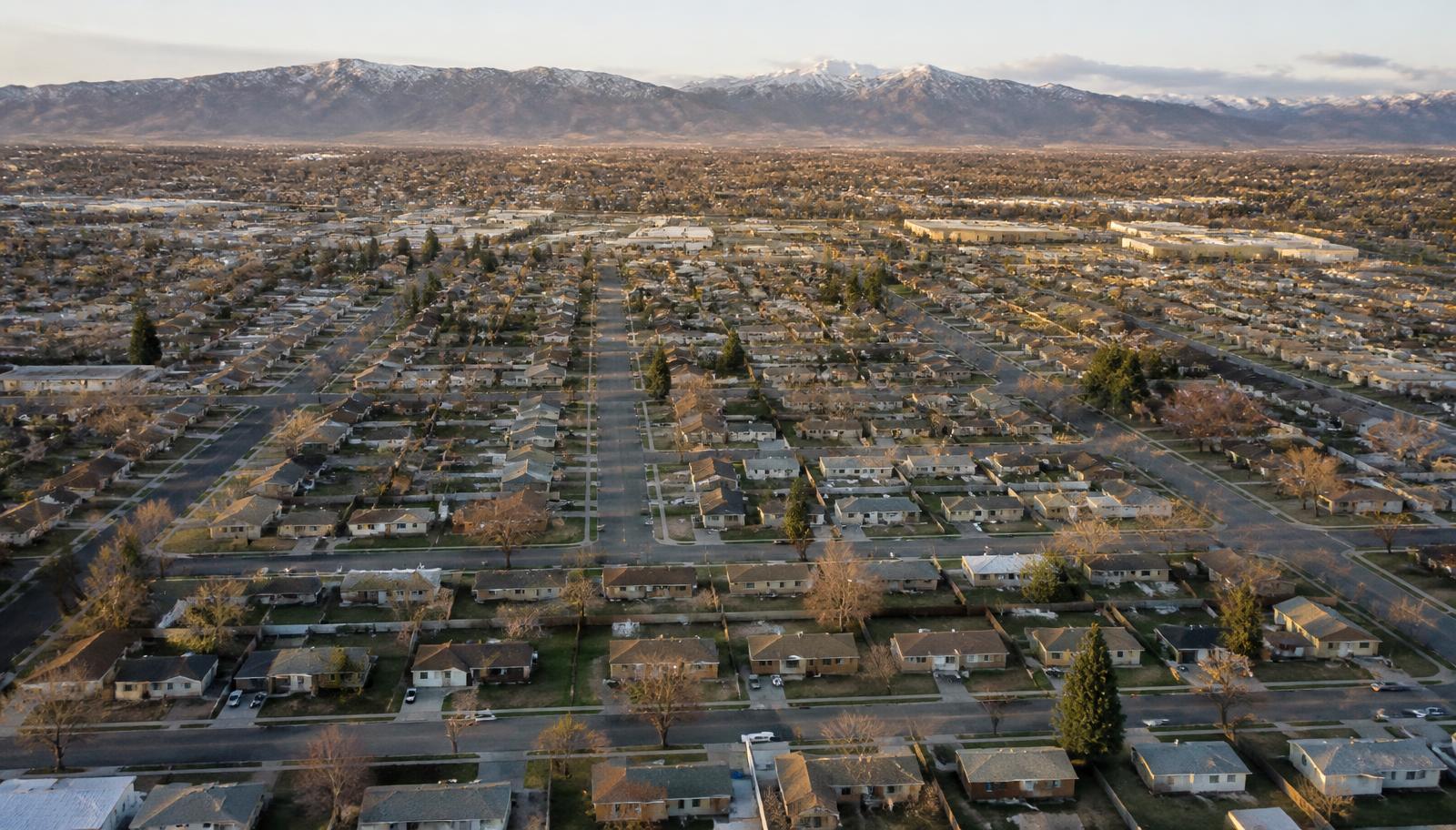
The housing tells you what the work is. Granger and Chesterfield went up in the 1950s and 60s, Hunter and the Redwood corridor filled in through the 70s and 80s, and the newer pockets out past 5600 West are the exception rather than the rule. That means West Valley demand is repair-and-replace demand: original galvanized supply lines finally giving up, seventy-percent-efficient furnaces at the end of their lives, swamp coolers being traded for real air conditioning, driveways spalled by forty winters of freeze-thaw, chain link coming down and vinyl going up, garage floors getting epoxied because the concrete underneath is too stained to look at.
Extentus coordinates search, Google advertising, paid social and web design under one plan rather than four separate vendors. In West Valley the reason that coordination matters is specific: this is a referral market first. Households here have been in the same neighborhoods for two and three generations and they ask family before they ask Google. But they still check. The name they were given gets typed into a phone, and whether that search returns a map listing, a real site and recognizable local work decides whether the referral converts or evaporates.
What makes West Valley its own market
It is easy to file West Valley under Salt Lake City because they share a valley and a metro. That is a mistake that shows up in the results. Salt Lake proper is a capital-city mix of downtown density, university households and expensive east-bench remodels. West Valley is a working-class city where the customer is a homeowner with an aging house, a careful budget and a very real network. Ogden's working-class framing is closer but still wrong: Ogden's identity is railroad-industrial and its housing is older brick. West Valley's identity is immigrant, multi-generational and suburban-dense, and its housing is mid-century tract.
The practical consequence is that trust here is earned in more than one language and in more than one channel. A bilingual estimate is not a nicety, it is a conversion lever. A site that loads on an older phone over a weak connection matters more than a site that looks impressive on a designer's monitor. And a business that is invisible online does not lose the referral immediately — it loses the second and third referral, because nobody can find it to pass it along.
Search: dense demand, thin local competition
Most agencies optimize their trade clients for Salt Lake City and treat the west side as overflow, which leaves West Valley terms cheap and winnable. Our SEO work claims West Valley proper — Granger, Hunter, Chesterfield, Redwood, Valley Fair, West Ridge, Lake Park, Decker Lake — plus the adjacent west-side communities a crew already drives through: Kearns, Magna, Taylorsville, West Jordan, Glendale, Poplar Grove and South Salt Lake. That whole footprint costs less to hold than one competitive downtown Salt Lake term.
Google advertising: emergency intent, tight radius
Trade clicks along the Wasatch Front are expensive — plumbing intent clears well past $50 — so the discipline is geographic and temporal, not just keyword-level. We run Local Services Ads for licensed trades, hold the radius to the west side instead of bleeding budget into east-bench searches the client will never win profitably, weight spend toward the first hard freeze and the first triple-digit week when furnace and AC failures cluster, and write ad copy that says what a West Valley homeowner is actually deciding: whether this will cost what they were told it would.
Social advertising: the referral engine, bought on purpose
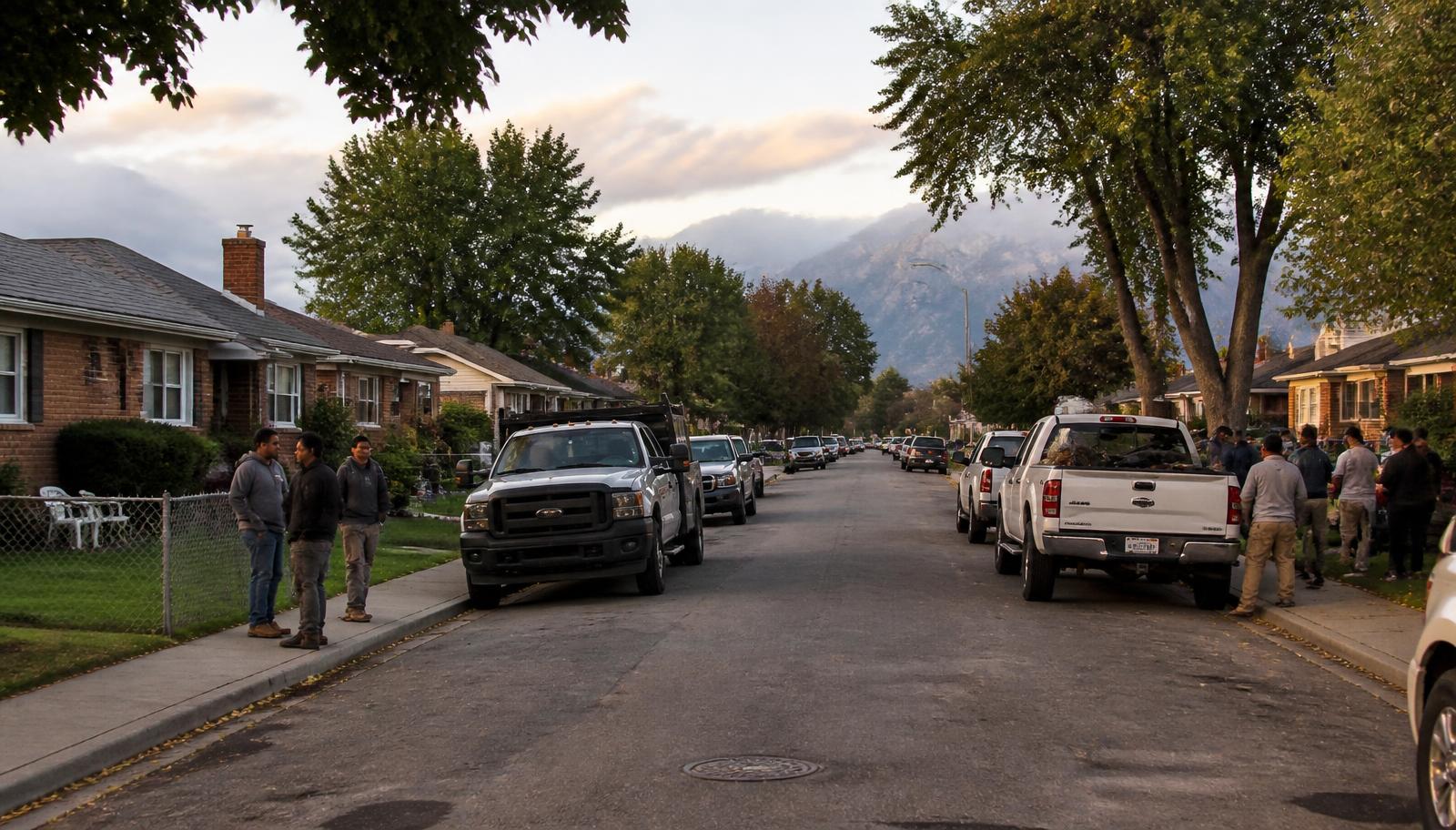
Word of mouth is already the strongest channel in this city. Paid social makes it repeatable: placements geo-fenced to specific West Valley neighborhoods, creative showing genuinely local finished work on houses that look like the viewer's own — a replaced furnace in a mid-century basement, a repoured driveway apron on a rambler, a vinyl fence line between two 1970s lots, an epoxied garage floor — and audiences built on homeownership, household size and life stage rather than vague interest targeting. Run in both English and Spanish where it earns its keep.
Web design: the check that happens after the referral
Sites for this market load fast on mid-range Android phones, name the neighborhoods people actually say out loud, show real west-side project photos instead of stock, state pricing posture plainly for households budgeting tightly, offer Spanish where the business can genuinely serve it, and treat the phone number as the primary action. A referral that dies on a slow, vague website is the most expensive thing a West Valley contractor can own.
How the four channels compound in West Valley
Web design decides whether a family recommendation survives the phone check that follows it. SEO claims a west-side position that is still cheap because everyone else aimed at Salt Lake. Google advertising catches the household whose furnace died last night and has nobody to ask. Paid social turns one finished job into a whole block's worth of awareness. Bought separately, nobody owns the sequence a West Valley household actually runs: hear a name from a relative, type it into a phone, see a map listing, open a site, recognize a house like theirs, and call. In the densest, most connected market in the state, owning that sequence is the growth.
One accountable team runs all four, which here means knowing not to spend Salt Lake money on West Valley keywords, knowing which neighborhoods convert in which language, and knowing that the channel you cannot buy — a family telling a family — travels faster when everything a curious neighbor can find online backs it up.
The West Valley attribution advantage
Extentus reports qualified inbound by channel, by neighborhood and by month, with cost per qualified inbound and the pages responsible. In a compact, dense city that reporting gets granular fast: you can see Granger performing differently from Hunter, and Kearns behaving differently from Magna, and move budget accordingly instead of guessing at a valley-wide average.
The four services Extentus runs in West Valley
- Search Engine Optimization
- The channel you own — map-pack rankings, reviews and service-area pages that keep producing after the work is done.
- Google Advertising
- The channel with a volume dial — paid search and Local Services Ads tuned to the hours demand actually spikes.
- Social Advertising
- The channel that builds the pipeline — demand created in homeowners before they ever search.
- Web Design
- Where the other three cash out — fast, mobile-first pages built to convert visits into booked jobs.
Install all four in West Valley
One framework, one accountable record: qualified inbound by channel and by West Valley district, cost per qualified inbound, and the exact pages responsible.
West Valley marketing questions, answered
No. They share a valley and a metro, but the customer is different. Salt Lake proper mixes downtown density, university households and expensive east-bench remodels. West Valley is Utah's second-largest city and its most diverse — dense, affordable, working-class, mid-century tract housing, and a referral network that runs through extended families. Campaigns built for Salt Lake overspend on the wrong geography and speak in the wrong register.
Yes, when the business can genuinely serve it. A large share of West Valley households speak a language other than English at home, and Spanish is the most common. Offering a Spanish-language path — ad copy, a landing page, a stated bilingual estimate — measurably improves conversion in specific neighborhoods. Offering it when nobody at the company can follow through does the opposite, so we scope it to what the business can actually deliver.
Repair and replacement. Most of the housing stock dates to the 1950s through the 1980s, so the recurring jobs are failing supply lines and sewer laterals, end-of-life furnaces, swamp-cooler-to-AC conversions, driveway and flatwork replacement after decades of freeze-thaw, chain-link-to-vinyl fencing, and garage floor epoxy over stained mid-century concrete.