Ready to advertise in Salt Lake City?
Call now — 385-985-0003Salt Lake City · Google Ads
Google advertising in Salt Lake City: a valley that bids one way in January and another in July
A furnace quits in a brick bungalow off 9th and 9th during a subzero inversion night, and the homeowner is searching from a house that's already dropping degrees by the minute. Six months later and twenty-five miles south, a new homeowner in a Herriman subdivision is comparing three AC quotes at leisure because the unit is still limping, not dead, and the deadline is soft. Draw one campaign over Salt Lake City and it treats both searches the same, when one needs a truck dispatched before midnight and the other needs a clean estimate by the weekend. A valley long enough to run from Rose Park to Draper doesn't share a housing age, an urgency level, or a household budget, and a Google Ads account has to bid like it actually knows that.
The short answer
Google advertising in Salt Lake City means paid search and Local Services Ads bid the older grid neighborhoods like The Avenues, Capitol Hill and Sugar House separately from the new-construction ring stretching toward Draper, Herriman, South Jordan and Riverton, because a single valley-wide campaign blends a subzero-night furnace emergency with a leisurely new-build AC quote and can't route either lead to the crew priced for that job. Extentus verifies trade licensing, splits winter heating spend from summer cooling spend on a seasonal calendar, and reports in booked jobs rather than clicks.
Beat 01 · A radius that ignores the grid
A circle over Salt Lake City treats a century-old Avenues bungalow and a brand-new Herriman build as the same lead.
Most Google Ads accounts default to a mileage radius drawn from a business address, and that shortcut assumes the homes inside it are roughly comparable. Salt Lake City breaks that assumption almost immediately. The Avenues, Capitol Hill, Federal Heights, Yalecrest and Sugar House hold older brick homes on the numbered grid, many with original plumbing and furnaces well past their expected life, while a standard radius also sweeps in newer subdivisions in Draper, Herriman, South Jordan and Riverton, where systems are under warranty and homeowners shop on a slower timeline.
A homeowner in Rose Park whose furnace just failed during a winter inversion night and a homeowner in South Jordan comparing epoxy garage floor finishes are not shopping the same contractor list, and neither belongs in the same ad group as a Millcreek renter dealing with a water heater that died early because of the valley's hard, mineral-heavy water. One blended campaign treats a downtown bungalow, a growing southern suburb, and a hard-water repair call the same, and none of them are.
The valley's elevation near 4,226 feet under the Wasatch Range compounds this: winter storms and freeze-thaw cycles hit driveways and sidewalks harder on some blocks than others, so a radius that ignores where the growth and the age actually sit also ignores where the service calls show up first.
Beat 02 · The shift: from a circle to grid-and-growth clusters
Downtown's numbered grid and the Draper-to-Riverton growth corridor don't share a buying pattern.
The fix replaces the radius with campaigns built around how Salt Lake County actually breaks apart. Core-city campaigns targeting Downtown, Central City, The Avenues, Capitol Hill, Federal Heights, Sugar House, 9th and 9th, Liberty Wells, Ballpark, Glendale, Poplar Grove, Rose Park, Fairpark, East Bench, Yalecrest and the Granary District carry copy built around older-home repair and replacement, since that housing stock drives service calls nothing in the southern ring matches.
Growth-ring campaigns for Millcreek, Holladay, Murray, South Salt Lake, West Valley City, Taylorsville, Kearns, Magna, West Jordan, South Jordan, Midvale, Cottonwood Heights, Sandy, Draper, Riverton, Herriman, Bluffdale, Lehi, Bountiful and North Salt Lake each carry their own copy, since new-construction demand for fencing, concrete and HVAC installs behaves like a genuinely different market — the Salt Lake City Master Framework page lays out why treating it as one blended pool wastes budget on both ends.
Seasonal intent gets its own calendar entirely: winter campaigns lean hard on furnace and no-heat language for the whole valley, while summer campaigns shift spend toward same-day AC repair, since a 100-degree July stretch and a subzero January cold snap don't compete for the same searcher on the same day.
Beat 03 · The mechanism: verified leads routed by cluster and season, not by distance
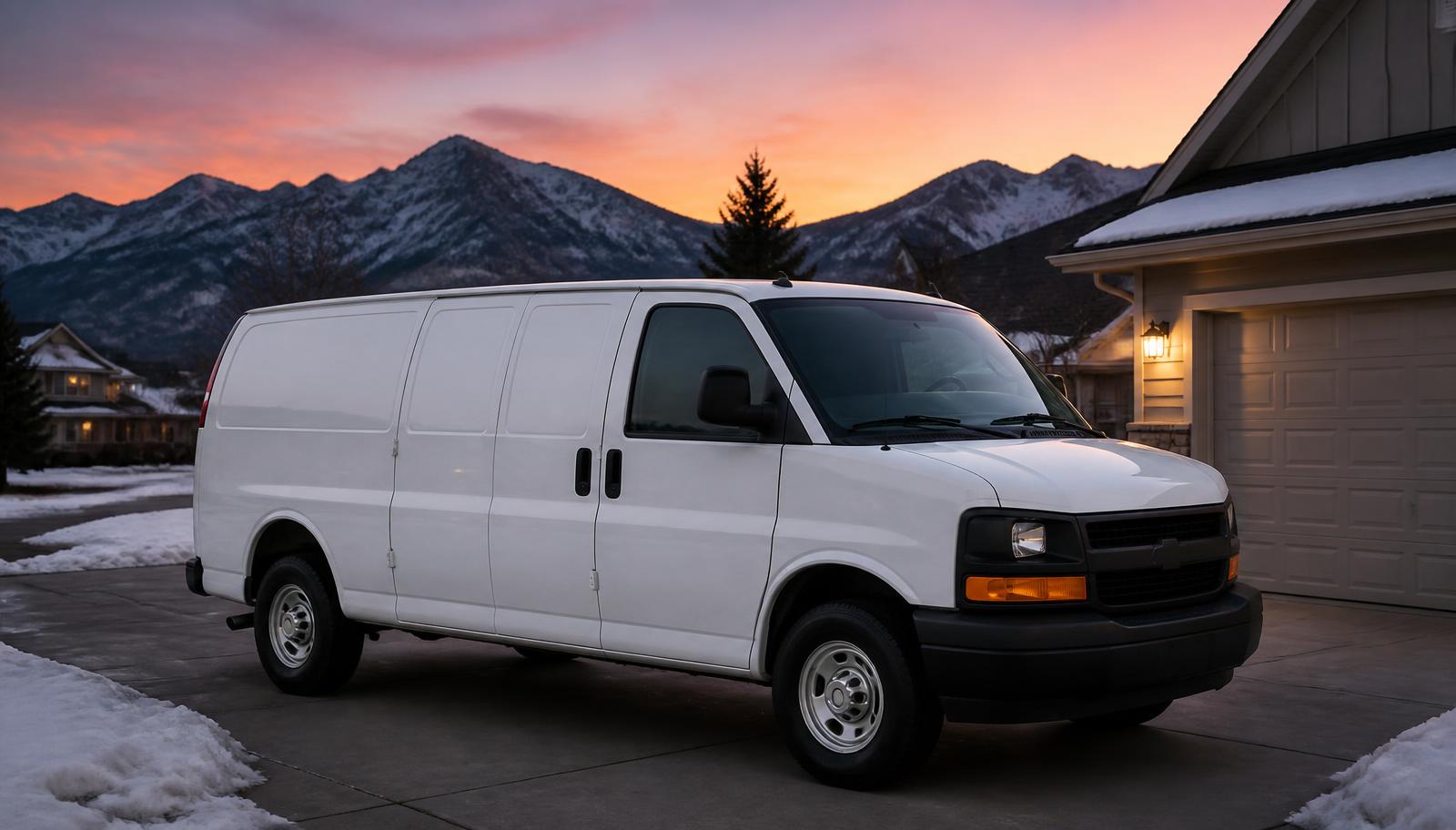
A quit furnace in Capitol Hill tonight and a slow-shopping quote in Draper both need the right lead, not a wasted click.
Salt Lake City's older core pushes most jobs toward repair and replacement, while the southern growth corridor pushes jobs toward new-construction fencing, concrete and HVAC installs, and a furnace failure in a century-old Yalecrest home is a different call than a routine install in a newer South Jordan subdivision twenty minutes away. Google-screened Local Services Ads bill per verified lead rather than per click, which matters when after-hours no-heat calls can spike hard downtown while staying flat in Herriman.
Extentus verifies contractor licensing and insurance before spend goes live, then routes leads by cluster and season rather than raw distance, so a crew based in Sugar House isn't paying for calls from a Bluffdale job priced for a different budget, and a Riverton-focused contractor isn't burning spend on Rose Park leads that need an older-home-specific pitch.
Ad copy matches the cluster: older-home and hard-water language for the numbered grid, new-construction language for the growth corridor, and seasonal swaps between furnace and AC copy timed to the valley's actual weather calendar, so whoever clicks lands on a message that already fits their property, their season, and their price point.
Beat 04 · The number behind the surge
Salt Lake City sits inside a Salt Lake County of roughly 1.2 million residents, and that gap sets the demand curve.
That county-to-city split means the vast majority of the valley's household budget sits outside the city core, spread across a growth corridor running from Midvale and Sandy down through Draper, Riverton, Herriman and toward Lehi, where new subdivisions keep pushing the county's southern edge outward. That gap feeds a predictable pattern: winter no-heat emergencies cluster hardest in the older grid neighborhoods near downtown and along the East Bench, summer AC failures spike valley-wide during the driest, hottest stretch of July, and new-construction fencing, concrete and HVAC-install searches cluster in the fast-growing southern cities year-round.
Beat 05 · The contrast: paid wins tonight's emergency, organic wins the valley
A page ranking on Salt Lake City's master-framework hub keeps working long after a cold-snap campaign pauses.
Paid search and Local Services Ads are built for right-now demand — the quit furnace in Poplar Grove during an inversion night, the dead water heater in Holladay the morning after hard water finally won — but the moment spend stops, so does the traffic. A well-built page on the Salt Lake City Master Framework page keeps surfacing for searches from Cottonwood Heights or North Salt Lake months later without another dollar spent, because it already answers the question a homeowner is typing.
That contrast matters more in a valley split between an older downtown grid and a fast-growing southern ring, where a wasted click can mean bidding on a Lehi job a Downtown-based crew was never priced or staffed to reach. Pairing paid campaigns with organic content that ranks for cluster-specific searches keeps paid budget focused on true emergencies while organic content absorbs the researching, comparison-shopping searches from South Jordan and Bountiful that don't need to be won at auction price.
Google Advertising is one of four. The Salt Lake City Master Framework page makes the case for running all four together, and what running only one costs a Salt Lake City service business.
Where we run google ads in Salt Lake City
Google Advertising for service businesses across Salt Lake City and Salt Lake County, plus the satellite towns crews already drive to. Every district below is targeted by name in campaigns, pages and profile service areas — not folded into a single city radius.
- Salt Lake City districts
- Downtown · Central City · The Avenues · Federal Heights · Capitol Hill · Marmalade District · Sugar House · 9th and 9th · Liberty Wells · Ballpark · Glendale · Poplar Grove · Rose Park · Fairpark · East Bench · Yalecrest · Harvard-Yale · Foothill · Wasatch Hollow · Granary District
- Beyond the county line
- Millcreek · Holladay · Murray · South Salt Lake · West Valley City · Taylorsville · Kearns · Magna · West Jordan · South Jordan · Midvale · Cottonwood Heights · Sandy · Draper · Riverton · Herriman · Bluffdale · Lehi · Bountiful · North Salt Lake · Woods Cross · Centerville · Farmington · Salt Lake County · Wasatch Front · Salt Lake Valley
- ZIP codes covered
- 84101 · 84102 · 84103 · 84104 · 84105 · 84106 · 84107 · 84108 · 84109 · 84111 · 84112 · 84115 · 84116 · 84117 · 84118 · 84119 · 84120 · 84121 · 84123 · 84124 · 84128 · 84020 · 84047 · 84070 · 84084 · 84088 · 84092 · 84094 · 84095 · 84043
Beat 06 · A valley that rewards bidding by season and by grid, not by boundary
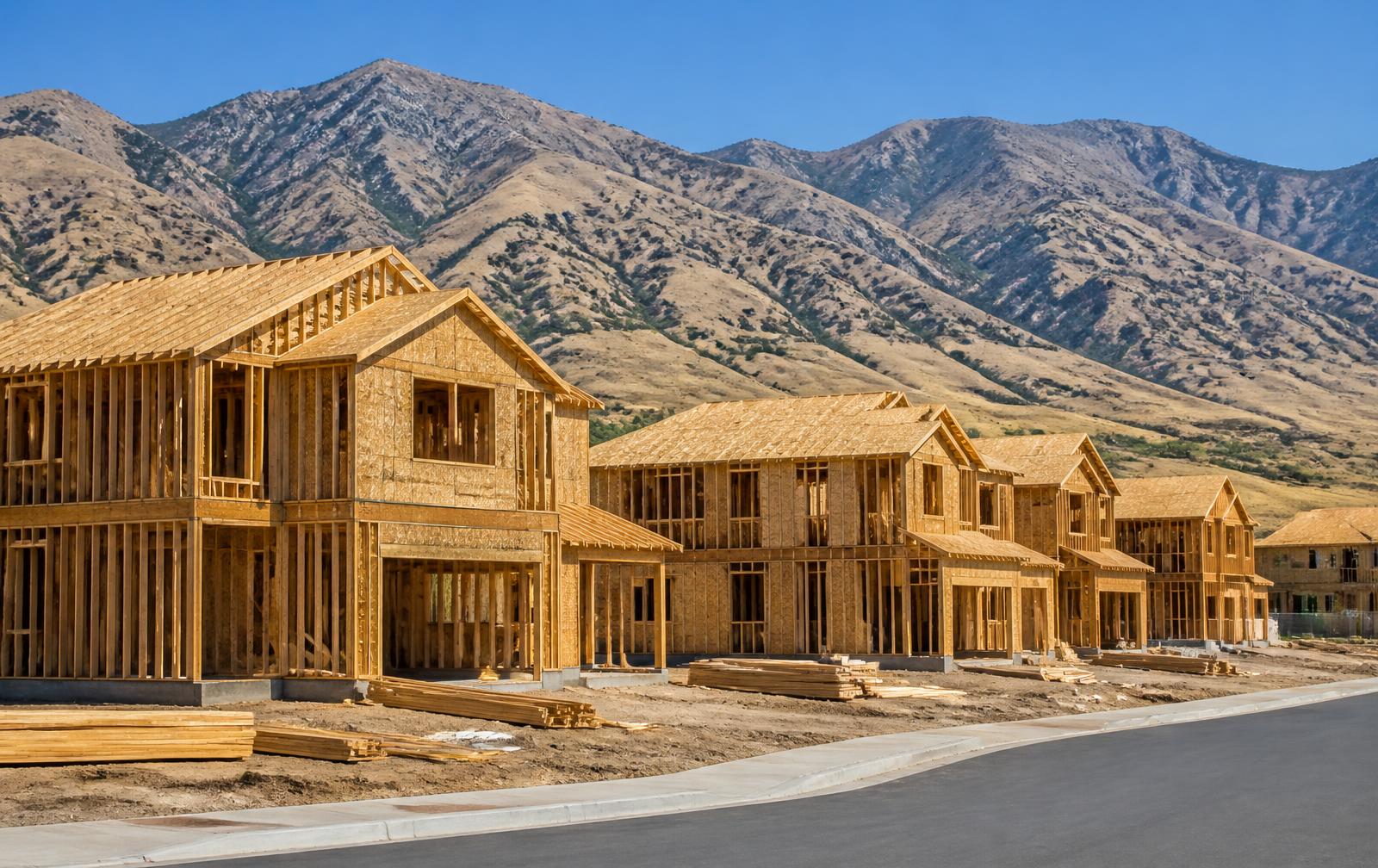
Salt Lake City's account should mirror the valley itself: an older core, a growth corridor, and two demand peaks a year.
The checkable local reality, as laid out on the Salt Lake City Master Framework page: the city sits at high-desert elevation under the Wasatch Range, its numbered-grid neighborhoods like The Avenues, Capitol Hill and Yalecrest hold housing stock decades older than the subdivisions climbing toward Draper and Herriman, and the valley swings between subzero winter inversions and 100-degree summer heat, each driving a different trade and a different urgency.
Extentus bids Salt Lake City's older grid neighborhoods, the fast-growing southern corridor toward Riverton, Herriman and Bluffdale, and the East Bench and West Side clusters as separate markets, splits plumbing, HVAC, fencing, concrete and epoxy flooring campaigns onto a seasonal calendar built around the valley's actual weather, verifies every contractor before spend goes live, and reports what each lead actually cost per booked job rather than per click.
Google Ads in Salt Lake City — questions, answered
A standard radius blends Salt Lake City's older grid neighborhoods, like The Avenues and Rose Park, where homes and systems run decades old, with the growth corridor toward Draper, Herriman and South Jordan, where homes are newer and buyers shop on a slower timeline. Campaigns split by grid neighborhood and growth ring avoid pairing an urgent no-heat call with a lead priced for the wrong budget.
The valley swings between subzero winter inversions that drive furnace and no-heat emergencies and 100-degree summer stretches that drive same-day AC repair calls, so a campaign built around one season misses half the year's demand. Splitting heating and cooling spend onto a seasonal calendar keeps budget pointed at whichever trade is actually surging.
The valley's mineral-heavy water shortens water heater lifespan across Millcreek, Holladay, Murray and neighboring cities, creating steady replacement demand that a generic plumbing campaign often misses. Ad copy built around early water heater failure captures that search intent before a competitor's broader campaign does.
The rest of the Salt Lake City set
- SEO
Search Engine Optimization in Salt Lake City
The channel that keeps producing calls in a valley where hard mineral water, brutal freeze-thaw winters and a metro population still climbing all shape what gets searched. A Google Business Profile built around hard-water plumbing failures and winter furnace emergencies, neighborhood pages for Downtown, Central City, The Avenues, Federal Heights, Capitol Hill, Marmalade District, Sugar House, 9th and 9th, Liberty Wells, Ballpark, Glendale, Poplar Grove, Rose Park, Fairpark, East Bench, Yalecrest, Wasatch Hollow and the Granary District, plus reach into Millcreek, Holladay, Murray, South Salt Lake, West Valley City, Taylorsville, Kearns, Magna, West Jordan, South Jordan, Midvale, Cottonwood Heights, Sandy, Draper, Riverton, Herriman, Bluffdale, Lehi, Bountiful, North Salt Lake and Farmington, and enough locally specific, review-backed proof to outrank national franchises that have never worked a bungalow perched on the East Bench.
Open page - Social Ads
Social Advertising in Salt Lake City
The Salt Lake City channel built for a young, fast-growing, recent-mover market: Facebook, Instagram and TikTok campaigns pulled from real local job sites and aimed neighborhood by neighborhood across Downtown, Central City, The Avenues, Capitol Hill, Marmalade District, Sugar House, 9th and 9th, Liberty Wells, Ballpark, Glendale, Poplar Grove, Rose Park, Fairpark, East Bench, Yalecrest, Wasatch Hollow and Granary District, plus Millcreek, Holladay, Murray, South Salt Lake, West Valley City, Taylorsville, Kearns, Magna, West Jordan, South Jordan, Midvale, Cottonwood Heights, Sandy, Draper, Riverton, Herriman, Bluffdale, Lehi, Bountiful, North Salt Lake and Farmington across Salt Lake County.
Open page - Web Design
Web Design in Salt Lake City
Sites built for a Salt Lake County market that runs from Downtown, Central City, The Avenues, Capitol Hill, Sugar House, 9th and 9th, Liberty Wells, Ballpark, Glendale, Poplar Grove, Rose Park, Fairpark, East Bench, Yalecrest, and the Granary District out through Millcreek, Holladay, Murray, South Salt Lake, West Valley City, Taylorsville, Kearns, Magna, West Jordan, South Jordan, Midvale, Cottonwood Heights, Sandy, Draper, Riverton, Herriman, Bluffdale, Lehi, Bountiful, and North Salt Lake: fast, mobile-first pages that read the numbered grid and neighborhood names the way locals search, instant-scheduling built for a tech-corridor buyer who expects a modern site, and pricing and service language that covers both freeze-thaw concrete repair on older streets and new-construction plumbing and HVAC installs pushing south toward Draper and Lehi.
Open page - All four — recommended
The Master Framework in Salt Lake City
All four channels, installed together for a high-desert valley market where winter heating and summer cooling both peak, freeze-thaw and road salt punish concrete every year, fast household growth pushes new subdivisions toward the county's edges while older neighborhoods renovate brick housing, and local search competition is still unusually soft for a metro this size. One strategy across SEO, Google advertising, social advertising and web design, tuned to Salt Lake City's grid and Salt Lake County's map, with one accountable number.
Open page