Pittsburgh · Master Framework
The Master Framework in Pittsburgh: four disciplines, one installed system
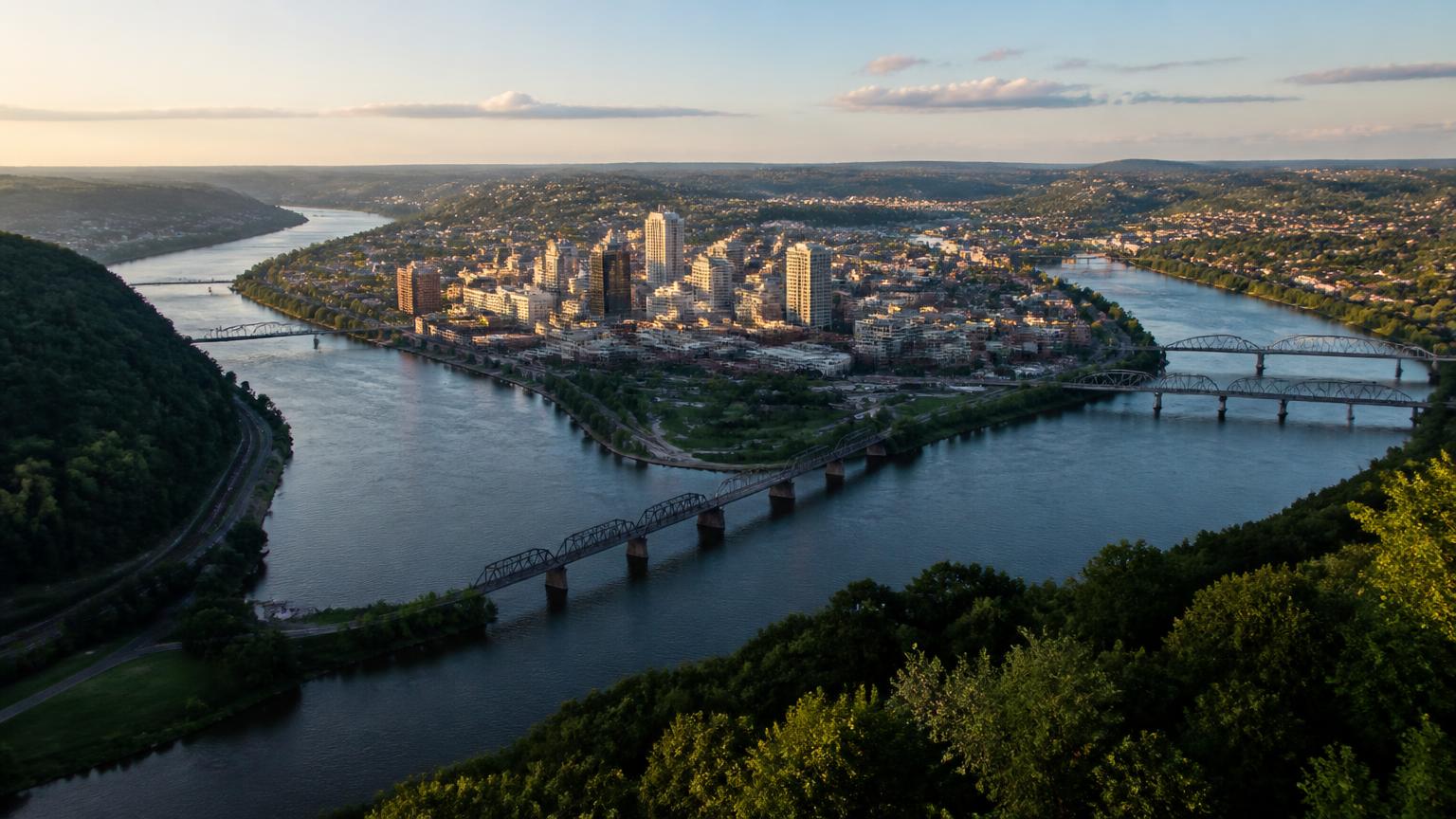
Pittsburgh doesn't sit on flat ground and doesn't behave like one market. Three rivers and a ring of steep hills split the city into dozens of tucked-away neighborhoods — Squirrel Hill and Shadyside on one side, Mount Washington and the South Side across the Monongahela, Lawrenceville and Bloomfield stacked along the Allegheny, the North Side and Oakland on their own grids entirely — and getting from one to another usually means crossing a bridge. Hire an SEO freelancer, a Google ads contractor, a social vendor and a web designer separately, and none of them is accountable for the fact that a Brookline or Carrick homeowner searches nothing like someone in Highland Park or Regent Square, or that East Liberty and Greenfield rarely need the same pitch, the same ad or the same site. Push past city limits into Mt. Lebanon, Bethel Park, Ross Township, Shaler, Robinson, Monroeville, Penn Hills, Cranberry, Sewickley and Bellevue, and the picture only fragments further across Allegheny County and Western Pennsylvania. Add a housing stock built mostly before 1940, a genuinely cold, snowy winter that puts freeze-thaw cracks into old concrete and driveways every year, and a post-steel economy that's rebuilt itself on healthcare, education and tech employment, and a marketing plan spread evenly across the metro is money spent guessing. An SEO retainer that doesn't separate old-house plumbing searches in Lawrenceville from new-build fencing searches out past Cranberry is optimizing the wrong pages. A Google ad account bidding flat across Allegheny County loses budget to clicks that were never going to convert into a Mount Washington or South Side job. A social feed posting once a month builds no familiarity with a Sewickley or Monroeville homeowner weighing three bids. A slow site loses the Bethel Park or Penn Hills visitor who meant to come back after checking two competitors. Four vendors, four invoices, and none of them can say which neighborhood actually produced last month's booked jobs.
The short answer
The Master Framework is Extentus installing SEO, Google advertising, social advertising and web design together as one Pittsburgh marketing system, built for a river-and-hill city of fragmented neighborhoods, older pre-1940 housing, and harsh winters that crack concrete and drive urgent repair calls — with one accountable record of qualified inbound by channel and by neighborhood, so no vendor claims credit for a lead it never produced.
Beat 01 · Four vendors, one blind spot each
None of the four ever sees the whole map at once.
Pittsburgh's buyer isn't one buyer, because bridges and hills carve the city into small, self-contained markets. An SEO retainer written without separating a Lawrenceville search from a Mt. Lebanon search never explains why plumbing and HVAC repair inquiries spike hardest in older housing near Bloomfield and Squirrel Hill while fencing and concrete searches spike further out toward Cranberry and Monroeville, and a paid ads vendor chasing the cheapest click never notices that the cheapest click in Carrick is rarely the buyer who books a job in Sewickley.
A social vendor running the same static post across the South Side and Ross Township builds no recognition with a Bethel Park or Shadyside homeowner comparing three quotes before calling anyone, and a web vendor's slow-loading site loses exactly the Oakland or Penn Hills visitor who meant to return after checking two competitors first. In a market this fragmented by geography, no single vendor is accountable for what the other three missed, and one weak link is enough to lose the job before it's ever quoted.
Beat 02 · A city split by rivers, aged by its housing, and hardened by a real winter
Pittsburgh runs on hills, bridges, old housing and cold winters, and most outside vendors never learn any of it.
Pittsburgh's identity is built neighborhood by neighborhood rather than as one uniform market: Squirrel Hill, Shadyside, East Liberty and Highland Park to the east, Lawrenceville, Bloomfield and the North Side hugging the Allegheny, Mount Washington, the South Side, Brookline, Carrick and Greenfield across the Monongahela, and Oakland and Regent Square anchoring their own pockets. Push past city limits and the market keeps going through Allegheny County into Mt. Lebanon, Bethel Park, Ross Township, Shaler, Robinson, Monroeville, Penn Hills, Cranberry, Sewickley and Bellevue, each with its own home ages, price points and search habits. A campaign written for one gets ignored in the next.
Underneath much of that map sits genuinely old housing — entire blocks built before 1940 — which keeps plumbing, HVAC, fencing, concrete and epoxy flooring repair in steady demand well beyond any single season. A true Western Pennsylvania winter compounds it: cold snaps fail aging furnaces overnight, and freeze-thaw cycles crack old concrete driveways and foundations year after year, pushing repair and replacement calls hard once the ground thaws. Layer in an economy that has rebuilt itself around healthcare, education and tech employment rather than steel, and a housing market where affordability still shapes what homeowners are willing to spend, and a marketing plan needs to know exactly which neighborhood to reach, with which urgency, and which proof point actually closes the job.
Beat 03 · Four channels, four separate jobs
Each discipline covers ground the other three cannot reach.
SEO builds the layer a comparison-minded Pittsburgh buyer checks first, ranking a business separately for the plumbing and HVAC repair searches coming out of older housing in Lawrenceville and Bloomfield and for the fencing, concrete and epoxy flooring searches coming from Cranberry and Robinson. The full case is on the <a href="/locations/pennsylvania/pittsburgh/seo">Pittsburgh SEO</a> page.
Google advertising covers what rankings can't reach fast enough, and it's exactly where an untargeted budget gets wasted fastest in a city split by rivers — spend has to be pointed at the neighborhood in crisis, not spread evenly across Allegheny County. That case is on the <a href="/locations/pennsylvania/pittsburgh/google-advertising">Pittsburgh Google advertising</a> page.
Social advertising builds the repeated familiarity a Pittsburgh buyer needs before trusting a stranger with a home whose age and value shift block by block, reaching a Sewickley or Monroeville household weighing a project long before they type a search. That argument is on the <a href="/locations/pennsylvania/pittsburgh/social-advertising">Pittsburgh social advertising</a> page.
Web design turns all three into booked jobs, with a fast, credible site built to survive a second and third look from a Mt. Lebanon or Bethel Park buyer comparing bids before settling on the first name they saw. See the full case on the <a href="/locations/pennsylvania/pittsburgh/web-design">Pittsburgh web design</a> page.
Beat 04 · The number behind the hills
Pittsburgh's housing stock, in one figure.
A substantial share of Pittsburgh's occupied housing units were built before 1,940 according to U.S.
Census Bureau data, concentrated in the older neighborhoods that define the city from Lawrenceville to Mount Washington. That much pre-1940 housing, spread across dozens of hill- and river-divided neighborhoods and reaching into Allegheny County suburbs like Monroeville and Penn Hills, is exactly why a single marketing channel bought alone can't cover the ground this city actually spans.
Beat 05 · Not a fifth service, a single spine
The shortest case: coordination, not addition.
Each sibling page argues why its own discipline earns its place in Pittsburgh. This page argues something different: none of the four should be bought separately here, because a city fragmented by rivers and hills into distinct neighborhoods, older housing stock driving steady repair demand, and a harsh winter that hits concrete and heating systems all move demand together, not in isolation. Only one accountable team can shift SEO priority, ad spend, social cadence and site messaging in the same week a cold snap fails furnaces in Carrick or a spring thaw cracks driveways in Bethel Park, instead of four vendors discovering the shift a month later from four separate invoices.

Where we run master framework in Pittsburgh
The Master Framework for service businesses across Pittsburgh and Allegheny County, plus the satellite towns crews already drive to. Every district below is targeted by name in campaigns, pages and profile service areas — not folded into a single city radius.
- Pittsburgh districts
- Downtown · Strip District · Lawrenceville · Bloomfield · Polish Hill · Shadyside · Squirrel Hill · Point Breeze · Highland Park · East Liberty · Garfield · Oakland · Greenfield · Hazelwood · South Side Flats · South Side Slopes · Mount Washington · Beechview · Brookline · Carrick · Overbrook · Sheraden · Elliott · North Side · Troy Hill · Brighton Heights · Perry South · Regent Square · Bloomfield-Garfield
- Beyond the county line
- Mt. Lebanon · Bethel Park · Upper St. Clair · Castle Shannon · Dormont · Brentwood · Whitehall · Ross Township · Shaler · West View · Bellevue · Avalon · McKees Rocks · Robinson Township · Moon Township · Sewickley · Coraopolis · Wilkinsburg · Penn Hills · Monroeville · Plum · Murrysville · Fox Chapel · O'Hara Township · Cranberry Township · Allegheny County · Butler County · Westmoreland County · Beaver County · Washington County
- ZIP codes covered
- 15201 · 15203 · 15204 · 15205 · 15206 · 15207 · 15208 · 15209 · 15210 · 15211 · 15212 · 15213 · 15214 · 15216 · 15217 · 15218 · 15219 · 15220 · 15221 · 15222 · 15224 · 15226 · 15227 · 15228 · 15232 · 15233 · 15234 · 15235 · 15236 · 15237 · 15238 · 15241 · 15243
Beat 06 · The Pittsburgh close
A city built from hills and rivers rewards businesses built for that fact.
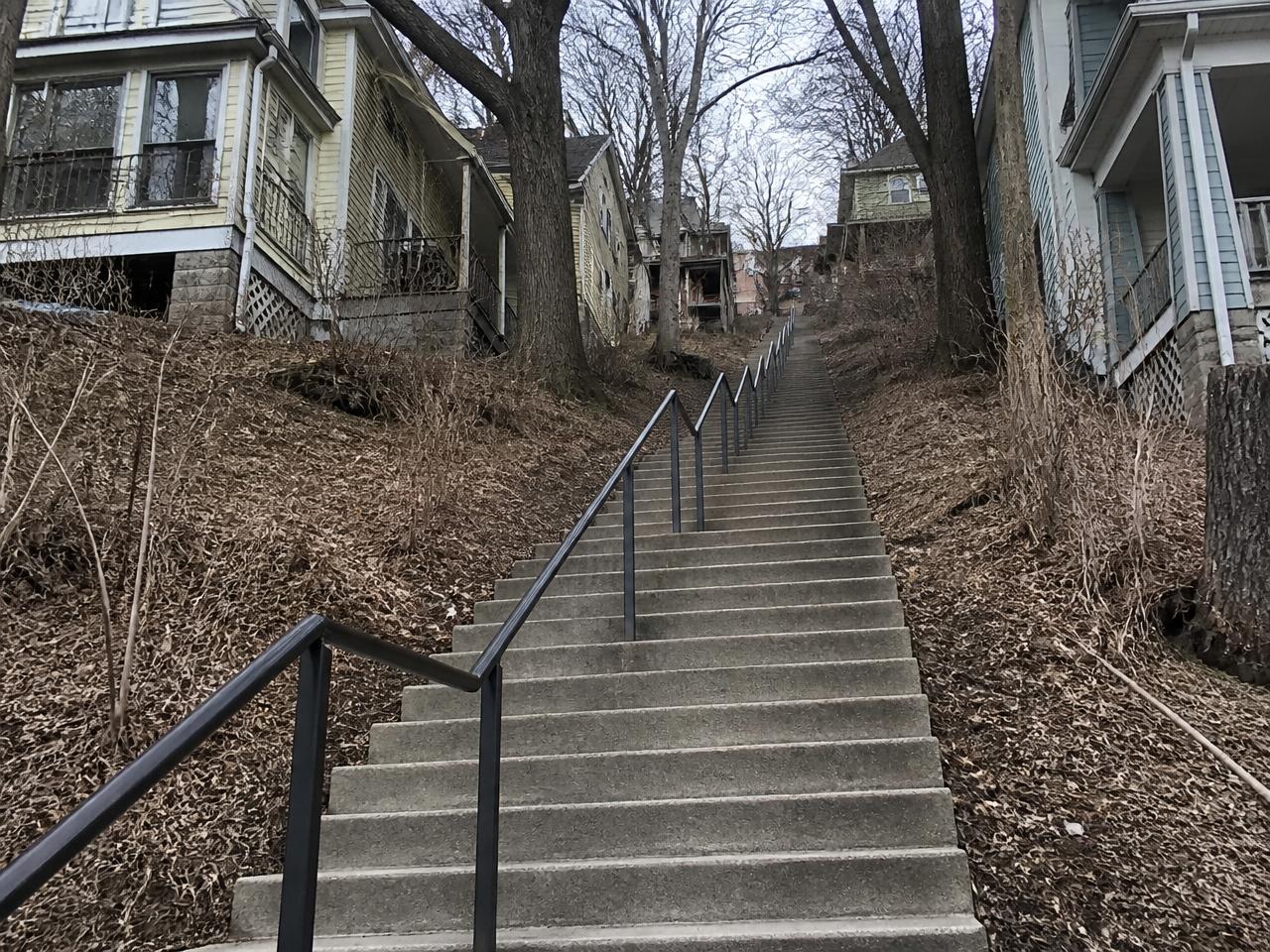
Pittsburgh runs on patterns most outside agencies never learn: a map of neighborhoods from Squirrel Hill to the South Side that search and compare differently block by block, pre-1940 housing stock that keeps plumbing, HVAC, fencing and concrete repair in steady demand, and a real winter that cracks concrete and fails furnaces on its own schedule every year. Layer on a metro that stretches through Allegheny County and Western Pennsylvania into Mt. Lebanon, Cranberry, Sewickley and Monroeville, and what gets punished hardest is four separate vendors who never once compared notes with each other, let alone with the neighborhood their next lead is actually coming from.
The Master Framework installs SEO, Google advertising, social advertising and web design as one system, built around Pittsburgh's geography and its winter calendar. Extentus installs all four on one Pittsburgh engagement with a single record of what the market actually returned, instead of four vendors each defending their own slice of a city too often mistaken for one uniform market.
Master Framework in Pittsburgh — questions, answered
Rivers and hills split Pittsburgh into dozens of self-contained neighborhoods, from older housing in Lawrenceville and Bloomfield with steady plumbing and HVAC repair demand to newer construction out toward Cranberry and Monroeville driving fencing and concrete work. A campaign speaking to both the same way misses each area's real project type and urgency.
A large share of the city's homes were built before 1940, and that much old housing keeps plumbing, HVAC, fencing and concrete repair in steady, year-round demand rather than a seasonal spike alone. Marketing that isn't built around old-home failure points misses the moments when demand actually peaks.
Cold snaps fail aging furnaces overnight and freeze-thaw cycles crack concrete driveways and foundations across Allegheny County every year. A single weak channel — a stale site, a flat ad budget, an inactive social feed — misses that urgency, which is why coordinating all four disciplines together matters more here than in a milder market.
The four Pittsburgh pages, individually
Each discipline's own Pittsburgh page — its own local search data, its own market detail, its own URL.
- SEO
Search Engine Optimization in Pittsburgh
The channel that keeps producing calls in a city defined by hills, steps and river valleys. A Google Business Profile built around hillside plumbing and retaining-wall concrete work, neighborhood pages for Squirrel Hill, Shadyside, Lawrenceville, Bloomfield, Mount Washington, South Side Slopes, Brookline, Beechview, Greenfield, Highland Park, East Liberty, Polish Hill, Troy Hill, Brighton Heights, North Side, Oakland, Carrick, Regent Square and Wilkinsburg, plus reach into Allegheny County suburbs like Mt. Lebanon, Bethel Park, Ross Township, Shaler, Robinson, Monroeville, Penn Hills, Cranberry, Sewickley, McKees Rocks and Bellevue, and enough PLI-savvy, review-backed proof to outrank the national franchises flooding this market with ad spend.
Open page - Google Ads
Google Advertising in Pittsburgh
The channel built for a city where hills and rivers make a straight-line radius meaningless. Paid search and Local Services Ads split city neighborhoods from Mt. Lebanon, Bethel Park, Ross Township, Cranberry and the rest of Allegheny County, weighted for freeze-thaw concrete failures, no-heat emergencies and older tight-basement housing, and report against booked jobs instead of raw clicks.
Open page - Social Ads
Social Advertising in Pittsburgh
The Pittsburgh channel built for a city of hills and older housing: Facebook and Instagram campaigns pulled from real local job sites and aimed neighborhood by neighborhood across Squirrel Hill, Shadyside, Lawrenceville, Bloomfield, Mount Washington and the South Side Slopes, out through Brookline, Beechview, Greenfield, Highland Park, East Liberty, Troy Hill, North Side, Oakland, Carrick and Regent Square, and into Mt. Lebanon, Bethel Park, Ross Township, Shaler, Robinson, Monroeville, Penn Hills, Cranberry, Sewickley and Bellevue across Allegheny County.
Open page - Web Design
Web Design in Pittsburgh
Sites built for a city of hills, hollows, and older housing stock, where Squirrel Hill, Shadyside, Lawrenceville, Bloomfield, Mount Washington, South Side, Brookline, Beechview, Greenfield, Highland Park, East Liberty, North Side, Oakland, Carrick, and Regent Square each search their own way, and where Allegheny County suburbs like Mt. Lebanon, Bethel Park, Ross Township, Shaler, Robinson, Monroeville, Penn Hills, Cranberry, Sewickley, and Bellevue round out the trade area: fast phone-first pages built for a cold basement with poor reception, neighborhood-and-suburb service pages instead of one flat city page, visible license, insurance, and City of Pittsburgh PLI permit proof, and pricing language that accounts for steep driveways and open-wall surprises in older homes.
Open page