Ready to advertise in Las Vegas?
Call now — 385-985-0003Las Vegas · Google Advertising
Google Ads in Las Vegas: when it is 110 degrees inside, nobody comparison shops.
Two in the afternoon in July and a condenser in Enterprise stops turning. A slab leak under a Spring Valley kitchen floor finally shows itself as a warm patch of tile. A monsoon cell parks over Henderson for twenty minutes and water comes through the ceiling of a bedroom that has been dry for nine years. Every one of those homeowners reaches for a phone and searches — and whoever occupies that result is the business that gets the job, because in this heat nobody has time to shop.
The short answer
Google Ads in Las Vegas means paying for high-intent searches like emergency ac repair and slab leak repair in a market where a cooling failure at 110 degrees is a same-hour emergency and the caller takes the first credible option. Demand ramps in March, peaks brutally from June through September, and spikes again during monsoon afternoons in July, August, and September. Extentus runs tightly geo-targeted campaigns across Clark County and its master-planned communities, tracks every call to a community and a service, dayparts around peak-heat hours, and reallocates budget weekly toward the work that actually closes.
Beat 01 · Urgency is the entire advantage
Las Vegas produces more genuine same-hour emergencies than almost any market in the country.
When an air conditioner fails in a northern city in July, the homeowner is uncomfortable. When it fails here at 112 degrees with an infant or an elderly parent in the house, it is a safety problem measured in hours. That changes buyer behavior completely: fewer tabs, fewer quotes, faster decisions.
That is what makes paid search so effective in this valley. Intent is not soft. A search for air conditioning repair in July is a person who will hire someone today, and the only question is who answers first with a credible offer and a tappable number.
The corollary is that a slow campaign wastes real money. Ads that run outside peak-heat hours, landing pages that load slowly on a phone in the sun, or a number that rings to voicemail all convert urgency into a competitor's revenue.
Beat 02 · The heat curve, not a season
Cooling demand ramps in March and does not release until late October.
Most markets budget paid search around a short peak. Las Vegas does not have one. March and April bring tune-ups and the homeowners who remember last August. May starts the failures. June through September is continuous. October still delivers replacement work as owners finally decide to stop patching.
That means budget pacing matters more here than bid tactics. A campaign that exhausts its month in the first ten days of July disappears during the most valuable fortnight of the year, and a campaign that holds back all spring pays more for the same clicks later when everyone else is bidding.
We pace across the curve, raise ceilings during heat advisories, and pull back into the cool months when the same budget belongs on planned projects instead of emergencies.
Beat 03 · Clark County geography decides the bid
One valley, very different economics from Summerlin to North Las Vegas.
Geographic bidding is where most Las Vegas accounts leak money. The valley is one metro, but a replacement lead out of Summerlin, Southern Highlands, Anthem, or Green Valley carries a different average ticket than a repair lead out of Sunrise Manor or parts of North Las Vegas — and both are worth having, at different prices.
So we bid by community rather than by city. Summerlin, Centennial Hills, Mountain's Edge, Enterprise, Southern Highlands, Henderson, Green Valley, Anthem, Inspirada, Aliante, Paradise, Whitney, and Boulder City each get their own performance history, and radius targeting follows the 215 beltway and US-95 rather than an arbitrary circle.
Drive time is part of the calculation too. A crew based in the northwest bidding hard on Henderson emergencies loses money on windshield time even when the lead is cheap, so the map is built around where the trucks actually are.
Beat 04 · More than 130 days a year above 90 degrees
Over 130 days above 90°F is the number every Las Vegas ad budget should be built around.
More than a third of the year sits above 90 degrees, and stretches of it sit above 105, which turns cooling from a comfort purchase into a recurring emergency category with a long tail of replacement work behind it.
That single figure explains why paid search behaves differently here.
It also explains the competitive crush. Everyone in the valley wants the July click, so auction prices rise sharply exactly when demand is highest. The businesses that win are the ones with organic depth already lowering their blended cost, tight landing pages that convert on the first visit, and call handling that does not drop a lead at three in the afternoon.
So the budget question is never just how much. It is which hours, which communities, which services, and which weeks — and that only becomes answerable when calls are tracked to a source rather than counted in aggregate.
Beat 05 · Monsoon afternoons and hard water
Two secondary spikes fund the parts of the year cooling does not.
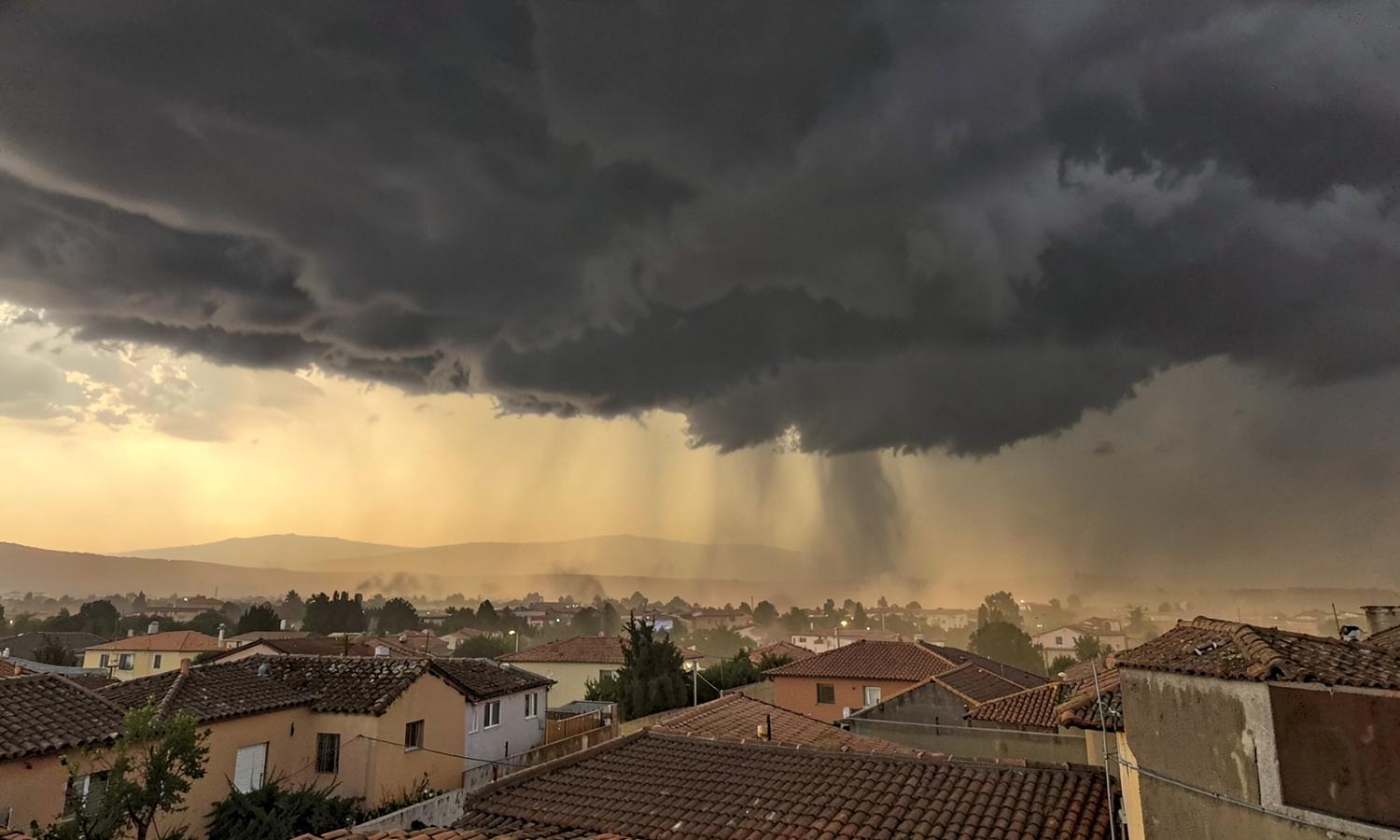
July through September brings the monsoon, and it is concentrated and violent. A single afternoon cell drops more water than a desert grade can move, and it finds brittle tile underlayment, blocked scuppers, flat patio slopes, and garage thresholds. Roofing, drainage, and concrete searches spike within the hour, then vanish.
Hard water runs all year underneath everything. Valley water scales water heaters, fixtures, and irrigation, which produces a steady stream of water-heater replacement, recirculation, filtration, and slab-leak searches that are far less contested than cooling terms and far cheaper to win.
Campaigns built to switch on within minutes of a storm and to hold steady on plumbing all year smooth the revenue line that pure cooling accounts leave jagged.
Google Advertising is one of four. The Las Vegas Master Framework page makes the case for running all four together, and what running only one costs a Las Vegas service business.
Where we run google ads in Las Vegas
Google Advertising for service businesses across Las Vegas and Clark County, plus the satellite towns crews already drive to. Every district below is targeted by name in campaigns, pages and profile service areas — not folded into a single city radius.
- Las Vegas districts
- Downtown Las Vegas · Arts District · Summerlin · Summerlin South · Centennial Hills · Skye Canyon · Providence · Lone Mountain · The Lakes · Spring Valley · Enterprise · Mountain's Edge · Southern Highlands · Silverado Ranch · Rhodes Ranch · Desert Shores · Sunrise Manor · Whitney · Winchester · Paradise · Charleston Heights · Huntridge · Rancho Charleston · University District
- Beyond the county line
- Henderson · North Las Vegas · Green Valley · Anthem · Inspirada · Cadence · Seven Hills · MacDonald Ranch · Aliante · Eldorado · Boulder City · Blue Diamond · Sloan · Jean · Indian Springs · Mesquite · Pahrump · Nellis Air Force Base · Clark County · Las Vegas Valley · Southern Nevada · Mojave Desert · Red Rock Canyon area · Lake Mead area
- ZIP codes covered
- 89101 · 89102 · 89103 · 89104 · 89106 · 89107 · 89108 · 89109 · 89110 · 89113 · 89115 · 89117 · 89118 · 89119 · 89120 · 89121 · 89122 · 89123 · 89128 · 89129 · 89130 · 89131 · 89134 · 89135 · 89138 · 89139 · 89141 · 89142 · 89143 · 89144 · 89145 · 89146 · 89147 · 89148 · 89149 · 89156 · 89161 · 89166 · 89178 · 89179 · 89183 · 89030 · 89031 · 89032 · 89033 · 89081 · 89084 · 89085 · 89086 · 89002 · 89011 · 89012 · 89014 · 89015 · 89044 · 89052 · 89074 · 89005
Beat 06 · Paid search inside a complete system
Google Ads works best in Las Vegas when it is not carrying the whole program.
Paid search is the fastest channel and the most expensive one, which is exactly why it should not be the only one. Organic community depth lowers the blended cost of every July click. Paid social builds the cool-season project pipeline so the account is not bidding on emergencies year round. The site converts all of it.
Run alone, paid search becomes a treadmill: spend rises every summer, the cost per booked job creeps, and nothing compounds. Run inside a system, the same budget produces more work each year because the other three channels keep absorbing demand that would otherwise have to be bought.
One team builds all four, reports them on one ledger, and answers for the number that matters — booked revenue per dollar, by community and by season.
Google Ads in Las Vegas — questions, answered
It depends far more on season and service than on a flat monthly number. Cooling emergency terms are expensive during the June-through-September crush because the entire valley is bidding, while plumbing, water-heater, and drainage terms stay comparatively cheap all year. A workable approach is a pacing plan that raises ceilings during heat advisories and monsoon events, holds a steady floor on non-cooling services, and shifts budget to planned projects in the cool months — with every call tracked so spend follows booked revenue rather than click volume.
Same day, if the campaign is built for urgency. Search intent here is unusually strong — a person searching for air conditioning repair at two in the afternoon in July is hiring someone that day. Calls typically start within hours of launch. Efficiency, though, takes four to six weeks of data to sort by community, hour, and service, which is when cost per booked job usually drops meaningfully.
Yes, because the demand is sudden and short. A single storm afternoon in July, August, or September can generate more roof-leak and drainage searches than the preceding month combined, and those searches disappear within a day or two. Campaigns held ready and switched on within minutes of a cell moving over Henderson, Summerlin, or North Las Vegas capture calls that a slower competitor never sees, and they cost very little to keep on standby the rest of the time.
The rest of the Las Vegas set
- SEO
Search Engine Optimization in Las Vegas
Las Vegas rewards depth over volume. A Google Business Profile built around how this valley actually buys — same-hour cooling failures in July, monsoon roof leaks in August, hard-water water heater replacement, first-cycle renovation on twenty-year-old subdivisions — is what separates a business that owns the map pack from one competing on a single citywide page. By anchoring your presence across Clark County and out through Summerlin, Henderson, North Las Vegas, Spring Valley, Enterprise, and Centennial Hills, Extentus makes sure your business is the one found the hour the heat creates the next job.
Open page - Social Ads
Social Advertising in Las Vegas
Paid social is where Las Vegas's planned work is won. The valley's best building months are the ones everyone else treats as the off-season, and the projects that fill them — pool decks, pavers and travertine, block walls and iron gates, turf, patio covers, epoxy garage floors — are chosen slowly and visually. Extentus runs proof-first campaigns on real valley houses with gravel yards and stucco walls, targeted across Summerlin, Henderson, North Las Vegas, Spring Valley, Enterprise, and Centennial Hills, timed to the months when projects actually get decided rather than the weeks when something breaks.
Open page - Web Design
Web Design in Las Vegas
A Las Vegas site has one job: convert a hot, impatient, mobile visitor before they open another tab. Extentus builds fast, mobile-first sites that load on a weak signal in a driveway, show real finished work on recognizable valley houses, name the master-planned communities served, publish plain pricing logic and warranty terms, and make calling or requesting a quote a single tap — then wire the whole thing to the search, paid, and social channels feeding it.
Open page - Framework
The Master Framework in Las Vegas
The framework is the whole argument: search, Google advertising, paid social, and the website installed together, sequenced, and measured on one ledger. Las Vegas runs two completely different demand rhythms — same-hour emergencies through the long heat, and slow visual decisions through the cool months — and no single channel covers both. Installed as a system, they cover the whole year and make each other cheaper.
Open page