Pinellas / Master Framework
St. Petersburg's four marketing channels, run as one peninsula-wide engagement instead of four bills
Talk to any St. Pete contractor who has tried buying these channels apart and the same complaint surfaces. The SEO vendor blames the site. The ads vendor blames the leads. The social vendor sends screenshots. Nobody owns the number that matters. The whole case for the framework is that these four disciplines only pay off once a single team runs them against one shared record of what worked.
The short answer
The Master Framework is Extentus installing all four disciplines in St. Petersburg as one system: SEO for the durable Pinellas County baseline, Google advertising for storm weeks and emergencies in older homes, social advertising for the elective backlog that never generates a search, and web design as the surface all three convert on. One strategy, one budget that moves between channels as demand on the peninsula shifts, and one reported number set — qualified inbound and cost per qualified inbound.
First · The problem with buying channels separately
Four vendors, four dashboards, no accountable number.
The typical St. Pete home service company has bought marketing three or four times. An SEO retainer from someone who reports rankings. A Google Ads manager who reports clicks and impressions. A social agency that reports reach and engagement. A web designer who finished eighteen months ago and has not been heard from since. Every one of them reports a number that goes up, and the owner still cannot say what a booked job cost.
The failure is structural, not a matter of vendor quality. Each vendor is measured on their own channel, so each optimizes for their own channel — and every one of them has a financial reason to argue that the answer is more of what they sell. When leads dip, the SEO vendor blames the site, the ads vendor blames the market, the social vendor blames the offer. Nobody can move budget, because moving money out of their channel means moving money out of their invoice.
Meanwhile the four channels are not independent. Site speed determines ad cost. Rankings determine how much of the map you have to buy. Social demand determines how much high-intent search traffic you need. Run separately, each one pays full Pinellas rate and leaves a visible hole.
Second · What each channel is actually for
Four jobs, not four versions of the same job.
SEO owns the durable baseline. Google Business Profile authority, review velocity, and a real page layer across the peninsula and the beach communities — the Old Northeast, Kenwood, Crescent Lake, Snell Isle, Shore Acres, Coquina Key, Jungle Terrace, Disston Heights, Pinellas Point, Gulfport, St. Pete Beach, Treasure Island, Pinellas Park, Lealman, Seminole. It compounds and it is the cheapest call you will ever earn, but it cannot surge and it takes months.
Google advertising buys the moment. A cast-iron lateral failing under a Kenwood bungalow on a Sunday, a condenser dead in a Disston Heights slab house in August, a garage flooding in Pinellas Park, a whole neighborhood searching the same afternoon after a tide event. It is instant, precise and expensive, and it stops the day the card stops.
Social advertising manufactures demand for work nobody on the peninsula has thought to search for yet. On a built-out peninsula where most housing predates 1980, the elective backlog is enormous and almost entirely unsearched: epoxy garage floors, paver driveways and patios, fencing corroded by salt air, pool deck resurfacing, screen enclosures, artificial turf, seawall and dock repair. Nobody types those terms until they have already decided, and social is where the deciding happens.
Web design converts all three and decides whether an AI answer engine has anything to cite. Fast on cellular, click-to-call fixed, separate emergency and planned-project paths, proof from housing stock St. Pete homeowners recognize, and schema explicit enough to be quoted by name.
Third · Why St. Petersburg specifically rewards the framework
An old peninsula with two different clocks.
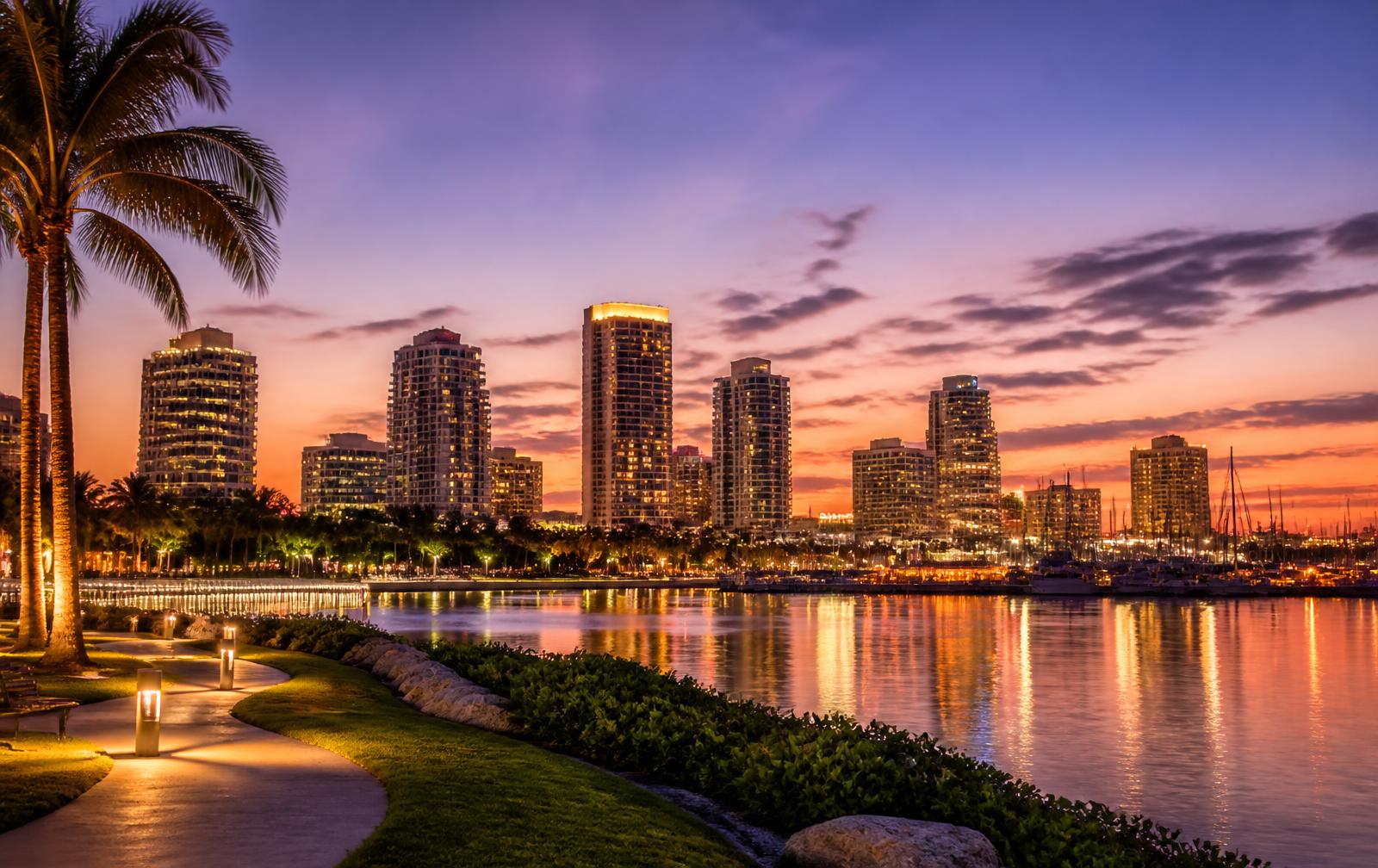
St. Petersburg is not Tampa with a bridge in between, and it is not Orlando's growth story. It is a built-out peninsula of roughly 260,000 residents inside Pinellas County — close to a million people in about 280 square miles, the most densely populated county in Florida, with essentially no vacant land. Growth happens by teardown, remodel and replacement, and a large share of the housing predates 1980.
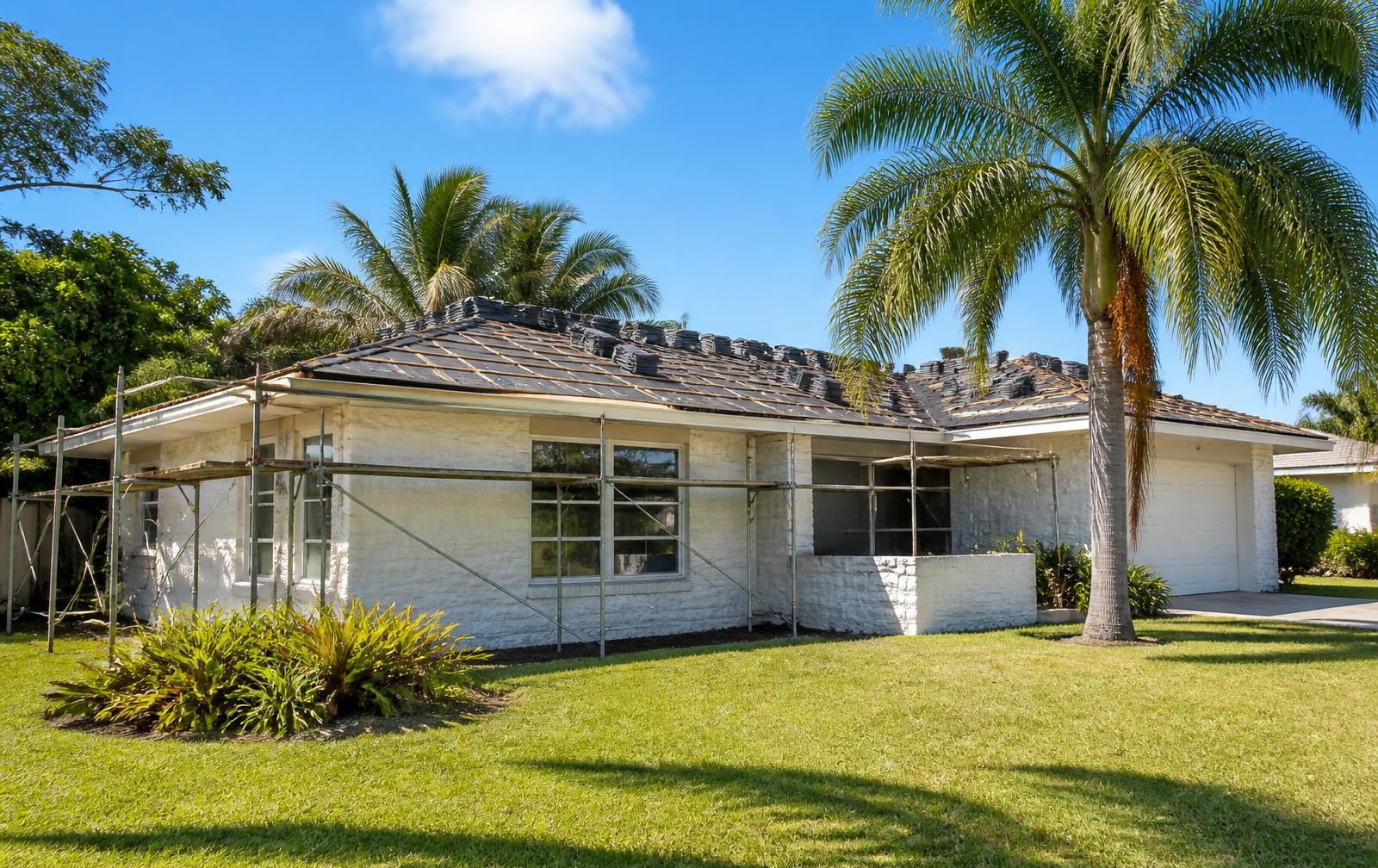
That produces the first clock: a steady, structural stream of failure and replacement work in old block houses on slabs — cast iron laterals, original ductwork, corroded condensers, spalling concrete, uncoated garage slabs, aging seawalls and docks — accelerated by salt air off Tampa Bay and the Gulf and by humidity that keeps air conditioning running most of the year. That baseline is what SEO is for, and it is why the Pinellas page layer keeps producing without new spend.
The second clock is tidal. Hurricane season runs June 1 to November 30, and low-lying neighborhoods including Shore Acres, Riviera Bay, Coquina Key and the Venetian Isles have a documented history of surge and tidal flooding — most severely in the 2024 season, which produced months of HVAC, electrical, drywall, flooring, dock and seawall work. Those weeks reorder the entire calendar: paid search should be loud, elective social should go silent in affected neighborhoods, and the site has to survive a whole ZIP code searching at once.
Add the competitive texture. A meaningful share of the money bidding on St. Pete terms comes from across the bay: Tampa-based agencies, regional franchises and private-equity home service roll-ups with budgets a local crew cannot match, plus lead resellers renting the head terms back to you. You do not beat them on spend. You beat them on match quality, neighborhood specificity and the ability to move budget between four channels in the same week they are locked into one.
Fourth · How the framework is run
One strategy, one budget, one number.
It starts with the site, because everything else lands there and because conversion rate multiplies every other channel. Then SEO foundations — profile, reviews, service and service-area pages — because they are the cheapest long-run inbound available. Then paid search on the urgent layer, tightly geofenced and hour-limited so no money crosses a bridge unless a bridge job pays. Then social on the elective backlog, seasonally timed against hurricane season.
After that it is one weekly loop rather than four monthly reports: qualified inbound by channel and by St. Pete neighborhood, cost per qualified inbound, and the specific pages and campaigns responsible. When a tide event hits Shore Acres, emergency paid spend earns its keep and elective social does not, so budget moves the same week. In a quiet February the reverse is true.
This is the entire promise of running it as one system: not a bulk discount, but one team with the authority and the visibility to move dollars to wherever demand on the peninsula actually shows up that week.
Fifth · The four pages, both directions
Read the individual disciplines, then come back here.
Each channel has its own St. Petersburg page, written for what that discipline actually does on this peninsula: SEO on earning the Pinellas map pack against out-of-area bidders, Google advertising on buying the emergency hour in a 60-year-old house, social advertising on selling the project a homeowner has deferred for three summers, and web design on the surface all three convert on and the schema that gets you cited by AI answer engines.
Read any one of them alone and it is a good service. Read all four and the argument becomes hard to avoid: each one has a hole that exactly matches another one's strength. SEO cannot surge; ads can. Ads cannot compound; SEO does. Neither creates demand; social does. None of them convert; the site does.
That interlock is the entire reason Extentus exists as one engagement rather than four.
Where we run master framework in St. Petersburg
The Master Framework for service businesses across St. Petersburg and Pinellas County, plus the satellite towns crews already drive to. Every district below is targeted by name in campaigns, pages and profile service areas — not folded into a single city radius.
- St. Petersburg districts
- Downtown St. Petersburg · Historic Old Northeast · Historic Kenwood · Crescent Lake · Euclid–St. Paul · Snell Isle · Shore Acres · Riviera Bay · Coquina Key · Venetian Isles · Broadwater · Jungle Terrace · Disston Heights · Pinellas Point · Grand Central District
- Beyond the county line
- Gulfport · St. Pete Beach · Treasure Island · Madeira Beach · Pinellas Park · Kenneth City · Lealman · Seminole · Largo · Clearwater · Safety Harbor · Tierra Verde · Pinellas County
- ZIP codes covered
- 33701 · 33702 · 33703 · 33704 · 33705 · 33706 · 33707 · 33708 · 33709 · 33710 · 33711 · 33712 · 33713 · 33714 · 33715 · 33716 · 33776 · 33781 · 33782 · 33785
Sixth · The St. Petersburg close
One accountable record, on a peninsula that does not forgive averages.
Attribution matters more here than in most markets because St. Pete's geography makes averages lie. A metro-wide cost per lead hides the fact that Old Northeast organic is carrying itself while Pinellas Park still needs paid support, that beach jobs cost more to serve than the quote assumed, and that a Tampa-side click never had a profitable job behind it. Extentus reports one number set: qualified inbound by channel and by neighborhood, cost per qualified inbound, and the pages responsible.
The checkable ground under all of it: a built-out peninsula in Florida's most densely populated county, roughly a million residents in about 280 square miles, a housing stock largely built before 1980, salt air on three sides, air conditioning running most of the year, and a hurricane season from June 1 to November 30 with a recent and severe flooding record in the low-lying neighborhoods.
Four channels, one framework, one record of what moved. Book a call and we will walk through what the peninsula is actually producing for your trade right now.
Master Framework in St. Petersburg — questions, answered
Because a Pinellas map-pack ranking does nothing the week Shore Acres floods, and it does nothing for the homeowner who has not decided she wants an epoxy garage floor. Google advertising covers the flood week; social covers the undecided homeowner; the site is what turns either into a booked job. Starting with SEO alone means paying full price for one-quarter of the system while a tide event or a competitor's ad fills the gap you left open.
Separate vendors are each measured on their own channel, so each argues for more of what they sell and none can move money between channels. That matters in St. Petersburg because the right allocation changes week to week: loud paid search during a flooding event, quiet elective social in affected neighborhoods, steady SEO underneath. Extentus runs all four against one weekly record — qualified inbound and cost per qualified inbound by channel and neighborhood — so budget can move where demand actually is.
St. Petersburg is a built-out peninsula in Pinellas County, the most densely populated county in Florida, where most housing predates 1980 and growth comes from remodel and replacement rather than new construction. Tampa is a mainland market still adding inventory. That changes which services people search for — repipes, cast iron replacement, seawall and dock repair, coatings on old slabs — and it changes the economics, because bridge crossings make Tampa leads structurally less profitable for a St. Pete crew than a job six blocks away. Any campaign that treats the two cities as one market wastes a large share of its budget.
The four St. Petersburg pages, individually
Each discipline's own St. Petersburg page — its own local search data, its own market detail, its own URL.
- SEO
Search Engine Optimization in St. Petersburg
The channel you own. Google Business Profile, Pinellas County service-area pages and review velocity, built so St. Petersburg searches for your trade land on you instead of a Tampa-based franchise bidding across the bay.
Open page - Google Ads
Google Advertising in St. Petersburg
The channel you rent, on purpose. Emergency and high-intent campaigns bid by St. Pete neighborhood and hour, so the flood week, the heat wave and the 10pm call-out are covered when rankings cannot flex.
Open page - Social Ads
Social Advertising in St. Petersburg
Manufactures the elective project a homeowner never searches for. Real St. Pete job-site creative, aimed neighborhood by neighborhood at the work nobody types into Google.
Open page - Web Design
Web Design in St. Petersburg
The multiplier. A fast, mobile-first site with click-to-call, separate emergency and planned-project paths, recognizable St. Pete proof, and the schema that lets AI answer engines cite you by name.
Open page