Anaheim, California
SEO, Google Ads, Social and Web Design in Anaheim — Built for Tract-Home Density, a Resort-Corridor Commercial Layer and HOA-Governed Neighborhoods
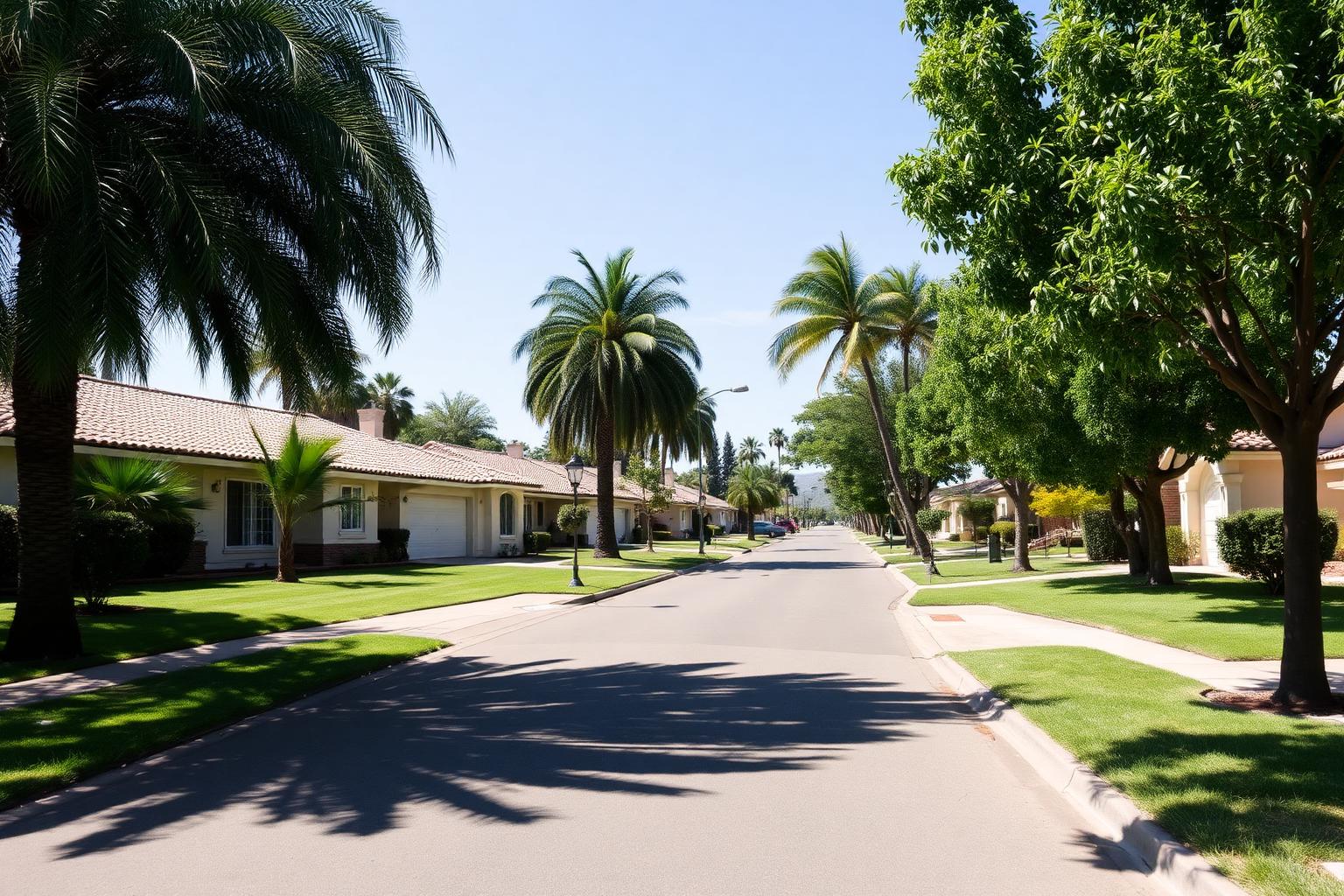
Anaheim is a family-suburb trade market wrapped around a tourism economy that never fully switches off. Most of the city is well-kept 1950s-through-1980s tract housing — roofs, panels, HVAC and pools that age on a predictable schedule — while the hillside lots east of the 91 add drainage, retaining wall and view-fence work that flatland Anaheim never sees. Meanwhile the resort and convention corridor keeps hotels, restaurants and vacation rentals buying commercial-grade work year-round. That is not Los Angeles with a different city name on it, and a page that treats it that way loses to a competitor who actually names the neighborhoods.
Five dedicated Anaheim pages
Each discipline has its own Anaheim page — its own local search data, its own market detail, its own URL.
- SEO
Search Engine Optimization in Anaheim
The channel that keeps producing calls in a city where a tourism corridor and a family-neighborhood housing stock generate two very different kinds of search demand. A Google Business Profile built for Anaheim's permit process, HOA approval steps and hot-summer HVAC load, service pages for Anaheim Hills, West Anaheim, the Platinum Triangle, the Resort District and the Colony, and enough CSLB-aware, review-backed proof to outrank a national franchise that has never dealt with the City of Anaheim or Anaheim Public Utilities.
Open page - Google Ads
Google Advertising in Anaheim
The channel built for a city where inland heat drives emergency AC calls in family neighborhoods while a tourism corridor drives commercial HVAC demand from hotels and vacation rentals a few miles away. Paid search and Local Services Ads bid Anaheim Hills, West Anaheim and the Platinum Triangle as separate markets, with reporting tied to booked jobs across Orange County instead of raw clicks.
Open page - Social Ads
Social Advertising in Anaheim
The Anaheim channel that creates the job before anyone types a query for it. Facebook and Instagram campaigns built from your own Anaheim job sites, aimed street by street across Anaheim Hills, West Anaheim and the Platinum Triangle, plus Orange, Fullerton, Placentia, Yorba Linda, Brea, Buena Park, Garden Grove, Cypress, Villa Park and Tustin — a market with pool-heavy backyards, HOA rules to work around, and less saturated competition than the ads market just north in Los Angeles.
Open page - Web Design
Web Design in Anaheim
Sites built for an Orange County buyer who's comparison-shopping several licensed contractors from a phone: a CSLB license number stated above the fold, plain language on City of Anaheim permits and Anaheim Public Utilities requirements, an HOA-approval note for the tract and hillside neighborhoods that need it, genuine Spanish-language intake, fast same-day quote paths for resort-corridor hotels and vacation rentals, and named pages for Anaheim Hills, West Anaheim, the Platinum Triangle, Orange, Fullerton, Placentia, Yorba Linda, Brea, Buena Park, Garden Grove, Cypress, Villa Park and Tustin instead of one page trying to speak for every Orange County zip code at once.
Open page - All four — recommended
The Master Framework in Anaheim
All four channels, installed together for Anaheim's tract-home base, its Anaheim Hills canyon terrain, its resort-driven commercial pull and its large bilingual Spanish-speaking population. One strategy across SEO, Google advertising, social advertising and web design, with spend shifted the moment demand moves between Anaheim Hills, West Anaheim and the Platinum Triangle — and one accountable number.
Open page

Orange County runs dense and suburban, and an Anaheim crew's real week crosses city lines constantly: Anaheim proper, then Orange, Fullerton, Placentia, Yorba Linda, Brea, Buena Park, Garden Grove, Cypress, Villa Park and Tustin. Each of those cities runs its own permit counter and its own price expectations, and a generic Orange County service-area page loses the local search before the phone ever rings.
Geography splits Anaheim into distinct pockets that behave like separate markets. Anaheim Hills and Peralta Hills sit on graded hillside lots where drainage, retaining walls, view fencing and pool-heavy backyard remodels carry the ticket. West Anaheim and the Sycamore District hold denser, older tract housing where roofing, panel upgrades and HVAC replacement are the everyday call. Downtown Anaheim and the Anaheim Colony Historic District carry older bungalow stock with its own permitting nuance, while the Platinum Triangle and the resort district around the convention center run a completely different commercial cadence — hotel maintenance, restaurant buildouts and vacation-rental turnover on top of the residential baseline.
What actually makes Anaheim its own market
Three forces set Anaheim apart from every other California city we work in. First, housing age and pool density: this is largely 1950s–1980s tract construction with backyard pools as the default rather than the exception, which makes re-plastering, pool equipment, decking and fencing steady, recurring revenue. Second, the resort corridor: hotels, restaurants and short-term rentals near the convention center and theme-park district generate commercial demand — kitchen buildouts, HVAC, signage, flooring — that runs on a tourism calendar rather than a homeowner's calendar. Third, HOA governance: a large share of Anaheim Hills and newer developments sit inside homeowners associations that dictate approved fence styles, paint colors and hardscape materials, which changes what a contractor can even sell before price ever comes up.
The regulatory layer sits on top of all of it. CSLB licensing, City of Anaheim permitting, Anaheim Public Utilities as the municipal electric and water provider, and Title 24 energy compliance all surface in the sale. Add a large bilingual Spanish-speaking customer base across West Anaheim and the flatlands, and a business that publishes its license number, a plain permit path and Spanish-language service pages is answering the question the homeowner was already going to ask.
SEO: hills, flatlands and the resort corridor need separate pages
Our Anaheim SEO work starts with a Google Business Profile built for an Orange County service radius and a review cadence naming real streets and real jobs. Then it builds dedicated pages for Anaheim Hills, Downtown Anaheim, the Anaheim Colony Historic District, the Platinum Triangle, West Anaheim and the Sycamore District, plus Orange, Fullerton, Placentia, Yorba Linda, Brea, Buena Park, Garden Grove and Cypress — each written around the housing stock and buyer that actually lives there.
Google advertising: buy the event, not the season

Paid search performs best against triggers, not weather. A pool heater failing before summer entertaining, Santa Ana winds knocking down an eastern-canyon fence, an HOA compliance deadline forcing a repaint or a resurface, a hotel near the resort district needing emergency HVAC before a convention weekend. Campaigns split by named city because an Anaheim Hills install and a Buena Park service call carry different tickets and different drive times across the 91 and the 5.
Social advertising: pool-heavy backyards, photographed honestly
Pool decking, hillside retaining walls, backyard paver patios, outdoor kitchens, epoxy garage floors and full backyard remodels in Anaheim Hills — this is visual, discretionary work that produces almost no direct search until a homeowner sees it finished. A dry, mild climate keeps backyards usable most of the year, so outdoor living stays a permanent category. Real job-site photography targeted to Anaheim Hills, Peralta Hills and West Anaheim consistently outperforms generic Orange County ad copy.
Web design: judged fast, in a market with less noise than LA
Anaheim carries less marketing saturation than Los Angeles proper, which means a well-built site can win top placement faster here than it would forty minutes north. Our builds load fast on a phone at a job site, keep click-to-call fixed on screen, serve Spanish-language content natively rather than through a translate widget, put the CSLB number and permit process above the fold, show real finished pool and backyard work at full resolution, and carry LocalBusiness, Service and FAQ schema naming Orange, Fullerton, Placentia, Yorba Linda, Brea, Buena Park, Garden Grove and Cypress so answer engines cite the business directly.
How the four channels compound in Anaheim
SEO holds the everyday tract-home repair baseline across a dozen named Orange County cities. Google advertising catches the trigger moments — a failed pool heater, a wind-damaged hillside fence, an HOA-forced resurface, a hotel's emergency call before a convention. Social advertising manufactures the discretionary backyard and remodel work that generates no direct search. Web design decides whether any of that becomes a booked, permitted Orange County job. One line carries it: a single $18,000 pool-decking-and-fence package a month is $216,000 a year, and a scattered vendor arrangement almost never tracks cleanly enough to say which channel produced it.
The master framework: one system across Orange County
Bought piecemeal, every channel costs Orange County retail and still leaves a gap. SEO alone misses the HOA-deadline call. Paid alone rents every lead forever at resort-adjacent click prices. Social alone builds backyard envy with nowhere to send it. A fast site with no traffic feeding it converts nothing. Installed together, with one report showing qualified inbound by channel and by city, the four cover an actual Anaheim year — tract-home repair volume underneath, hillside and pool remodel work on top, and a tourism-corridor commercial layer that keeps demand running even when residential slows.
The four services Extentus runs in Anaheim
- Search Engine Optimization
- The channel you own — map-pack rankings, reviews and service-area pages that keep producing after the work is done.
- Google Advertising
- The channel with a volume dial — paid search and Local Services Ads tuned to the hours demand actually spikes.
- Social Advertising
- The channel that builds the pipeline — demand created in homeowners before they ever search.
- Web Design
- Where the other three cash out — fast, mobile-first pages built to convert visits into booked jobs.
Install all four in Anaheim
One framework, one accountable record: qualified inbound by channel and by Anaheim district, cost per qualified inbound, and the exact pages responsible.
Anaheim marketing questions, answered
Yes. Anaheim is a smaller, more uniform suburban market built mostly on 1950s–1980s tract housing with heavy pool ownership, HOA governance in many neighborhoods, and a resort-and-convention corridor that generates commercial demand unrelated to residential seasons. Los Angeles marketing has to cover far more architectural eras, a much bigger competitive field and neighborhood identities that don't map onto Anaheim's tract-and-hillside layout at all.
Because they're functionally different sales conversations. An Anaheim Hills job is often a hillside drainage, retaining wall or pool-remodel project with HOA approval steps and a larger ticket. A West Anaheim or Sycamore District job is a straightforward tract-home repair — roofing, panel upgrades, HVAC. A resort-corridor job is commercial work tied to a hotel or restaurant's operating calendar, not a homeowner's. One citywide Anaheim page can't speak convincingly to all three, and local ranking systems reward pages written about a place over pages that merely list it.
CSLB licensing, City of Anaheim permitting, Anaheim Public Utilities as the municipal electric and water provider, Title 24 energy compliance, and — in many Anaheim Hills and newer developments — HOA approval requirements that dictate acceptable fence styles, paint colors and hardscape materials before a homeowner can even sign a contract. Publishing a license number, a plain permit path and, where relevant, HOA-compliant options converts better here than a discount ever will.